
Honey mustard chicken is one of those dinners I make when I want the oven to do most of the work but I still need dinner to taste like I tried. The sauce is sweet, sharp, garlicky, and just sticky enough to coat the chicken without turning into candy.
If kids are circling the kitchen or homework is happening at the counter, cut the potatoes small before they hit the pan. That one move keeps this from becoming a late dinner. I first tested this with chicken breasts, then switched to thighs because they forgive distractions better.
Ingredients
This makes 4 modest servings or 3 very hungry servings. If you’re cooking for two, leftovers reheat well enough for lunch, though the potatoes soften a bit.
- 1 1/2 lb / 680 g boneless, skinless chicken thighs — about 6 small thighs. Boneless chicken breasts work, but pound them to an even thickness and start checking them early; they dry out faster.
- 1 lb / 450 g baby potatoes, halved if small or cut into 1/2-inch / 1.25 cm pieces if larger. Small pieces matter here.
- 2 tbsp / 30 ml olive oil, divided.
- 3 tbsp / 63 g honey — use regular liquid honey, not creamed honey.
- 2 tbsp / 30 g Dijon mustard — this gives the sauce its bite.
- 1 tbsp / 15 g whole-grain mustard — for texture and a little mellow mustard flavor. Use more Dijon if that’s what you have; it’ll be smoother and sharper.
- 2 garlic cloves, finely grated or minced.
- 1 tbsp / 15 ml fresh lemon juice — apple cider vinegar works if you’re out of lemons; it’s a little less bright but still good.
- 1/2 tsp fine sea salt, plus more for the potatoes.
- 1/4 tsp black pepper, plus more to taste.
- 1 cup / 120 g frozen peas, no need to thaw.
- 3 packed cups / 90 g baby spinach.
- 2 spring onions, thinly sliced, optional but nice at the end.
Mustard has been used far beyond hot dogs and sandwich bottles; if you like the food-history rabbit hole, the Smithsonian has a short piece on mustard’s long-running place as a condiment. For the nerdier version, this archaeology article on mustard bottles and British colonial foodways is surprisingly useful context for such a familiar ingredient.
Step-by-Step Honey Mustard Chicken
-
Heat the oven and prep the pan.
Heat the oven to 425°F / 220°C. Line a large rimmed sheet pan with parchment if you hate scrubbing sticky pans. Foil works too, but parchment releases the honey sauce better.
Add the potatoes to the pan with 1 tbsp / 15 ml olive oil, a generous pinch of salt, and a few grinds of pepper. Toss them well, then spread them out cut-side down where you can.
-
Give the potatoes a head start.
Roast the potatoes for 15 minutes. They won’t be done yet, but the edges should look a little dry and the bottoms should be starting to color.
Heads up: don’t skip this unless your potatoes are tiny. Chicken thighs cook faster than potatoes, and nobody wants good chicken sitting on top of hard little potato rocks.
-
Mix the sauce.
While the potatoes roast, whisk together the honey, Dijon mustard, whole-grain mustard, garlic, lemon juice, remaining 1 tbsp / 15 ml olive oil, 1/2 tsp salt, and 1/4 tsp pepper in a bowl large enough to hold the chicken.
The sauce should taste punchy. If it tastes a little too sharp by itself, that’s fine; the chicken juices and potatoes soften it in the oven.
-
Coat the chicken.
Pat the chicken dry with paper towels, then add it to the bowl and turn each piece until coated. If you have 10 extra minutes, let it sit while the potatoes finish their first roast. If you don’t, keep moving. This recipe doesn’t fall apart without a long marinade.
One thing — don’t pour all the extra sauce onto the pan yet. Honey can scorch at the edges if it puddles. Spoon a little over the chicken now and save the rest for later.
-
Add the chicken to the pan.
Pull the pan from the oven and stir the potatoes once. Nestle the chicken between the potatoes, smooth side up, and scrape a thin layer of sauce over the top of each piece.
Roast for 18 to 22 minutes, depending on the size of your chicken pieces. Start checking at 18 minutes if the thighs are small or if you’re using breasts.
-
Finish with peas and spinach.
Scatter the frozen peas around the chicken and pile the spinach over the potatoes. Drizzle the reserved sauce over the greens, not directly onto the bare pan.
Return the pan to the oven for 3 to 5 minutes, just until the peas are hot and the spinach slumps down. It looks like too much spinach at first. It isn’t.
-
Check the chicken properly.
Use an instant-read thermometer and check the thickest part of the largest piece. Poultry should reach 165°F / 74°C. I know people try to judge chicken by cutting into it, but honey mustard sauce stains the meat a bit and makes that trick unreliable.
If the chicken is done but you want more color, switch the oven to broil for 1 to 2 minutes. Watch it the whole time. Honey goes from glossy to burnt fast, and burnt honey tastes bitter, not charming.
-
Rest, then serve.
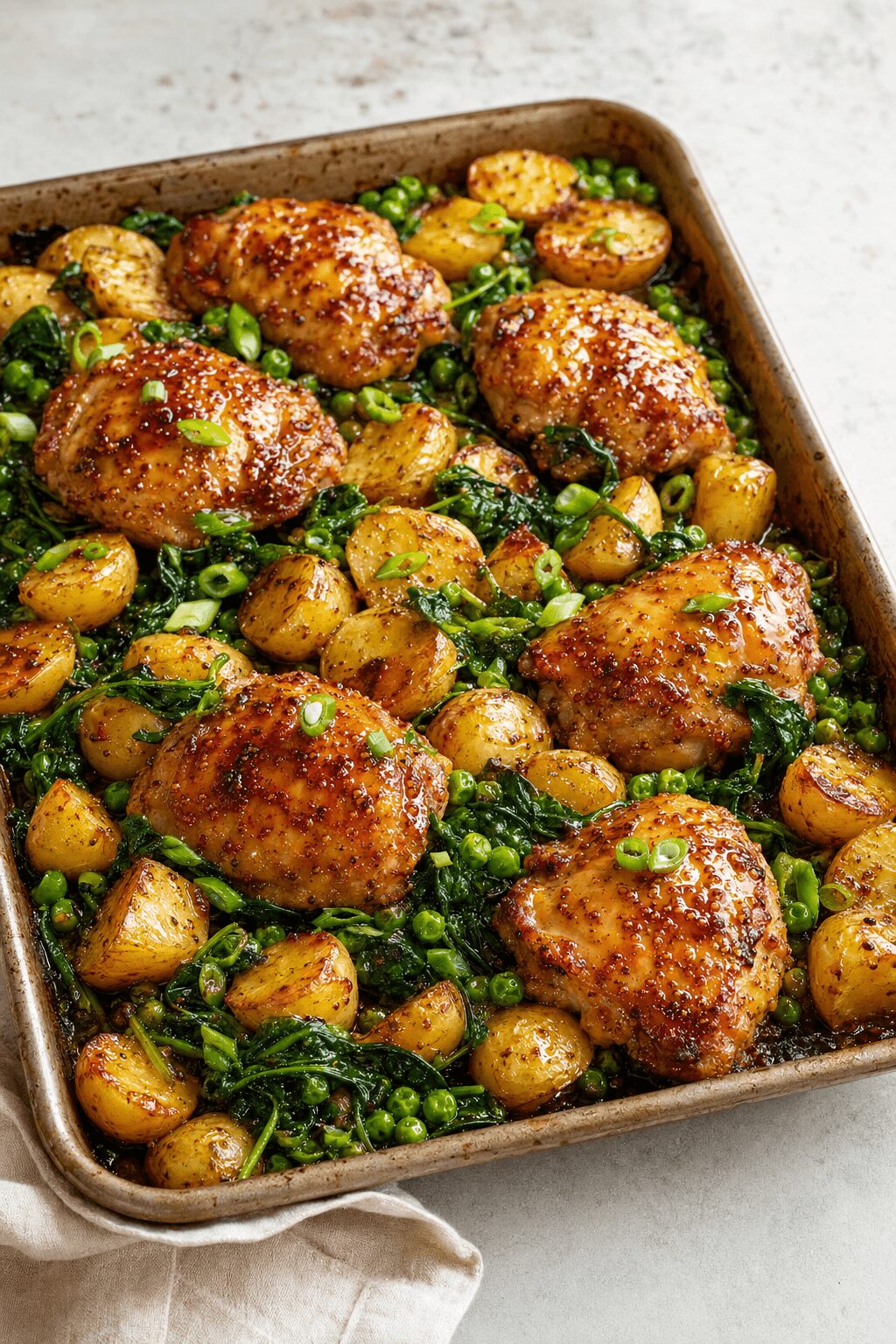
Let the pan sit for 5 minutes before serving. Spoon the mustardy pan juices over the chicken and potatoes, then finish with sliced spring onions if you’re using them.
If the sauce looks a little separated on the pan, don’t panic. Stir the juices around the potatoes and greens. It’ll taste right even if it doesn’t look restaurant-neat.
What to Expect
The chicken comes out glossy and lightly sticky, with browned spots where the honey catches the heat. The potatoes get tender with some golden edges, though they won’t be as crisp as plain roasted potatoes because the sauce and chicken juices are in the pan.
Flavor-wise, it’s sweet first, then tangy and savory. Thighs make the dish juicier; breasts make it leaner but need more attention. A darker sheet pan will brown the potatoes faster than a pale one.
Ways to Change It Up
For a vegetarian version, use thick cauliflower steaks or large portobello mushrooms instead of chicken and roast them with the same sauce. You’ll lose the savory chicken juices, so add a splash of vegetable broth to the pan near the end if it looks dry. Check cauliflower with a knife, not a thermometer; it should slide in with only a little resistance.
Want it spicier? Stir 1/4 to 1/2 tsp crushed red pepper flakes into the sauce, or add a spoonful of chili crisp at the table. I prefer adding heat at the end because it keeps the honey mustard flavor clean for anyone who doesn’t want spice.
You can swap the peas and spinach for trimmed green beans, but add them with the chicken instead of at the end. They need more time and they won’t soften much in the last few minutes.
Serving and Storage
This is already a one-pan dinner, so I don’t add much unless I’m stretching it. A bowl of buttered egg noodles works if you’re skipping potatoes, and steamed broccoli is good if your family eats broccoli without a negotiation meeting. For something fresh, serve it with sliced cucumbers tossed with lemon juice, salt, and a little sour cream or Greek yogurt.
Leftovers keep in an airtight container in the fridge for 3 to 4 days. Store the chicken, potatoes, and greens together if you want easy lunches; separate them only if you’re trying to keep the potatoes from getting too soft.
Reheat gently in a covered skillet over medium-low heat with a splash of water, or microwave in short bursts until hot. The oven works too, about 325°F / 165°C for 12 to 15 minutes, but the chicken can dry out if you forget it. Reheated leftovers taste good, but the potatoes won’t regain their roasted edges.
You can freeze the raw chicken in the honey mustard sauce for up to 1 month. Thaw it overnight in the fridge, then cook it with freshly cut potatoes. Don’t freeze the whole assembled sheet pan with raw potatoes; their texture gets weird and watery.
Common Questions
Can I use chicken breasts instead of thighs?
Yes, but don’t just toss giant chicken breasts on the pan and hope. Pound them to about 3/4 inch / 2 cm thick so they cook evenly, then start checking around 16 minutes after they go onto the pan. Breasts are less forgiving, and honey mustard doesn’t fix dry chicken.
Can I marinate the chicken ahead?
Absolutely. Mix the sauce and chicken up to 24 hours ahead and keep it covered in the fridge. The flavor gets deeper, but the bigger win is that dinner moves faster. If the honey thickens in the fridge, let the bowl sit on the counter for 10 minutes before cooking so the sauce spreads more easily.
Why did my sauce burn on the pan?
Usually there was too much sauce sitting directly on bare metal, or the pan was too small and everything crowded together. Use a large rimmed pan, keep the chicken and potatoes in a single layer, and save some sauce for the last few minutes. Also, broil like you’re standing guard because you are.
Can I make this without potatoes?
Yes. Bake the sauced chicken in a lightly oiled baking dish at 425°F / 220°C until it reaches 165°F / 74°C, usually 20 to 25 minutes for boneless thighs. Add a quick starch on the side: rice, couscous, toasted bread, or noodles all catch the sauce better than plain lettuce.
Is the chicken safe if the juices aren’t completely clear?
Use the thermometer. FoodSafety.gov lists 165°F / 74°C as the safe minimum internal temperature for chicken and other poultry, and that’s the number I use in my own kitchen. Color can fool you, especially with mustard and honey in the mix.
The only fussy part here is the timing on the potatoes, so cut them small and give them that head start. If you try it with chicken breasts, tell me how thick they were and how long they took; that’s the detail that actually helps the next person making dinner at 6:15.
Honey Mustard Chicken for Easier Weeknight Dinners

Equipment
- Large rimmed sheet pan
- Parchment paper
- Whisk
- Large bowl
- Paper towels
- Instant-read thermometer
Ingredients
- 1 1/2 lb boneless, skinless chicken thighs about 6 small thighs
- 1 lb baby potatoes halved if small or cut into 1/2-inch pieces if larger
- 2 tbsp olive oil divided
- 3 tbsp honey regular liquid honey, not creamed honey
- 2 tbsp Dijon mustard
- 1 tbsp whole-grain mustard
- 2 garlic cloves finely grated or minced
- 1 tbsp fresh lemon juice apple cider vinegar works as a substitute
- 1/2 tsp fine sea salt plus more for the potatoes
- 1/4 tsp black pepper plus more to taste
- 1 cup frozen peas no need to thaw
- 3 packed cups baby spinach
- 2 spring onions thinly sliced, optional
Instructions
- Heat the oven to 425°F / 220°C. Line a large rimmed sheet pan with parchment if you hate scrubbing sticky pans. Foil works too, but parchment releases the honey sauce better. Add the potatoes to the pan with 1 tbsp / 15 ml olive oil, a generous pinch of salt, and a few grinds of pepper. Toss them well, then spread them out cut-side down where you can.
- Roast the potatoes for 15 minutes. They won’t be done yet, but the edges should look a little dry and the bottoms should be starting to color. Don’t skip this unless your potatoes are tiny, since chicken thighs cook faster than potatoes.
- While the potatoes roast, whisk together the honey, Dijon mustard, whole-grain mustard, garlic, lemon juice, remaining 1 tbsp / 15 ml olive oil, 1/2 tsp salt, and 1/4 tsp pepper in a bowl large enough to hold the chicken. The sauce should taste punchy.
- Pat the chicken dry with paper towels, then add it to the bowl and turn each piece until coated. If you have 10 extra minutes, let it sit while the potatoes finish their first roast; otherwise, keep moving. Do not pour all the extra sauce onto the pan yet. Spoon a little over the chicken now and save the rest for later.
- Pull the pan from the oven and stir the potatoes once. Nestle the chicken between the potatoes, smooth side up, and scrape a thin layer of sauce over the top of each piece. Roast for 18 to 22 minutes, depending on the size of your chicken pieces. Start checking at 18 minutes if the thighs are small or if you’re using breasts.
- Scatter the frozen peas around the chicken and pile the spinach over the potatoes. Drizzle the reserved sauce over the greens, not directly onto the bare pan. Return the pan to the oven for 3 to 5 minutes, just until the peas are hot and the spinach slumps down.
- Use an instant-read thermometer and check the thickest part of the largest piece. Poultry should reach 165°F / 74°C. If the chicken is done but you want more color, switch the oven to broil for 1 to 2 minutes, watching carefully because honey can burn quickly.
- Let the pan sit for 5 minutes before serving. Spoon the mustardy pan juices over the chicken and potatoes, then finish with sliced spring onions if using. If the sauce looks a little separated, stir the juices around the potatoes and greens before serving.



Leave a Reply