
Lemon Herb Couscous Salad is one of those dishes that quietly solves a lot of potluck problems. It serves well at room temperature, holds up on a buffet table, and brings a bright, fresh contrast to heavier mains. Here it leans on a lemony olive oil dressing, plenty of herbs, crisp vegetables, and chickpeas for a bit of protein.
If you’re racing out the door after work, start by cooking the couscous so it can cool while you chop everything else. For very busy evenings or small kitchens, whisk the dressing in the serving bowl first, then toss in the warm couscous and fold in the vegetables and herbs last. The result is a salad that tastes even better after a short rest and fits easily into most schedules.
Ingredients
Serves 4 as a side (about 6 small potluck portions)
For the couscous salad:
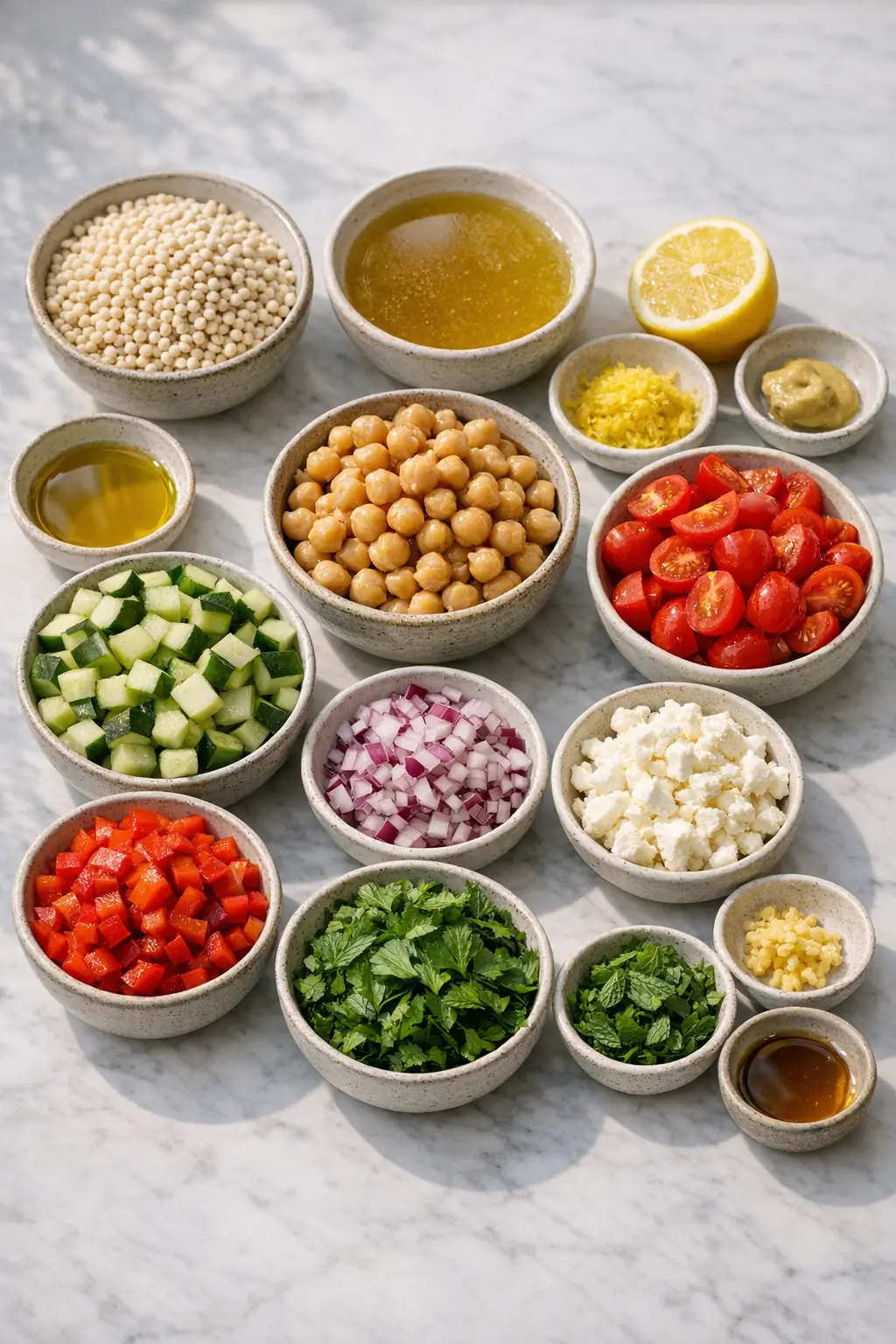
- 200 g (about 1 cup) dry pearl/Israeli couscous – small toasted pasta that gives the salad a pleasantly chewy texture
- 480 ml (2 cups) low-sodium vegetable broth – adds more flavor than water; use lightly salted water if needed
- 1 tbsp olive oil – for toasting the couscous
- 1 can (400 g / 14 oz) chickpeas, drained and rinsed – adds protein and bulk
- 1 medium cucumber (about 200 g / 7 oz), diced – for crunch and freshness; English or Persian cucumbers work best
- 200 g (about 1 heaping cup) cherry or grape tomatoes, halved – juicy sweetness
- 1 small red bell pepper (about 120 g / 4 oz), finely diced – color and subtle sweetness
- 1 small red onion or 2 shallots, finely minced (about 50 g / 1.75 oz) – gentle bite
- 20 g (about 1/2 cup loosely packed) fresh flat-leaf parsley, finely chopped – key herb for freshness
- 10 g (about 1/4 cup loosely packed) fresh mint leaves, finely chopped – cool, bright flavor
- 50 g (about 1/2 cup) crumbled feta cheese – saltiness and creaminess; omit or use a dairy-free feta-style cheese for vegan
For the lemon herb dressing:
- 60 ml (1/4 cup) extra-virgin olive oil – base of the dressing
- 60 ml (1/4 cup) fresh lemon juice (about 1–2 lemons) – main acidity and lemon flavor
- 1 tsp finely grated lemon zest – boosts lemon aroma without extra acidity
- 1 tsp Dijon mustard – helps the dressing emulsify and adds a mild tang
- 1 small garlic clove, very finely minced or grated – sharpness and savoriness
- 1/2 tsp fine sea salt, plus more to taste – seasoning
- 1/4 tsp freshly ground black pepper – mild heat
- 1–2 tsp honey or maple syrup, to taste – softens the acidity; omit for a sharper dressing
Kitchen note: If serving to a crowd, keep some feta and herbs on the side so you can sprinkle them over the top just before serving. It refreshes the look and flavor after travel.
Step-by-Step Instructions for Lemon Herb Couscous Salad
-
Cook the couscous.
Add the 1 tbsp olive oil to a medium saucepan over medium heat. Stir in the dry pearl couscous and toast, stirring frequently, for 2–3 minutes until some of the grains turn golden and smell nutty. -
Simmer until tender.
Pour in the vegetable broth carefully (it will steam), add a small pinch of salt if your broth is very low-sodium, and bring to a gentle boil. Reduce the heat to low, cover, and simmer for 8–10 minutes, stirring once or twice, until the couscous is tender but still slightly chewy and most of the liquid is absorbed. -
Fluff and cool.
Take the pan off the heat, uncover, and fluff the couscous with a fork to separate the grains. Spread it out on a large tray or baking sheet to cool more quickly, or leave it in the pan with the lid slightly ajar for 10–15 minutes.
Kitchen note: For potlucks, you want the couscous at least room temperature before adding herbs. Tossing delicate herbs into very hot couscous can dull their color and flavor.
-
Prep the vegetables and herbs.
While the couscous cools, dice the cucumber and red bell pepper, halve the cherry tomatoes, and finely mince the red onion or shallots. Rinse and drain the chickpeas thoroughly. Chop the parsley and mint just before using so they stay bright. -
Make the dressing.
In a large serving bowl, whisk together the extra-virgin olive oil, lemon juice, lemon zest, Dijon mustard, minced garlic, salt, pepper, and honey or maple syrup (if using). Taste and adjust the seasoning—aim for a bright, balanced dressing that tastes slightly more lemony and salty than you think you want. It will mellow once it coats the salad. -
Combine couscous with dressing.
Add the cooled or just slightly warm couscous to the bowl with the dressing. Use a large spoon to gently toss until every grain is lightly coated. This helps the couscous absorb flavor instead of clumping. -
Fold in vegetables and chickpeas.
Tip in the chickpeas, cucumber, tomatoes, bell pepper, and red onion. Toss gently to distribute everything evenly without crushing the tomatoes. -
Add herbs and feta last.
Fold in the chopped parsley and mint, reserving a small handful for garnish. Sprinkle in most of the feta, then toss again very gently. Taste and adjust with more salt, pepper, or lemon juice as needed. -
Rest and chill (optional).
If time allows, cover and refrigerate the salad for at least 20–30 minutes and up to several hours. The flavors will meld and deepen as it sits. Before serving, taste again and refresh with an extra squeeze of lemon and a drizzle of olive oil if the salad seems dry. -
Garnish and serve.
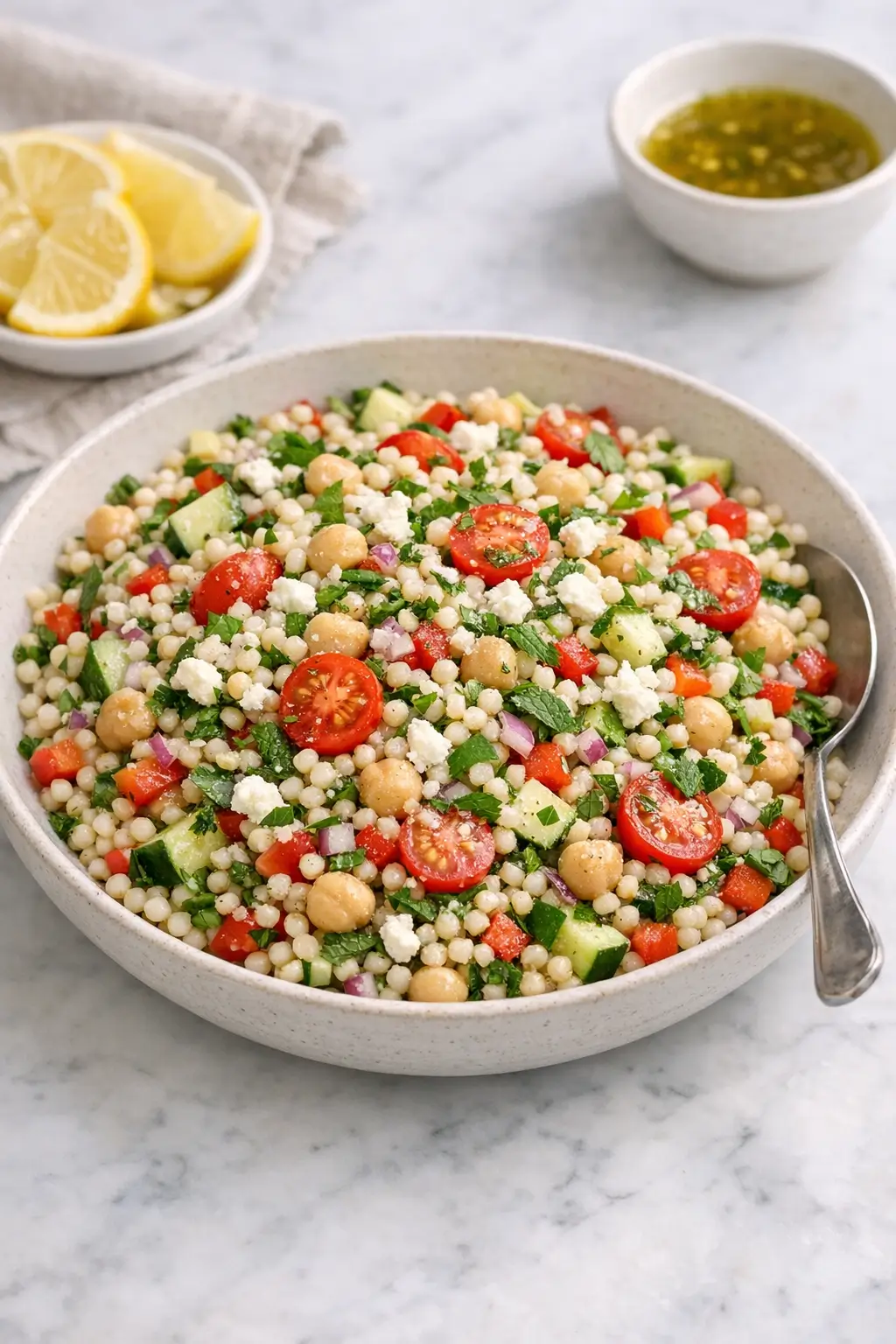
Transfer the salad to a shallow serving bowl or platter if needed. Scatter the reserved herbs and feta over the top for a fresh look. Serve cool or at room temperature.
Kitchen note: If you’re making this a full day ahead, hold back half the herbs and feta. Stir them in just before serving so the salad looks and tastes newly made at the potluck table.
What to Expect
This salad lands somewhere between fluffy and chewy. Pearl couscous has more bite than fine couscous, so you can expect tender, round grains that hold their shape rather than a light, fluffy texture.
The flavor profile is clean and lemon-forward with plenty of herb freshness. Chickpeas and feta add a savory backbone so it doesn’t taste like just pasta and dressing. Garlic and onion bring a subtle sharpness without overpowering the lemon.
Different brands of couscous may absorb liquid at different rates, so yours could finish slightly drier or softer. If it seems dry after chilling, loosen it with a splash of olive oil and a bit more lemon juice. Stronger feta will also influence overall salinity, so always taste before adding extra salt.
Kitchen note: If your salad feels flat in flavor, don’t automatically add more salt. Try adding 1–2 teaspoons of lemon juice first; acidity often wakes up the other ingredients.
Ways to Change It Up
1. Make it fully vegan.
Omit the feta and either skip the sweetener in the dressing or use maple syrup. You can add a handful of toasted nuts or seeds—such as slivered almonds, sunflower seeds, or pumpkin seeds—for richness and crunch. A few olives chopped through also give the salad a salty, savory edge without dairy.
2. Go milder and kid-friendly.
For kids or spice-sensitive guests, keep the garlic on the light side and rinse the minced onion briefly under cold water to soften its bite. You can swap the red onion for thinly sliced green onions, which are gentler. If anyone is wary of herbs, cut back the mint and parsley slightly and increase the cucumber and tomatoes.
3. Make it spicier.
To introduce more heat, whisk a pinch of red pepper flakes or a small spoonful of harissa paste into the dressing. Another option is to add finely chopped fresh chili to the salad. Just remember that heat can intensify as the salad rests, so start with less than you think you need.
4. Faster weeknight version.
If you’re very short on time, you can use regular fine couscous instead of pearl, following the quick soaking directions on its package with hot water or broth. Fluff and dress it in the same way, then stir in the vegetables and herbs. The texture will be softer and more like a grain salad, but it still travels well and soaks up the lemon dressing nicely.
5. Bulk it up as a main.
To turn this into a light main course, add diced grilled chicken, roasted vegetables, or extra chickpeas. You could also serve it on a bed of arugula or mixed greens and drizzle with a bit more dressing just before serving.
Serving and Storage
This salad fits naturally on a potluck table alongside grilled meats, roasted vegetables, or other cold salads. It pairs especially well with anything seasoned with Mediterranean flavors—think grilled chicken, fish, or skewers with olive oil, garlic, and herbs.
For presentation, a wide, shallow bowl or platter works better than a deep bowl. It gives space to show off the colors and makes it easier for guests to scoop without digging.
Leftovers keep well in an airtight container in the refrigerator for 3–4 days. The couscous will continue to soak up dressing, so you may want to revive leftovers with a spoonful of olive oil, a squeeze of lemon, and a pinch of salt.
This salad is best served cool or at room temperature rather than hot. If it has been chilled for several hours, let it sit out for 15–20 minutes before serving so the flavors open up again.
Kitchen note: For food safety at potlucks, try not to leave the salad at room temperature for more than 2 hours (or 1 hour if it’s very hot outside). After that, return it to a cooler or refrigerator.
Cultural Context
Couscous has deep roots in North Africa, where it is a staple food made from steamed semolina granules. It is widely eaten in countries across the Maghreb, often served with vegetables and meat in warming dishes for family gatherings and celebrations. Historical research suggests that couscous has been part of regional food culture for many centuries.
In 2020, the knowledge and practices surrounding couscous were added to UNESCO’s Representative List of the Intangible Cultural Heritage of Humanity, recognizing its importance to communities in Algeria, Mauritania, Morocco, and Tunisia. You can read more about that designation on UNESCO’s site through this article: couscous traditions and international cultural cooperation.
For broader background on how couscous fits into regional cooking, the overview of Maghrebi cuisine is useful: Maghrebi cuisine and its key dishes.
Common Questions and Troubleshooting
My couscous turned out sticky and clumped together. What went wrong?
Often this happens when the couscous wasn’t fluffed while cooling or if there was too much liquid. Make sure to fluff with a fork as soon as it finishes cooking and spread it out to cool slightly before dressing. If it’s already clumped, gently break it up with your fingers before adding the vegetables and herbs.
The salad tastes bland. How can I fix it?
First, try adjusting the acidity and salt. Add a teaspoon or two of lemon juice and a pinch of salt, toss, and taste again. A drizzle of extra-virgin olive oil can also help carry the flavors. If you have time, let the salad rest for 10–15 minutes, then taste once more—flavors often bloom with a short rest.
Can I make this Lemon Herb Couscous Salad the day before a potluck?
Yes, it’s very make-ahead friendly. Prepare the salad up to the point of mixing everything together, but hold back about half the herbs and feta. Refrigerate overnight, then fold in the reserved herbs and cheese just before serving. Refresh with a splash of lemon juice and olive oil if it seems dry.
What can I use instead of chickpeas?
If you don’t enjoy chickpeas or don’t have them, white beans (such as cannellini), cooked lentils, or even small diced roasted potatoes can work. Each option changes the texture slightly—beans keep it lighter, while potatoes make it more filling.
How do I keep the herbs from turning dark?
Use very sharp knives to chop the herbs and add them to cooled couscous rather than hot. If you’re storing the salad for several hours, you can reserve some herbs and fold them in shortly before serving to keep the color vivid.
Is it okay to freeze leftovers?
Freezing is not ideal here. The texture of the couscous and vegetables, especially the cucumber and tomatoes, will soften significantly once thawed. It’s better to make a smaller batch or enjoy leftovers within a few days from the fridge.
Conclusion
Lemon Herb Couscous Salad fills a useful spot in a potluck lineup: it’s easy to transport, simple to scale up, and happy at room temperature. With a balance of bright lemon, fresh herbs, and hearty chickpeas, it offers both freshness and substance.
If you make this version, consider leaving a comment or rating to share how it went in your kitchen. Adjustments—extra vegetables, different herbs, or a spicy twist—are all helpful for other home cooks to read about, so feel free to note what you changed and how it worked for your crowd.

Lemon Herb Couscous Salad for Easy Potlucks

Equipment
- Medium saucepan with lid
- Fork
- Large tray or baking sheet
- Large serving bowl
- Whisk
- Knife
- Cutting board
- Measuring cups and spoons
Ingredients
For the couscous salad
- 200 g dry pearl/Israeli couscous
- 480 ml low-sodium vegetable broth
- 1 tbsp olive oil for toasting the couscous
- 1 can chickpeas 400 g / 14 oz, drained and rinsed
- 1 medium cucumber diced (about 200 g / 7 oz)
- 200 g cherry or grape tomatoes halved
- 1 small red bell pepper finely diced (about 120 g / 4 oz)
- 1 small red onion or 2 shallots, finely minced (about 50 g / 1.75 oz)
- 20 g fresh flat-leaf parsley finely chopped
- 10 g fresh mint leaves finely chopped
- 50 g feta cheese crumbled
For the lemon herb dressing
- 60 ml extra-virgin olive oil
- 60 ml fresh lemon juice
- 1 tsp lemon zest finely grated
- 1 tsp Dijon mustard
- 1 small clove garlic very finely minced or grated
- 1/2 tsp fine sea salt plus more to taste
- 1/4 tsp freshly ground black pepper
- 1-2 tsp honey or maple syrup to taste (optional)
Instructions
- Cook the couscous: Add 1 tbsp olive oil to a medium saucepan over medium heat. Stir in the dry pearl couscous and toast, stirring frequently, for 2–3 minutes until some grains turn golden and smell nutty.
- Simmer until tender: Pour in the vegetable broth carefully (it will steam), add a small pinch of salt if your broth is very low-sodium, and bring to a gentle boil. Reduce heat to low, cover, and simmer 8–10 minutes, stirring once or twice, until couscous is tender but slightly chewy and most liquid is absorbed.
- Fluff and cool: Remove from heat, uncover, and fluff couscous with a fork. Spread on a tray/baking sheet to cool quickly, or leave in the pan with the lid slightly ajar for 10–15 minutes.
- Prep the vegetables and herbs: Dice the cucumber and red bell pepper, halve the cherry tomatoes, and finely mince the red onion/shallots. Rinse and drain chickpeas. Chop parsley and mint just before using.
- Make the dressing: In a large serving bowl, whisk together extra-virgin olive oil, lemon juice, lemon zest, Dijon mustard, garlic, salt, pepper, and honey/maple (if using). Taste and adjust seasoning.
- Combine couscous with dressing: Add cooled (or slightly warm) couscous to the bowl and toss until evenly coated.
- Fold in vegetables and chickpeas: Add chickpeas, cucumber, tomatoes, bell pepper, and red onion. Toss gently to distribute without crushing tomatoes.
- Add herbs and feta last: Fold in parsley and mint (reserve a little for garnish). Sprinkle in most of the feta and toss very gently. Taste and adjust with more salt, pepper, or lemon juice as needed.
- Rest and chill (optional): Cover and refrigerate 20–30 minutes (or up to several hours) for flavors to meld. Before serving, taste again and refresh with extra lemon juice and a drizzle of olive oil if it seems dry.
- Garnish and serve: Transfer to a serving bowl or platter if desired. Scatter reserved herbs and feta over the top. Serve cool or at room temperature.



Leave a Reply