
A glazed lemon poppy seed loaf is the kind of bake that quietly makes a weekday feel like a slow coffee shop morning. This version leans into bright lemon zest, tangy yogurt, and a not-too-sweet crumb dotted with poppy seeds. It’s sturdy enough to slice for snacks, but still tender and cake-like.
If you’re staring at the clock between meetings, start by softening your butter and pulling the eggs and yogurt out of the fridge; they mix more easily when not ice cold. If your kitchen is small or busy with kids, line the loaf pan with parchment before you begin so you can pour the batter and get it in the oven without juggling extra dishes.
Ingredients
Makes one 9×5 in / 23×13 cm loaf (8–10 slices)
For the lemon poppy seed loaf
- 190 g (1 ½ cups) all-purpose flour
- 1 tsp baking powder
- ¼ tsp baking soda
- ½ tsp fine sea salt
- 1 ½ Tbsp poppy seeds
- 115 g (½ cup / 1 stick) unsalted butter, softened to room temperature
- 200 g (1 cup) granulated sugar
- 2 Tbsp finely grated lemon zest (from about 2 large lemons)
- 3 large eggs, at room temperature
- 120 g (½ cup) plain full-fat yogurt or sour cream, at room temperature
- 60 ml (¼ cup) fresh lemon juice
- 1 tsp pure vanilla extract
Substitution notes:
- Yogurt: Use plain Greek yogurt thinned with a splash of milk, or sour cream, in the same quantity.
- Butter: Salted butter works; reduce the added salt to a small pinch.
- Poppy seeds: If you’re out, you can bake this as a straight lemon loaf and skip them.
For the lemon glaze
- 120 g (1 cup) powdered sugar, sifted
- 2–3 Tbsp fresh lemon juice (start with 2, add more to thin)
- Optional: 1–2 tsp whole milk or cream if you prefer a softer, more opaque glaze
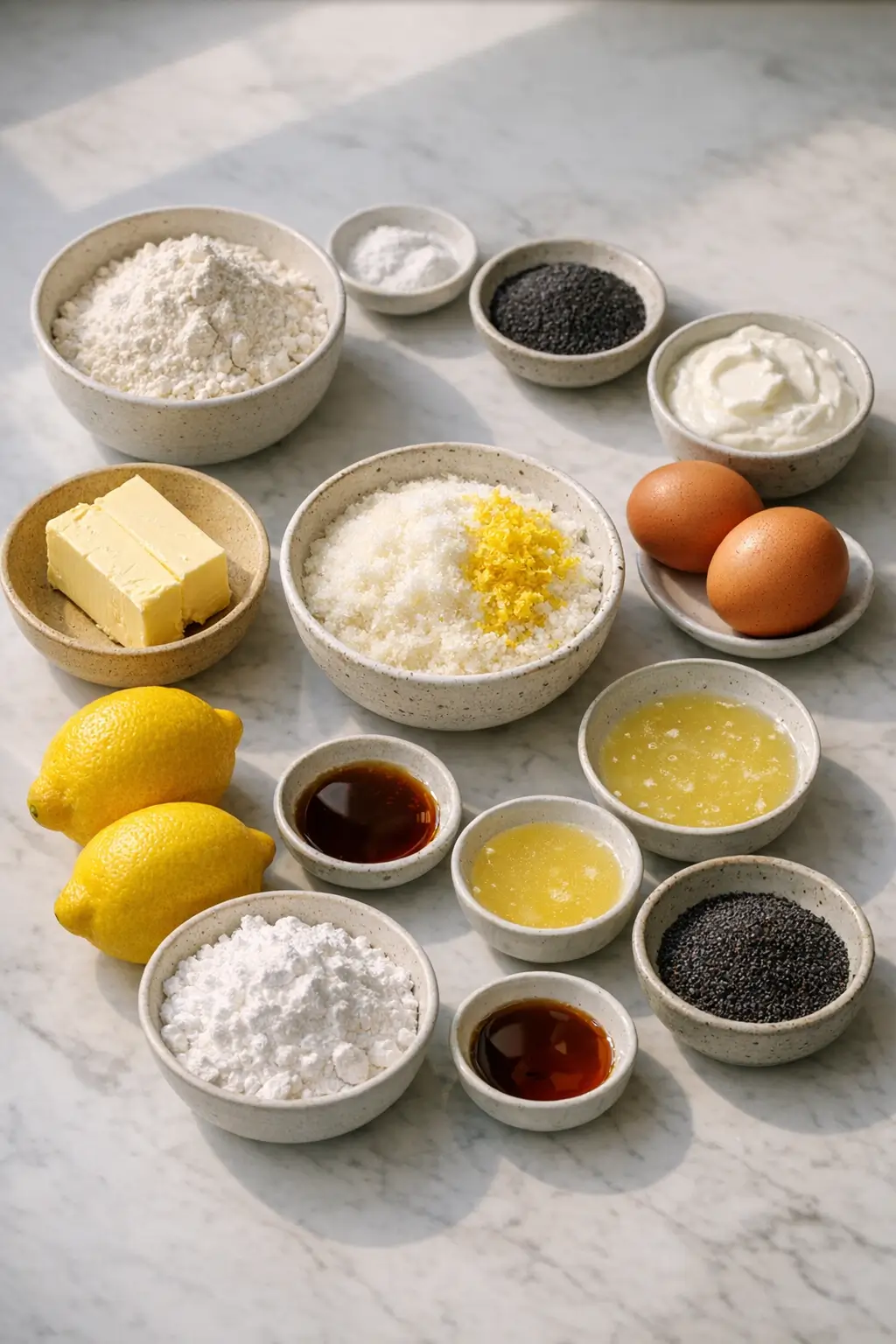
Step-by-Step Instructions for Lemon Poppy Seed Loaf
-
Preheat and prep the pan.
Preheat your oven to 175°C / 350°F with a rack in the center. Lightly grease a 9×5-inch (23×13 cm) loaf pan and line it with a parchment sling that overhangs the long sides. This makes lifting the finished loaf out much easier.
-
Combine dry ingredients.
In a medium bowl, whisk together the flour, baking powder, baking soda, salt, and poppy seeds until everything looks evenly speckled. Set aside.
-
Rub zest into sugar (more flavor).
In a large mixing bowl, add the granulated sugar and lemon zest. Use your fingers to rub the zest into the sugar for about 30 seconds until the sugar feels slightly damp and smells strongly of lemon. This releases more of the citrus oils into the batter.
-
Cream butter and lemon sugar.
Add the softened butter to the lemon sugar. Using a handheld mixer or stand mixer fitted with the paddle attachment, beat on medium speed for 3–4 minutes, scraping down the bowl once or twice, until the mixture looks lightened in color and a bit fluffy.
-
Beat in eggs one at a time.
Add the eggs one at a time, beating on medium-low just until each one is incorporated before adding the next. The batter may look slightly curdled after the second or third egg; that’s fine and will smooth out once the dry ingredients go in.
Kitchen note: If the butter was too cold or the eggs very cold, the mixture can look broken. Don’t panic—keep going and avoid over-mixing at this stage; the flour will bring it back together.
-
Add yogurt, lemon juice, and vanilla.
Add the yogurt (or sour cream), lemon juice, and vanilla extract. Mix on low speed or fold in by hand just until combined. The batter will be creamy and pourable but not runny.
-
Fold in the dry ingredients.
Sprinkle the flour mixture over the wet ingredients. Using a spatula, fold gently until no dry patches remain, scraping the bottom and sides of the bowl. Try to stop as soon as the batter looks uniform; over-mixing here can make the loaf tough.
-
Fill the pan and level the top.
Scrape the batter into the prepared loaf pan. Use your spatula to nudge it into the corners, then smooth the top. If you like, run the tip of a butter knife lengthwise down the center of the batter to encourage a neat crack as it bakes.
-
Bake and check for doneness.
Bake for 45–55 minutes. Start checking around 40 minutes; oven temperatures vary. The loaf is done when the top is deep golden, a toothpick inserted into the center comes out with just a few moist crumbs (no wet batter), and the loaf springs back lightly when pressed.
Kitchen note: If the top is browning quickly but the center still looks wet on a toothpick, tent the pan loosely with foil and continue baking, checking every 5–7 minutes.
-
Cool in the pan, then on a rack.
Place the pan on a wire rack and let the loaf cool for 10–15 minutes. Run a knife around the short edges if needed, then use the parchment sling to lift the loaf out of the pan. Let it cool completely on the rack; glazing a warm loaf makes the icing slide off and soak in too much.
-
Mix the lemon glaze.
When the loaf is cool to the touch, whisk the powdered sugar and 2 tablespoons of lemon juice in a small bowl until smooth and thick, like school glue. Add more lemon juice, or a teaspoon or two of milk/cream, a few drops at a time if you want a thinner, more pourable glaze.
-
Glaze the loaf.
Set the cooled loaf on a rack over a tray or parchment sheet to catch drips. Pour or spoon the glaze over the top, nudging it gently with the back of the spoon so it drips down the sides in thick ribbons. Let the glaze set for at least 20–30 minutes before slicing.
-
Slice and serve.
Use a sharp, serrated knife to cut slices about 1.5–2 cm (½–¾ inch) thick. Wipe the blade between slices for the cleanest look. Serve as is, or alongside coffee or tea for a coffee shop-style snack at home.
Kitchen note: For extra neat slices, chill the glazed loaf for 20–30 minutes before cutting. The glaze firms up and the crumb tightens slightly, which helps prevent tearing.
What to Expect
This lemon poppy seed loaf bakes up with a fine, moist crumb—closer to a pound cake than a dry quick bread, but lighter than the heaviest coffee shop slices. Poppy seeds add a soft crunch, but they shouldn’t feel gritty or hard.
The flavor leans bright and citrusy without being sour. Yogurt and fresh lemon juice bring tang, while the glaze adds a sweet, zesty top layer. It should taste clearly of lemon, not vanilla cake with a hint of citrus.
Depending on your oven and pan, the crust may range from pale golden to a deeper caramel color at the edges. A darker metal pan tends to brown more; a glass or light-colored pan bakes a little gentler and sometimes needs an extra few minutes.
Kitchen note: If your loaf consistently comes out dry, shorten the bake time by 5 minutes next round and check earlier. Pull it as soon as the toothpick shows moist crumbs instead of waiting for it to be completely dry.
Ways to Change It Up
-
More lemon, less sweetness.
For a punchier lemon flavor with less sugar on top, skip the glaze and brush the warm loaf with a simple lemon syrup made from equal parts sugar and lemon juice heated until dissolved. The crumb will taste more intensely lemony and a little less like dessert.
-
Coffee shop-style extra glaze.
Double the glaze and let the first layer set, then add a second, slightly thicker layer. This gives you that dense, opaque top similar to some chain café loaves. The trade-off is a noticeably sweeter slice.
-
Vegan adaptation.
Swap the butter for a neutral-tasting vegan baking margarine, and use a thick plant-based yogurt (such as soy or oat). Replace each egg with 3 tablespoons of unsweetened applesauce or a commercial egg replacer prepared per package instructions. Expect a slightly denser, more tender crumb that may not rise as high but still slices nicely.
-
Poppy-seed-forward, softer lemon.
Reduce the lemon zest to 1 tablespoon and use milk instead of lemon juice in the glaze. You’ll still taste lemon in the loaf, but the overall impression will be more nutty and mellow from the poppy seeds.
-
Faster snack squares.
Bake the batter in an 8-inch (20 cm) square pan instead of a loaf. Start checking for doneness at 25–28 minutes. You’ll get more surface area for glaze and slightly thinner pieces that cool and slice more quickly.
Serving and Storage
Lemon poppy seed loaf fits neatly into the “anytime” category: snack, light dessert, or a not-too-sweet breakfast slice with coffee. Because the glaze is lemon-forward, it pairs well with milky drinks like lattes, or simple hot tea.
For a spring brunch, slice the loaf and fan the pieces on a platter with fresh berries and a bowl of lightly whipped cream or yogurt. A bright side like Spring Pea and Mint Salad with Feta brings a savory contrast if you’re building a bigger table.
At room temperature, store the glazed loaf in an airtight container for up to 3 days. If your kitchen runs warm, you can refrigerate it; let slices come back to room temperature for the best texture, or warm briefly in the microwave.
For longer storage, wrap the unglazed loaf tightly in plastic, then foil, and freeze for up to 2 months. Thaw overnight in the refrigerator or for a few hours at room temperature, then glaze before serving.
Kitchen note: If freezing, consider slicing the loaf first and separating slices with parchment. You can then pull just one or two pieces at a time for quick snacks.

Cultural Context
Lemon poppy seed loaves sit at the intersection of several baking traditions: citrus cakes, quick breads, and poppy seed pastries. Lemon cakes have long appeared in European and North American baking, especially in tea-time or coffee-break settings where a sturdy but tender slice is easy to serve. Poppy seeds show up across Central and Eastern European sweets, from rolls to filled pastries, often paired with citrus or nuts.
Quick breads like this loaf are chemically leavened with baking powder or soda rather than yeast, which makes them accessible for home bakers who want something closer to cake without the extra steps. For a broader view of how poppy seeds are used in sweets, the entry on poppy seed pastries in Central and Eastern European baking traditions is a useful starting point. And for the rise of modern coffeehouse culture that popularized glazed loaves with coffee, the short overview from the Encyclopedia Britannica on coffeehouses traces how café snacks and hot drinks grew together.
Common Questions and Troubleshooting
My loaf sank in the middle—what went wrong?
A slightly sunken center usually means the batter was underbaked or the oven temperature ran low. Next time, bake until a toothpick comes out with just a few moist crumbs, and avoid opening the oven door in the first 25–30 minutes, which can cause a collapse.
The crumb feels dense and heavy instead of light.
Over-mixing after adding the flour is the most common culprit; it develops too much gluten. It can also happen if your baking powder is old. Aim to fold the dry ingredients in gently and replace baking powder every 6–12 months for reliable lift.
My glaze soaked in instead of sitting on top.
The loaf was probably still warm. The heat melts the sugar and pulls it into the crumb. Let the loaf cool fully, then apply a thicker glaze. If you prefer a visible layer, use less liquid in the icing so it’s spoonable but not thin.
Can I bake this as muffins instead of a loaf?
Yes. Divide the batter among a lined 12-cup muffin pan, filling each about ¾ full. Bake at the same temperature for 18–22 minutes, or until a toothpick comes out with moist crumbs. Cool and glaze the tops.
How do I keep the loaf moist for a few days?
Cool it completely before storing, then wrap tightly or store in a lidded container so it doesn’t dry out. Keeping the glaze intact (rather than slicing the whole loaf at once) also helps lock in moisture.
Can I reduce the sugar?
You can reduce the sugar in the loaf by about 25% (to ¾ cup / 150 g) without ruining the texture, though the crumb will be slightly less tender and the lemon may taste a bit sharper. Keep the full amount of sugar in the glaze for structure.
Conclusion
This lemon poppy seed loaf brings coffee shop-style snacking into a home kitchen with supermarket ingredients and straightforward steps. Once you’ve baked it once, it’s easy to adjust the lemon level, glaze thickness, or pan shape to match how you like to snack.
If you try it, leave a comment and share how it turned out in your oven—especially if you changed the glaze, swapped in a different yogurt, or turned the batter into muffins. Those details help other home cooks make it work in their own kitchens too.

Lemon Poppy Seed Loaf for Spring Snacking

Equipment
- 9×5-inch (23×13 cm) loaf pan
- Parchment paper
- Medium mixing bowl
- Large mixing bowl
- Whisk
- Handheld mixer or stand mixer (paddle attachment)
- Rubber spatula
- Wire rack
- Toothpick
- Small bowl (for glaze)
Ingredients
For the lemon poppy seed loaf
- 190 g all-purpose flour
- 1 tsp baking powder
- 1/4 tsp baking soda
- 1/2 tsp fine sea salt
- 1 1/2 Tbsp poppy seeds
- 115 g unsalted butter softened to room temperature
- 200 g granulated sugar
- 2 Tbsp lemon zest finely grated (from about 2 large lemons)
- 3 large eggs at room temperature
- 120 g plain full-fat yogurt or sour cream at room temperature
- 60 ml fresh lemon juice
- 1 tsp pure vanilla extract
For the lemon glaze
- 120 g powdered sugar sifted
- 2–3 Tbsp fresh lemon juice start with 2, add more to thin
- 1–2 tsp whole milk or cream optional, for a softer/more opaque glaze
Instructions
- Preheat your oven to 175°C / 350°F with a rack in the center. Lightly grease a 9×5-inch (23×13 cm) loaf pan and line it with a parchment sling that overhangs the long sides.
- In a medium bowl, whisk together the flour, baking powder, baking soda, salt, and poppy seeds until evenly combined. Set aside.
- In a large mixing bowl, add the granulated sugar and lemon zest. Rub the zest into the sugar with your fingers for about 30 seconds until the sugar feels slightly damp and smells strongly of lemon.
- Add the softened butter to the lemon sugar. Using a handheld mixer or stand mixer fitted with the paddle attachment, beat on medium speed for 3–4 minutes, scraping down the bowl once or twice, until lightened and fluffy.
- Add the eggs one at a time, beating on medium-low just until each is incorporated before adding the next. If the batter looks slightly curdled, continue (it will smooth out after adding the dry ingredients).
- Add the yogurt (or sour cream), lemon juice, and vanilla extract. Mix on low speed or fold by hand just until combined.
- Sprinkle the flour mixture over the wet ingredients. Fold gently with a spatula until no dry patches remain; stop as soon as the batter looks uniform to avoid over-mixing.
- Scrape the batter into the prepared loaf pan, nudge it into the corners, and smooth the top. Optionally run the tip of a butter knife lengthwise down the center to encourage an even crack.
- Bake for 45–55 minutes, starting to check around 40 minutes. The loaf is done when the top is deep golden and a toothpick inserted into the center comes out with a few moist crumbs (no wet batter). If browning too quickly, tent loosely with foil.
- Cool in the pan on a wire rack for 10–15 minutes, then lift out using the parchment sling and cool completely on the rack before glazing.
- Whisk the powdered sugar with 2 tablespoons lemon juice until smooth and thick. Thin with a few drops more lemon juice, or a teaspoon or two of milk/cream, as needed.
- Set the cooled loaf on a rack over a tray or parchment. Pour or spoon glaze over the top, nudging it so it drips down the sides. Let set for 20–30 minutes before slicing.
- Slice with a sharp serrated knife into 1.5–2 cm (1/2–3/4 inch) slices, wiping the blade between cuts for the cleanest look.



Leave a Reply