
Busy nights are when a bowl of pasta salad with mozzarella and Italian herbs really earns its place in your fridge. It works as a side for grilled chicken, a light lunch straight from the container, or a dish to bring to a potluck when you have no time to fuss.
If you’re racing the clock, start by getting the pasta water on and pulling the mozzarella out of the fridge so it can lose its chill. While the pasta cooks, you’ll halve tomatoes, chop herbs, and whisk a quick vinaigrette so everything is ready to toss.
The flavor here leans bright and savory: chewy short pasta, juicy cherry tomatoes, creamy fresh mozzarella, and a sharp, garlicky dressing laced with Italian herbs. Expect a cool, sturdy salad that improves as it rests and suits anyone who likes clear, bold flavors without heavy richness.
Ingredients
Serves 3–4 as a main, 4 as a side
For the pasta salad:
- 250 g (about 8 oz) short pasta such as fusilli, rotini, or farfalle
- 1 tsp fine sea salt, for the pasta water (plus more to taste)
- 160 g (about 1 cup) cherry or grape tomatoes, halved
- 200 g (about 7 oz) fresh mozzarella balls (ciliegine or pearl-size), drained and patted dry, halved if large
- 20 g (about 1/2 cup loosely packed) fresh basil leaves, torn
- 5 g (about 1 Tbsp) fresh flat-leaf parsley, finely chopped
- 10–15 g (about 2–3 Tbsp) red onion, very thinly sliced or 2 Tbsp sliced green onion, for mild bite
- 20 g (about 1/4 cup) pitted black or green olives, sliced optional but adds briny contrast
For the Italian herb vinaigrette:
- 60 ml (1/4 cup) extra-virgin olive oil
- 30 ml (2 Tbsp) red wine vinegar or white wine vinegar
- 1 small clove garlic, finely minced or grated
- 1 tsp Dijon mustard, to help emulsify
- 1 tsp dried Italian herb blend (usually a mix of basil, oregano, thyme, and rosemary)
- 1/2 tsp dried oregano, if your blend is mild and you want extra herbal punch
- 1/4–1/2 tsp fine sea salt, to taste
- 1/4 tsp freshly ground black pepper
- 1/4 tsp sugar or honey, optional, to soften acidity
Substitution notes:
- Pasta: Any short, ridged pasta works. Try penne rigate, gemelli, or small shells. Whole wheat or gluten-free pasta is fine; just cook until just tender.
- Mozzarella: If you can’t find small balls, use 200 g (7 oz) fresh mozzarella log and cut into 1.5 cm (1/2-inch) cubes.
- Vinegar: Balsamic vinegar can replace red wine vinegar for a slightly sweeter, darker dressing. Use 1.5 Tbsp and skip the sugar.
- Herbs: If you only have dried herbs, keep the dried Italian blend but skip the fresh parsley and reduce fresh basil to 10 g torn leaves to avoid overwhelming the salad.
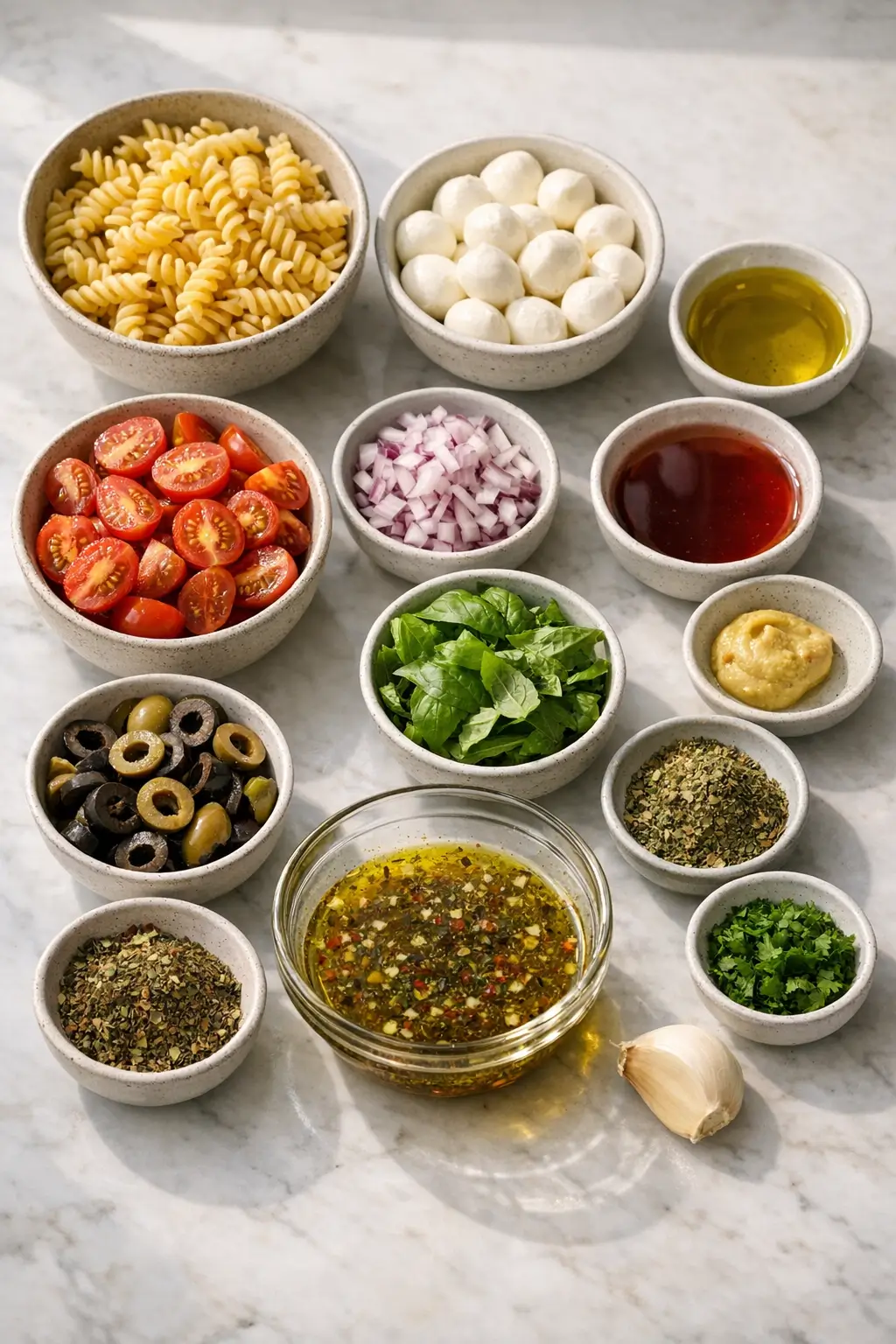
Step-by-Step Instructions for Pasta Salad with Mozzarella and Italian Herbs
-
Cook the pasta.
Bring a large pot of water (about 3–4 liters / 3–4 quarts) to a rolling boil. Add 1 tsp fine salt, then stir in the pasta. Cook according to package directions until just al dente—usually 1 minute less than the suggested time.
-
Cool the pasta properly.
Drain the pasta in a colander. For a cold salad, rinse very briefly with cool water (10–15 seconds) while gently stirring to stop the cooking and remove excess starch, then drain thoroughly.
Kitchen note: Shake the colander several times and let the pasta sit for at least 2–3 minutes. Extra water trapped in the twists and shells will dilute your vinaigrette and make the salad taste flat.
-
Make the Italian herb vinaigrette.
While the pasta drains and cools, add olive oil, red wine vinegar, minced garlic, Dijon mustard, dried Italian herb blend, dried oregano, salt, pepper, and sugar or honey (if using) to a small bowl or jar.
Whisk until emulsified, or screw on a lid and shake vigorously until the mixture thickens slightly and looks unified.
-
Season and lightly dress the pasta.
Transfer the drained, cooled pasta to a large mixing bowl. Pour about half of the vinaigrette over the pasta and toss thoroughly, making sure it’s evenly coated.
Let it sit for 10–15 minutes at room temperature so the flavors start to absorb.
-
Prep the mix-ins.
Halve the cherry or grape tomatoes. Halve or quarter the mozzarella balls if they’re larger than bite size. Tear the basil leaves by hand into bite-sized pieces and finely chop the parsley. Slice the red onion very thinly.
Kitchen note: If your red onion tastes sharp, soak the slices in cold water for 5–10 minutes, then drain and pat dry. This softens the bite while keeping the crunch.
-
Combine pasta, mozzarella, and vegetables.
Add the halved tomatoes, mozzarella, red onion, olives (if using), basil, and parsley to the bowl with the pasta.
Toss gently with a large spoon or silicone spatula, taking care not to mash the mozzarella or break up the pasta.
-
Add more dressing as needed.
Drizzle in most of the remaining vinaigrette and toss again. Taste a few pieces of pasta and a tomato; adjust with extra dressing, a pinch more salt, or black pepper to your preference.
-
Chill briefly, then finish with fresh herbs.
Cover the bowl and refrigerate for at least 20–30 minutes for the flavors to settle and the pasta to soak up some dressing.
Before serving, taste and adjust again—cold foods can seem under-seasoned. Add a few more torn basil leaves and a light drizzle of olive oil if it looks a bit dry.
Kitchen note: If you make the salad several hours ahead, reserve some basil to add right before serving. Fresh basil darkens and softens in the fridge; late addition keeps the flavor bright and the leaves vibrant.
What to Expect
The finished pasta salad should be cool, lightly glossy, and not soupy. The pasta will be tender but still have a bit of chew, and the mozzarella will feel soft and creamy against the firmer noodles.
Flavors lean toward tangy and herbal. The vinegar and mustard give the dressing a bright edge that balances the richness of the cheese, while dried Italian herbs and fresh basil/parsley add a mix of savory, slightly floral notes.
You may notice small differences depending on your ingredients and tools. A thicker, ridged pasta like fusilli will hold more dressing than smooth shells, and whole-wheat pasta tends to taste a bit nuttier and denser. A punchy red wine vinegar or a more peppery olive oil can make the salad taste sharper; milder brands will yield a softer, rounder flavor.
Kitchen note: If the salad tastes flat after chilling, don’t reach for more herbs first. Try a tiny splash of vinegar and a pinch of salt, toss, and taste again—the brightness usually comes back quickly.
Ways to Change It Up
-
Vegetarian to fully plant-based (vegan option).
To make the salad vegan, swap the mozzarella for 200 g (7 oz) firm tofu, pressed and cut into small cubes, or a plant-based mozzarella-style cheese that holds its shape. Increase the salt slightly and add 1–2 Tbsp nutritional yeast to the dressing for extra savory depth.
The texture will be a bit firmer and less creamy, but the herbs, tomatoes, and vinaigrette keep the salad flavorful.
-
Spicier version for heat-lovers.
Add 1/2–1 tsp red pepper flakes to the vinaigrette and a finely chopped small fresh chili (such as red Fresno or jalapeño) if you want more kick. You can also fold in 2–3 Tbsp chopped pepperoncini or pickled hot cherry peppers for a tangy, spicy note.
This does shift the salad toward a more assertive flavor profile, so keep the mozzarella amount the same to balance the heat.
-
Milder, kid-friendly bowl.
Skip the raw onion and olives if they’re deal-breakers. Use a slightly sweeter vinegar such as balsamic and include the sugar or honey in the dressing. Reduce the dried Italian herbs to 1/2 tsp and lean more on fresh basil.
The result is softer and a bit sweeter, which tends to work better for cautious eaters or very young kids.
-
Faster, simplified version.
Use bottled Italian dressing instead of mixing your own vinaigrette. Choose a brand you already like and start with 80 ml (1/3 cup), adding more if needed. Keep the salad to pasta, tomatoes, mozzarella, and basil.
This cuts prep down to the time it takes to cook and cool the pasta but gives you less control over salt and acidity, so season carefully at the end.
Serving and Storage
This pasta salad is most often served chilled or at cool room temperature. It works well alongside grilled chicken, sausages, or fish, and sits comfortably on a buffet table for picnics, potlucks, or cookouts.
For a complete lunch, pile it on a bed of arugula or mixed greens and add a few extra tomato halves. Crusty bread, focaccia, or garlic bread also make good partners, especially if you like to mop up any dressing at the bottom of the bowl.
Store leftovers in an airtight container in the refrigerator for up to 2 days. The pasta will continue to absorb dressing, so expect it to feel slightly softer on day two.
Before serving leftovers, let the salad stand at room temperature for 15–20 minutes to take off the chill, then stir in a small drizzle of olive oil and, if needed, a splash of vinegar to refresh the flavor.
Kitchen note: Because this salad contains fresh mozzarella, avoid leaving it at room temperature for more than 2 hours (or 1 hour if it’s very hot outside). Return any unused portion to the fridge promptly.
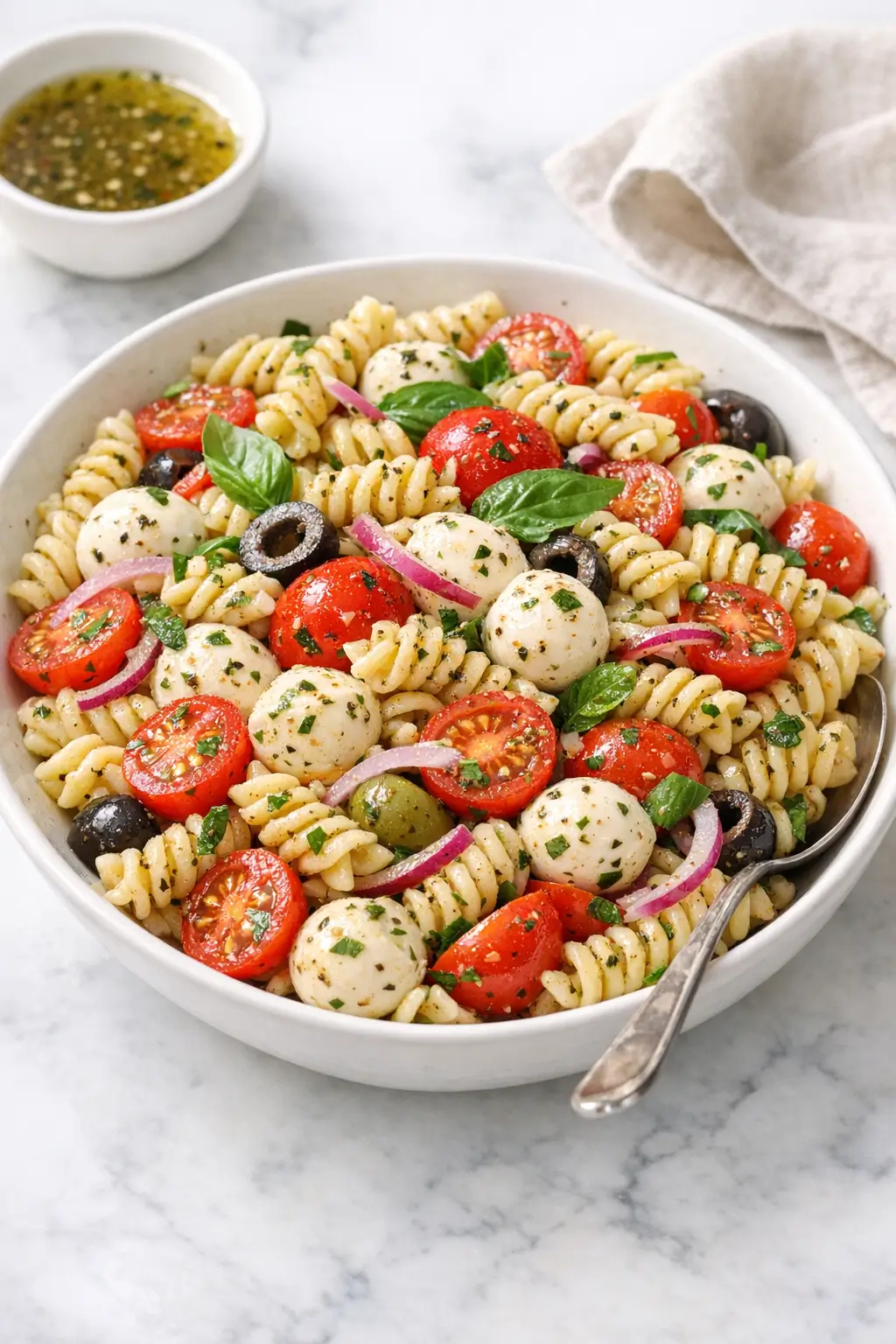
Cultural Context
Cold pasta salads like this one borrow flavors from the Italian caprese combination of tomatoes, fresh mozzarella, and basil. The classic salad, often associated with the island of Capri, is typically a simple plate of sliced tomatoes, mozzarella, basil, olive oil, and salt.
Over time, those same ingredients have been adapted into sandwiches, skewers, and pasta dishes. Pasta salads using caprese flavors are widely served at picnics and barbecues in many countries, especially in warmer months.
For more background on the original caprese salad, you can read about it in this overview from the Italian culinary company Pasta Evangelists: history and notes on Caprese salad. A concise explanation of the dish’s basic components and its connection to Italian colors appears in this encyclopedia entry: Caprese salad article.
Common Questions and Troubleshooting
My pasta salad tastes bland. How can I fix it?
Cold dishes need a bit more seasoning than warm ones. First, add a small pinch of salt and a splash (about 1 tsp) of vinegar, then toss and taste again. If it’s still dull, add a spoonful of dressing or a drizzle of olive oil plus a few fresh basil leaves.
The pasta absorbed all the dressing and looks dry. What now?
This is common if the salad sits in the fridge for several hours. Loosen it with 1–2 Tbsp olive oil and 1–2 tsp vinegar, toss thoroughly, and let it sit at room temperature for 10 minutes before serving. The surface should look lightly glossy again.
Can I make this pasta salad the day before?
Yes, but for the best texture, combine pasta, tomatoes, onion, and olives with the dressing the day before, then cover and chill. Add mozzarella and most of the basil within a few hours of serving. This prevents the cheese from getting rubbery and the basil from darkening too much.
What can I use instead of fresh mozzarella?
If fresh mozzarella is unavailable, use 150–175 g (5–6 oz) of a mild semi-soft cheese like provolone or a young, not-too-sharp cheddar cut into small cubes. The flavor will be different—saltier and firmer—but still works with the herbs and dressing.
Is it okay to freeze leftover pasta salad?
Freezing isn’t recommended. The texture of both the pasta and the fresh mozzarella suffers after thawing, often turning grainy and mushy. It’s better to make only what you can eat within two days.
How can I keep the mozzarella from getting rubbery?
Avoid over-chilling and don’t add mozzarella to very hot pasta. Let the pasta cool before tossing everything together, and serve the salad slightly chilled rather than icy cold. If the cheese is very cold from the fridge, let the salad sit at room temperature for 10–15 minutes before serving.
Conclusion
This pasta salad with mozzarella and Italian herbs is meant to be practical: it comes together while the pasta cooks, holds well in the fridge, and adapts easily to what you have on hand.
Use the method here as a base, then adjust the herbs, level of acidity, and mix-ins so it fits the way you actually eat during a busy week.
If you try it, consider leaving a comment with what you added or changed—extra vegetables, a different vinegar, or a spicy twist—so other home cooks can pick up ideas. Honest ratings and notes help refine the recipe for the next person making dinner in a hurry.
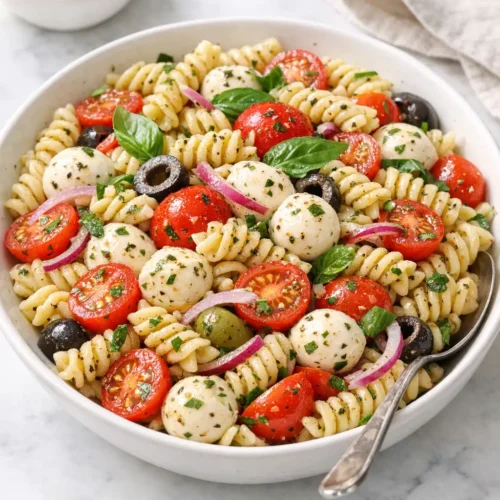
Pasta Salad with Mozzarella and Italian Herbs

Equipment
- Large pot
- Colander
- Large mixing bowl
- Small bowl or jar
- Whisk
- Knife
- Cutting board
- Spoon or silicone spatula
Ingredients
For the pasta salad
- 250 g short pasta (fusilli, rotini, or farfalle)
- 1 tsp fine sea salt for the pasta water, plus more to taste
- 160 g cherry or grape tomatoes halved
- 200 g fresh mozzarella balls (ciliegine or pearl-size) drained and patted dry; halved if large
- 20 g fresh basil leaves torn
- 5 g fresh flat-leaf parsley finely chopped
- 10–15 g red onion very thinly sliced (or use 2 Tbsp sliced green onion)
- 20 g pitted black or green olives sliced (optional)
For the Italian herb vinaigrette
- 60 ml extra-virgin olive oil
- 30 ml red wine vinegar (or white wine vinegar)
- 1 small clove garlic finely minced or grated
- 1 tsp Dijon mustard
- 1 tsp dried Italian herb blend
- 1/2 tsp dried oregano optional, for extra herbal punch
- 1/4–1/2 tsp fine sea salt to taste (for vinaigrette)
- 1/4 tsp freshly ground black pepper
- 1/4 tsp sugar or honey optional
Instructions
- Cook the pasta. Bring a large pot of water (about 3–4 liters / 3–4 quarts) to a rolling boil. Add 1 tsp fine salt, then stir in the pasta. Cook according to package directions until just al dente—usually 1 minute less than the suggested time.
- Cool the pasta properly. Drain the pasta in a colander. For a cold salad, rinse very briefly with cool water (10–15 seconds) while gently stirring to stop the cooking and remove excess starch, then drain thoroughly. Shake the colander several times and let the pasta sit for at least 2–3 minutes so excess water doesn’t dilute the vinaigrette.
- Make the Italian herb vinaigrette. While the pasta drains and cools, add olive oil, red wine vinegar, minced garlic, Dijon mustard, dried Italian herb blend, dried oregano, salt, pepper, and sugar or honey (if using) to a small bowl or jar. Whisk until emulsified, or cover and shake until slightly thickened and unified.
- Season and lightly dress the pasta. Transfer the drained, cooled pasta to a large mixing bowl. Pour about half of the vinaigrette over the pasta and toss thoroughly until evenly coated. Let it sit for 10–15 minutes at room temperature so the flavors start to absorb.
- Prep the mix-ins. Halve the cherry/grape tomatoes. Halve or quarter the mozzarella balls if larger than bite size. Tear the basil into bite-sized pieces and finely chop the parsley. Slice the red onion very thinly (soak in cold water 5–10 minutes, then drain and pat dry, if it tastes very sharp).
- Combine pasta, mozzarella, and vegetables. Add tomatoes, mozzarella, red onion, olives (if using), basil, and parsley to the bowl with the pasta. Toss gently with a large spoon or silicone spatula so the mozzarella stays intact.
- Add more dressing as needed. Drizzle in most of the remaining vinaigrette and toss again. Taste and adjust with extra dressing, a pinch more salt, and/or black pepper.
- Chill briefly, then finish with fresh herbs. Cover and refrigerate for at least 20–30 minutes. Before serving, taste and adjust again (cold foods can seem under-seasoned). Add a few more torn basil leaves and a light drizzle of olive oil if it looks dry.



Leave a Reply