
Protein pancakes with banana and oats are my weekday truce between “something wholesome” and “everyone just wants pancakes.” These are soft, a little custardy in the middle, and actually filling thanks to oats, egg whites, and a bit of Greek yogurt. If you’ve ever tried the classic banana-egg two-ingredient pancakes and found them flimsy or too eggy, this version lands in a much nicer place.
If your morning is chaos (kids asking for snacks while you’re still making breakfast), blend the batter the night before and keep the jug in the fridge; you’ll just pour and cook. I first put these together on a Sunday when I’d run out of flour, and honestly I never missed it.
Ingredients
Makes 8–10 small pancakes (2–3 servings)
Dry ingredients
- 70 g (¾ cup) rolled oats – base of the batter; use quick oats if that’s what you have
- 20–30 g (¼ cup) vanilla whey or plant protein powder – bumps the protein; plain or unflavored works, just add extra sweetener and a pinch more vanilla
- ½ tsp baking powder – helps the pancakes puff a bit
- ¼ tsp fine salt – rounds out the sweetness
- ½ tsp ground cinnamon – optional, but very good with banana
Wet ingredients
- 1 large very ripe banana (about 120 g peeled) – the more speckled, the sweeter and softer the pancakes
- 2 large egg whites – structure and protein; you can use 1 whole egg + 1 white for a richer version
- 90 g (⅓ cup) plain Greek yogurt – adds protein and tenderness; thicker 2% or full-fat works best; nonfat is fine but a little less silky
- 60–90 ml (¼–⅓ cup) milk of choice – dairy or unsweetened plant milk; you’ll adjust to get a pourable batter
- 1–2 tsp neutral oil or melted butter – for moisture in the batter
- 1–2 tsp maple syrup or honey, to taste – optional, depending on how sweet your banana is
- 1 tsp vanilla extract – flavor
For cooking & serving
- 1–2 tsp butter or oil for the pan
- Toppings: extra banana slices, berries, Greek yogurt, nut butter, or a drizzle of maple syrup
Step-by-Step Protein Pancakes with Banana and Oats
-
Blend the dry ingredients.
Add the oats, protein powder, baking powder, salt, and cinnamon to a blender. Blend until the oats turn into a fairly fine flour. It doesn’t need to be powder-smooth, but you don’t want big flakes.[1] -
Add the wet ingredients.
Break the banana into chunks and add it to the blender with the egg whites, Greek yogurt, ¼ cup milk, oil or melted butter, maple syrup or honey (if using), and vanilla. -
Blend to a thick batter.
Blend until completely smooth, stopping once or twice to scrape down the sides. The batter should be thicker than standard pancake batter but still pourable. If it looks like paste, blend in 1 tablespoon of milk at a time. -
Rest the batter briefly.
Let the batter sit in the blender for 5–10 minutes while you heat the pan. The oats hydrate and the baking powder wakes up. If you skip this, the pancakes still work, just a little flatter. -
Heat the pan properly.
Set a nonstick skillet or well-seasoned griddle over medium heat. Once hot, brush lightly with butter or oil. You’re aiming for “hot enough that a drop of batter sizzles, not so hot it smokes.” -
Portion small pancakes.
Pour about 2 tablespoons of batter per pancake (roughly 7–8 cm / 3 inches wide). Smaller pancakes flip easier, especially with high-protein batter that’s a bit more delicate than flour pancakes. -
Cook the first side slowly.
Cook 2–3 minutes, until the edges look dry and you see small bubbles on top. Gently lift an edge; the underside should be golden, not dark brown. If they’re browning before they set on top, turn the heat down. -
Flip carefully.
Slide a thin spatula fully underneath each pancake and flip in one confident motion. Don’t fuss with them after flipping; that deflates them. -
Finish cooking.
Cook the second side for 1–2 minutes. They’re done when the centers spring back lightly if pressed and the sides look set, not shiny. -
Adjust the batter as you go.
If the batter thickens while it sits (it usually does), stir in a splash of milk to loosen it. Batter that’s too thick gives you gummy centers. -
Keep them warm.
Transfer cooked pancakes to a plate or a low oven (90–100°C / 200°F) while you finish the rest. Don’t stack them too tightly in the oven or steam will soften the edges. -
Serve with protein-friendly toppings.
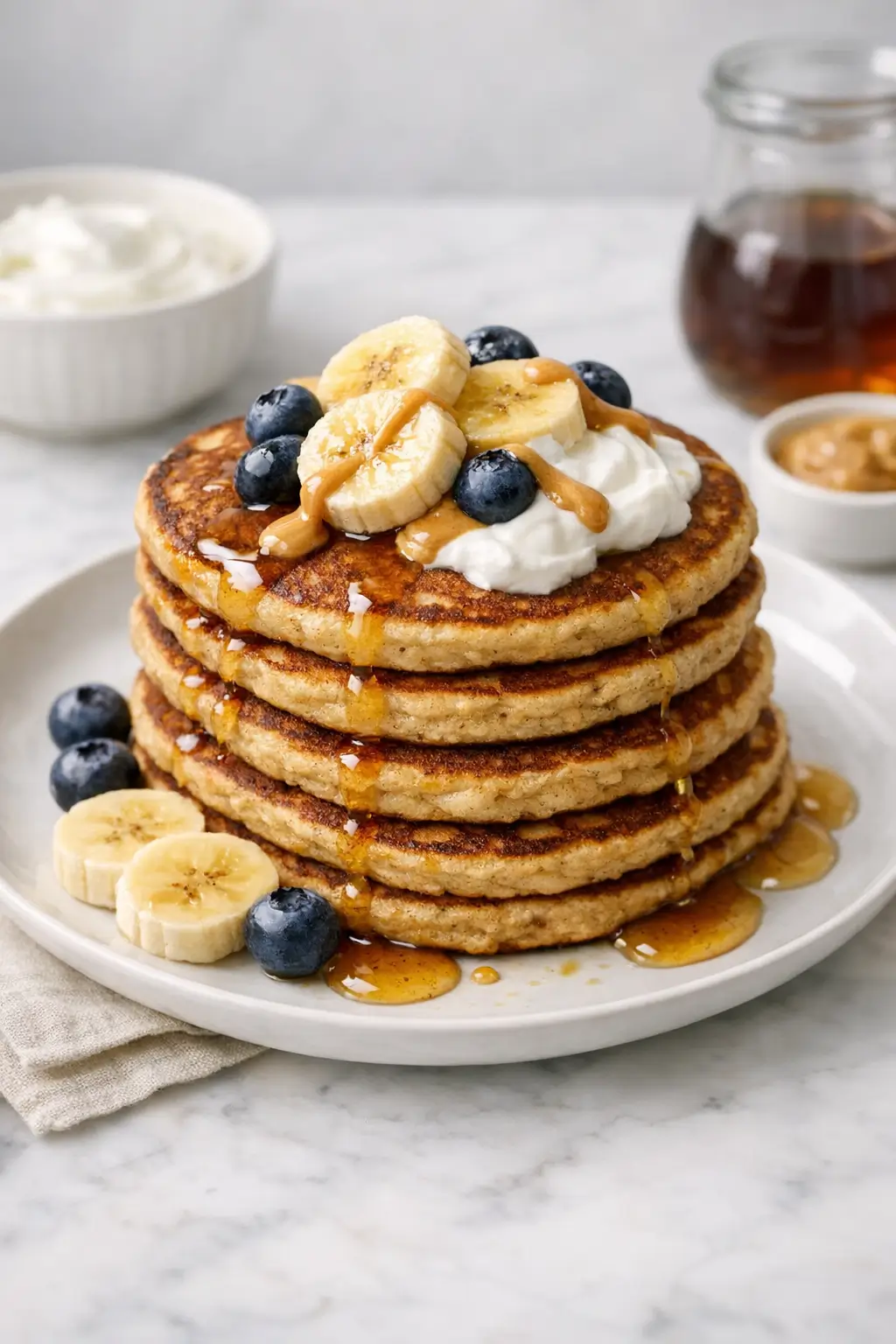
Plate the pancakes and top with extra Greek yogurt or cottage cheese, banana slices, berries, or a small drizzle of maple syrup. A spoonful of peanut or almond butter makes these into a serious post-workout breakfast.
One thing — resist the urge to crank the heat to “get them done faster.” High-protein batters scorch on the outside while staying wet in the middle.
What to Expect
These protein pancakes stay on the softer side, closer to a hearty, custardy flapjack than a super-fluffy diner stack.
You’ll taste banana first, with a little nuttiness from the oats and a mild vanilla-cinnamon thing in the background. They’re lightly sweet on their own, so toppings matter.
If you use plant protein powder, they can be a bit drier; that’s when a generous spoon of yogurt or fruit on top saves the day.
Ways to Change It Up
If you want them dairy-free, use a pea or soy-based protein powder, swap the Greek yogurt for a thick plant yogurt, and use plant milk. Expect them to be slightly less tender, so keep them small and avoid overcooking.
Sometimes I stir a small handful of frozen blueberries into the batter right before cooking. Don’t blend them in; just fold them through so you get little pockets of jammy fruit.
You can lean into the “dessert for breakfast” thing by sprinkling a few dark chocolate chips on each pancake right after you pour it into the pan. It’s not health food at that point, but it’s very good.
Serving and Storage
I like to serve these with extra Greek yogurt, banana slices, and a drizzle of warm peanut butter thinned with a splash of milk. Fresh berries or a spoon of quick berry compote also work really well.
For a fuller breakfast plate, add scrambled eggs or a couple of turkey sausage links if you’re really chasing protein.
Leftover pancakes keep in an airtight container in the fridge for up to 3 days.
To reheat, pop them in the toaster on a low setting or warm them in a dry skillet over low heat for a couple of minutes per side. Microwaving works in a pinch, but they’ll turn softer and a bit rubbery.
You can also freeze them: cool completely, freeze in a single layer, then stack with parchment between layers in a bag for up to 2 months. Toast straight from frozen; no need to thaw.
Common Questions
Can I skip the protein powder?
Yes. Replace the protein powder with an extra ¼ cup (about 25 g) of oats. The pancakes will be a touch less “high-protein” but still a great banana-oat breakfast, and the texture leans slightly more oatmeal-y.
Can I use whole eggs instead of just egg whites?
Absolutely. Use 1 whole egg plus 1 egg white instead of 2 whites. The pancakes will be a bit richer and slightly softer, and the batter may brown faster, so keep an eye on the heat.
Why are my pancakes gummy in the middle?
That’s usually from a batter that’s too thick or a pan that’s too hot. Thin the batter with a splash of milk and cook a test pancake over slightly lower heat. Also, don’t make them huge; these do best as small rounds.
Can I make the batter the night before?
Yes, with one adjustment: blend everything except the baking powder, refrigerate, then stir in the baking powder right before cooking. The oats thicken overnight, so be ready to add an extra splash of milk.
Is this the same as traditional pancakes?
Not really. Classic wheat-flour pancakes have a spongier, airier crumb thanks to gluten and usually more sugar and fat. These are closer to a cross between oatmeal and a pancake — different, but really satisfying in their own way. If you’re curious about how many styles of pancakes are out there globally, this overview from
different pancake traditions around the world is a fun rabbit hole.
I’d keep this as a weekday recipe you can tweak in your sleep. Once you’ve made it a couple of times, you’ll get a feel for the batter thickness that gives you the texture you like. If you try a version with chocolate chips or nuts folded in, tell me what you added and how it went — I’m always stealing good topping ideas.

Protein Pancakes With Banana and Oats, Fast

Equipment
- Blender
- Nonstick skillet or griddle
- Thin spatula
Ingredients
Dry ingredients
- 70 g rolled oats about 3/4 cup; quick oats work too
- 20–30 g vanilla whey or plant protein powder about 1/4 cup; plain/unflavored works (add extra sweetener and a pinch more vanilla)
- 1/2 tsp baking powder
- 1/4 tsp fine salt
- 1/2 tsp ground cinnamon optional
Wet ingredients
- 1 large very ripe banana about 120 g peeled
- 2 large egg whites or use 1 whole egg + 1 egg white for a richer version
- 90 g plain Greek yogurt about 1/3 cup
- 60–90 ml milk of choice about 1/4–1/3 cup; adjust for a pourable batter
- 1–2 tsp neutral oil or melted butter for moisture in the batter
- 1–2 tsp maple syrup or honey optional, to taste
- 1 tsp vanilla extract
For cooking & serving
- 1–2 tsp butter or oil for the pan
- toppings (banana slices, berries, Greek yogurt, nut butter, and/or maple syrup) optional
Instructions
- Blend the dry ingredients. Add the oats, protein powder, baking powder, salt, and cinnamon to a blender. Blend until the oats turn into a fairly fine flour (no big flakes).
- Add the wet ingredients. Break the banana into chunks and add it to the blender with the egg whites, Greek yogurt, 1/4 cup milk, oil or melted butter, maple syrup or honey (if using), and vanilla.
- Blend to a thick batter. Blend until completely smooth, stopping to scrape down the sides. Batter should be thicker than standard pancake batter but still pourable; if too thick, blend in milk 1 tablespoon at a time.
- Rest the batter briefly. Let the batter sit for 5–10 minutes while you heat the pan.
- Heat the pan properly. Set a nonstick skillet or well-seasoned griddle over medium heat. Once hot, brush lightly with butter or oil (a drop of batter should sizzle, not smoke).
- Portion small pancakes. Pour about 2 tablespoons of batter per pancake (about 7–8 cm / 3 inches wide).
- Cook the first side slowly. Cook 2–3 minutes, until edges look dry and small bubbles appear. If browning before the top sets, lower the heat.
- Flip carefully. Slide a thin spatula fully underneath and flip in one motion. Don’t press or fuss after flipping.
- Finish cooking. Cook the second side 1–2 minutes, until centers spring back lightly and sides look set (not shiny).
- Adjust the batter as you go. If the batter thickens while sitting, stir in a splash of milk to loosen.
- Keep them warm. Transfer cooked pancakes to a plate or a low oven (90–100°C / 200°F) while finishing the batch.
- Serve. Top with extra Greek yogurt or cottage cheese, banana slices, berries, and/or a small drizzle of maple syrup; add nut butter if desired.



Leave a Reply