
Pull-apart monkey bread is the sticky, cinnamon-coated pile of dough you eat with your fingers, one gooey piece at a time. This version starts with a can of buttermilk biscuits, so there’s no kneading, no rising, and no waiting around before breakfast.
I first made it for a sleepover with my nephew. He ate a third of the pan before anyone else got a fork.
If the kids are up early and you’re still waking up, give them the quartered biscuits and the bag of cinnamon sugar. Shaking is their job. All you have to do is pour the butter and get the pan in the oven.
Ingredients
This is a half batch sized for 2 to 4 people. The full two-can version needs a 10-inch bundt pan and feeds a crowd. Halved, it fits a 9×5-inch (23×13 cm) loaf pan or a 6-cup bundt pan.
For the coating
- 1 can (16.3 oz / 462 g) refrigerated buttermilk biscuits, usually 8 large biscuits
- 6 tablespoons (75 g) granulated sugar
- ¾ teaspoon ground cinnamon
For the brown sugar glaze
- 6 tablespoons (85 g) butter, melted
- ½ cup (100 g) light brown sugar, firmly packed
- A pinch of kosher salt. It keeps the glaze from tasting flat and overly sweet, so don’t leave it out.
- Cooking spray or a little soft butter for the pan
Margarine works in place of butter if that’s what you have. Salted or unsalted butter both work; if yours is salted, use a smaller pinch of salt. Dark brown sugar works too, and it gives you a deeper, more molasses-heavy caramel.
On the biscuits: get the big flaky “grands”-style ones if you can. Small biscuits are fine, but you’ll only cut each one in half instead of quarters, and the pieces bake a little faster.
Step-by-Step Pull-Apart Monkey Bread
-
Heat the oven and prep the pan. Preheat to 350°F (180°C). Grease your loaf pan or small bundt pan well with cooking spray, getting into every corner and up the sides. Any spot you miss is where the caramel will glue the bread to the pan.
-
Make the cinnamon sugar. Put the granulated sugar and cinnamon in a gallon-size resealable bag, seal it, and shake to combine.
-
Quarter the biscuits. Open the can, separate the biscuits, and cut each one into 4 pieces with kitchen scissors or a knife. Scissors are faster and don’t squash the layers.
-
Coat the pieces. Drop the biscuit pieces into the bag, about 8 to 10 at a time, seal it, and shake until they’re fully coated. If you dump them all in together, they stick to each other and come out bald in patches.
-
Layer them in the pan. Scatter the coated pieces loosely into the pan. Don’t press them down. They need some space to puff up, and the glaze needs gaps to run through. If there’s cinnamon sugar left in the bag, sprinkle it over the top.
-
Make the glaze. Melt the butter in a small saucepan or in the microwave. Stir in the brown sugar and salt until it’s mostly smooth. It’ll look slightly grainy, and that’s fine, because the sugar finishes melting in the oven.
-
Pour and bake. Pour the glaze evenly over the biscuit pieces, aiming for the gaps as well as the tops. Bake for about 28 to 32 minutes, until the top is deep golden brown and the pieces in the center are no longer doughy.
Check the middle, not the top. A small loaf pan browns faster on top than a big bundt does, so the outside can look done while the center pieces are still raw. Start checking at 25 minutes. Pull a piece from the middle with a fork, and if it’s gummy inside, give it another 4 to 5 minutes. If the top is getting too dark before the middle is cooked, lay a loose sheet of foil over it.
- Rest, then flip. Let the pan sit for 10 minutes. Then put a plate over the top and flip it over in one confident motion. Scrape any caramel left in the pan onto the bread.
Heads up: that 10-minute rest is the window you need to hit. If you flip it right away, the caramel is too thin and runs everywhere. If you wait 30 minutes, it hardens and the bread sticks. In the second case, put the pan back in a warm oven for a few minutes to loosen it up.
What to Expect
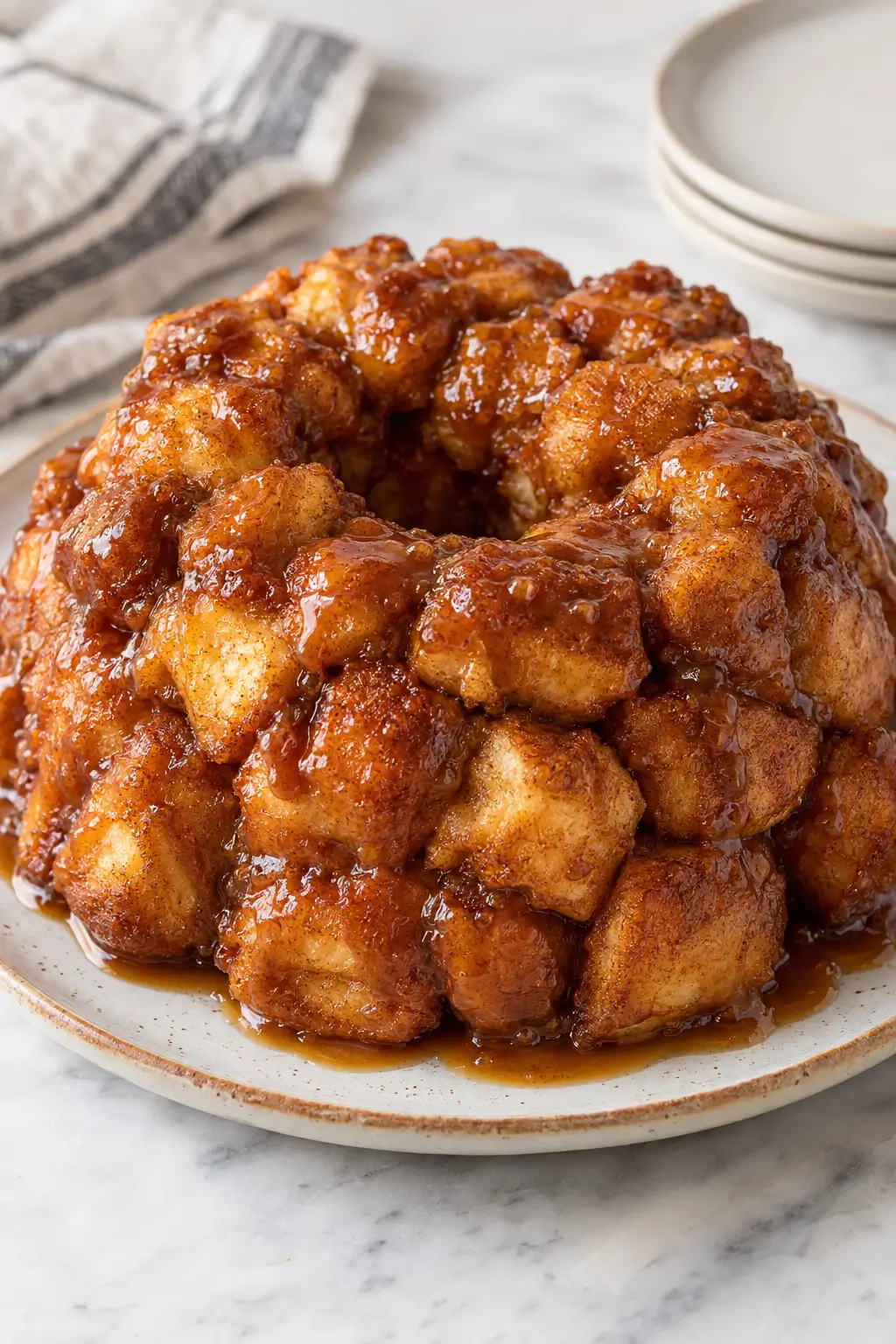
It isn’t going to look like a bakery bundt. Expect a lumpy, glossy mound with a few pieces that are darker and crunchier than others, and a puddle of caramel on the plate. The outer pieces get chewy and sticky, and the inner ones stay soft and bready.
It’s sweet, but the salt and the slight tang from the buttermilk biscuits take the edge off. A glass or ceramic pan bakes a bit slower than metal, so plan on the longer end of the time range.
Ways to Change It Up
The biggest change you can make is ditching the can and making a yeasted dough from scratch. Mix 2½ cups (315 g) flour, 1½ teaspoons instant yeast, 2 tablespoons sugar, ½ teaspoon kosher salt, 1 egg, 40 g melted and cooled butter, ¾ cup room-temperature milk, and ½ teaspoon vanilla. Knead it in a stand mixer on medium for at least 8 minutes, until it’s smooth and silky, then let it rise for 1 to 2 hours, until doubled. Roll it out about ¼ inch thick, cut it into small pieces, and roll them into balls. Dip each ball in melted butter, roll it in the cinnamon sugar, layer them in the pan, and let them rest for 20 minutes. Pour the brown sugar glaze over and bake at 350°F for 30 to 40 minutes. It’s softer and more pillowy than the biscuit version, and it’s worth it on a slow weekend. On a school morning, it isn’t.
Add about ½ teaspoon ground cardamom to the cinnamon sugar. Some from-scratch versions add it to the dough, and it makes the whole thing taste warmer and a little less like a candy bar.
- Dairy-free: Use a plant-based butter stick for the glaze, and read the label on your biscuits. Some canned biscuit doughs contain milk and some don’t, so check before you buy. The glaze sets a little softer with plant butter, but it still works.
Serving and Storage
Serve it warm, straight from the plate, with forks for anyone who’s squeamish about sticky fingers. For brunch, it goes well with a make-ahead French toast casserole if you’re feeding more people, or with something fresh like a fruit platter with honey lime dip or berry yogurt parfaits to balance out the sugar. Coffee is pretty much mandatory. A batch of cold brew concentrate made the night before, or a full iced coffee bar with vanilla sweet cream, works perfectly.
Leftovers keep covered at room temperature for 1 day, or in the fridge for up to 3 days. Microwave individual pieces for 10 to 15 seconds, or warm the whole thing under foil in a 300°F oven for about 10 minutes. Reheated monkey bread is good, but it’s never as soft as it was on day one. The caramel firms up and the edges get chewier.
Common Questions
Can I put it together the night before?
I wouldn’t with canned biscuits. The dough starts to proof and slump in the fridge once it’s out of the can, and the sugar pulls moisture out of it. Do the shaking and layering in the morning, since it only takes 10 minutes. If you want something you can prep the night before, make the from-scratch dough and let it do its second rise slowly in the fridge.
Why is the bottom (well, the top after flipping) soggy and raw?
It’s almost always underbaking, sometimes combined with packing the pieces in too tightly. Spread them loosely and use the fork test on a center piece. A thin metal pan helps too.
Can I double this back to the full recipe?
Yes. Use two cans and double everything else, then bake in a well-greased 10-inch bundt pan for 28 to 32 minutes.
Can I use other canned dough?
People use crescent or cinnamon roll dough, but I’ve only tested this with buttermilk biscuits, and that’s the dough the method is built around. If you’re after a different fried-dough-and-sugar kind of morning, try these baked apple cider donut holes instead.
One last thing I learned the hard way: put the plate on a sheet pan before you flip. The caramel drips over the edge more often than you’d expect. If you try the cardamom version, tell me whether your kids noticed.
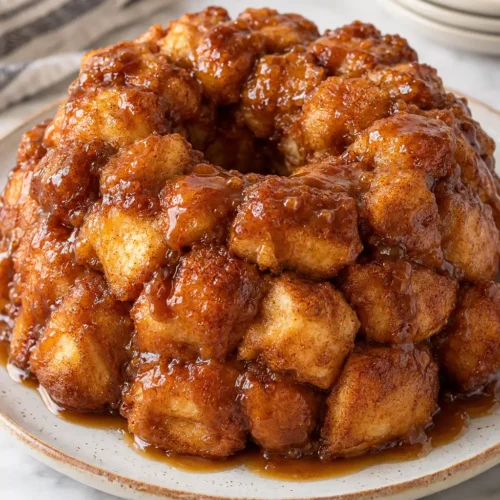
Pull-Apart Monkey Bread from Canned Biscuits for Easy Mornings

Equipment
- 9×5-inch loaf pan
- 6-cup bundt pan
- Gallon-size resealable bag
- Small saucepan
- Kitchen scissors
- Sheet pan
- Fork
Ingredients
For the coating
- 1 can (16.3 oz / 462 g) refrigerated buttermilk biscuits usually 8 large biscuits
- 6 tablespoons (75 g) granulated sugar
- 3/4 teaspoon ground cinnamon
For the brown sugar glaze
- 6 tablespoons (85 g) butter melted
- 1/2 cup (100 g) light brown sugar firmly packed
- 1 pinch kosher salt keeps the glaze from tasting flat
- Cooking spray or a little soft butter for the pan
Instructions
- Heat the oven and prep the pan. Preheat to 350°F (180°C). Grease your loaf pan or small bundt pan well with cooking spray, getting into every corner and up the sides. Any spot you miss is where the caramel will glue the bread to the pan.
- Make the cinnamon sugar. Put the granulated sugar and cinnamon in a gallon-size resealable bag, seal it, and shake to combine.
- Quarter the biscuits. Open the can, separate the biscuits, and cut each one into 4 pieces with kitchen scissors or a knife. Scissors are faster and don’t squash the layers.
- Coat the pieces. Drop the biscuit pieces into the bag, about 8 to 10 at a time, seal it, and shake until they’re fully coated. If you dump them all in together, they stick to each other and come out bald in patches.
- Layer them in the pan. Scatter the coated pieces loosely into the pan. Don’t press them down. They need some space to puff up, and the glaze needs gaps to run through. If there’s cinnamon sugar left in the bag, sprinkle it over the top.
- Make the glaze. Melt the butter in a small saucepan or in the microwave. Stir in the brown sugar and salt until it’s mostly smooth. It’ll look slightly grainy, and that’s fine, because the sugar finishes melting in the oven.
- Pour and bake. Pour the glaze evenly over the biscuit pieces, aiming for the gaps as well as the tops. Bake for about 28 to 32 minutes, until the top is deep golden brown and the pieces in the center are no longer doughy. Check the middle, not the top. Start checking at 25 minutes. Pull a piece from the middle with a fork, and if it’s gummy inside, give it another 4 to 5 minutes. If the top is getting too dark before the middle is cooked, lay a loose sheet of foil over it.
- Rest, then flip. Let the pan sit for 10 minutes. Then put a plate over the top and flip it over in one confident motion. Scrape any caramel left in the pan onto the bread. The 10-minute rest is the window you need to hit. If you flip right away, the caramel is too thin and runs everywhere. If you wait 30 minutes, it hardens and the bread sticks. In that case, put the pan back in a warm oven for a few minutes to loosen it up.



Leave a Reply