
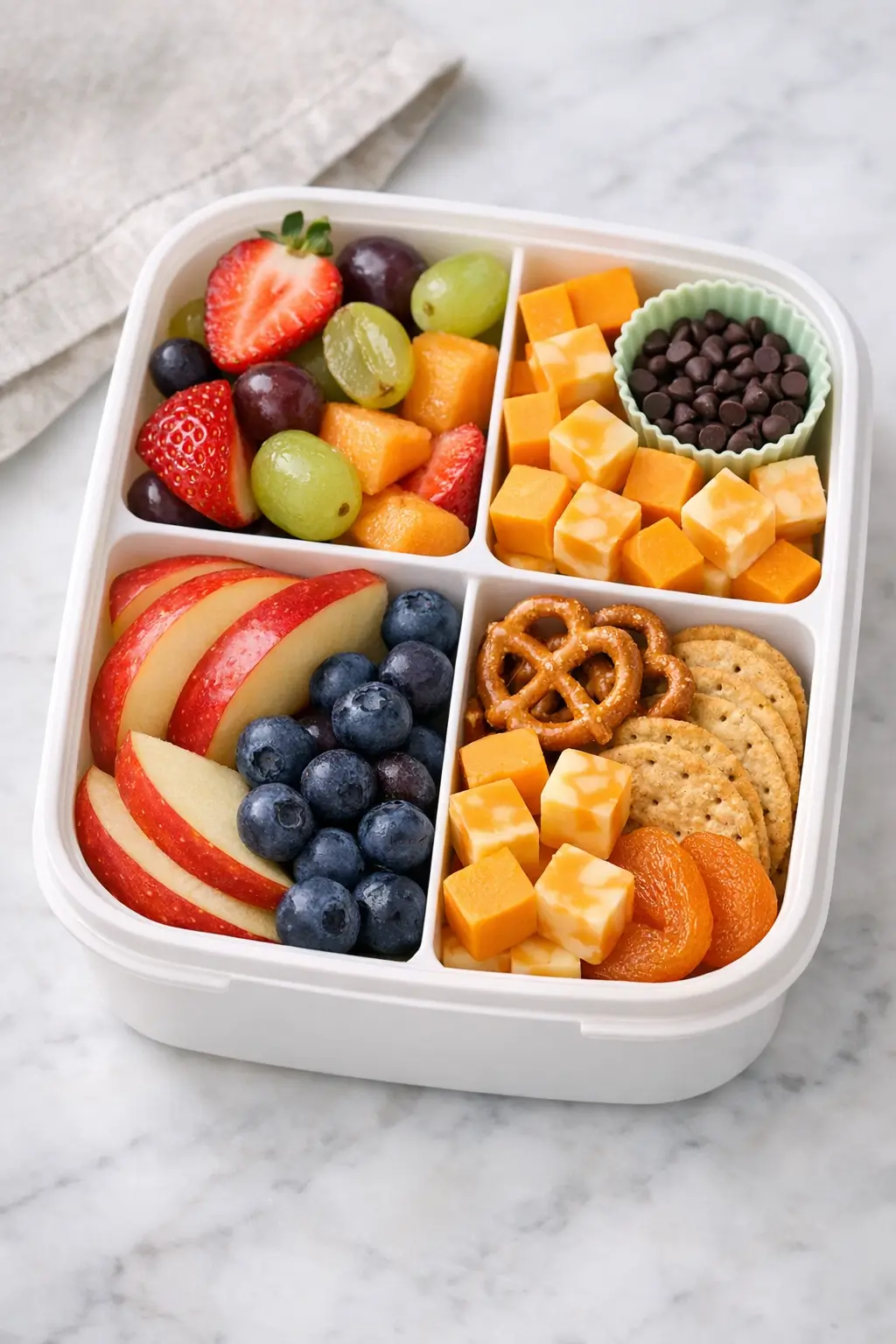
If you’re stuck in the “same three snacks on repeat” rut, these snack box ideas for kids with fruit and cheese are a nice reset. You get a mix of color, protein, and natural sweetness, and kids get some control over what goes in their box. I started doing these during a summer of endless “I’m hungry” and never really stopped.
If you’ve got younger kids or a chaotic morning, prep the fruit and cheese the night before and keep a simple formula in mind: 1–2 fruits, 1–2 cheeses, something crunchy, and a tiny fun extra. It doesn’t have to be Pinterest-pretty to be useful.
Ingredients
Below is a flexible base for 3–4 snack boxes (adjust as needed). You don’t have to use everything every time; think of it as a mix-and-match list.
Fruit (pick 2–3 per box)
- 1 medium apple (about 180 g), sliced or diced – crisp, familiar, cheap
- 1 cup (150 g) grapes, halved for younger kids
- 1 cup (150 g) berries (strawberries, blueberries, raspberries)
- 1 cup (160 g) melon (cantaloupe or honeydew), in bite-size cubes
- 1 cup (165 g) pineapple, chunks
- Option: 2 small mandarins, peeled, segments separated
Cheese (pick 1–2 per box)
- 120 g (4 oz) mild cheddar, cut in small cubes or sticks
- 120 g (4 oz) Colby Jack or Monterey Jack, cubed
- 4 string cheese sticks (about 28 g each), cut into bite-size pieces
- 120 g (4 oz) mozzarella, cut into small cubes or cheese “stars” with cutters if you’re feeling extra
- You can use reduced-fat cheese if you want, but kids are more likely to eat full-fat and it keeps them full longer.
Crunchy component (pick 1–2 per box)
- 1–1½ cups (40–60 g) whole-grain crackers
- 1–1½ cups (40–60 g) pretzels or mini pretzel twists
- 1–1½ cups (30–40 g) plain popcorn, air-popped or lightly salted
- ¾ cup (30 g) dry cereal (like plain Cheerios or similar)
Veggies (optional but useful)
- 1 cup (120 g) cucumber slices
- 1 cup (120 g) carrot sticks or thin coins (steam briefly for toddlers)
- 1 cup (80 g) sugar snap peas
- Hummus or ranch for dipping works, but skip if your kid is likely to wear it instead of eat it.
Fun extras (add 1 small thing if you want)
- 2–3 dried apricots or dates per box
- 1 tbsp (10 g) mini chocolate chips or a small square of dark chocolate
- 1 tbsp (10 g) trail mix (nut-free if needed for school)
For more general guidance on balancing kids’ snack boxes with fruit, protein, and grains, there’s a helpful framework in this extension handout: Montana State University’s snack box ideas.
Step-by-Step Snack Box Ideas for Kids with Fruit and Cheese
-
Pick the right containers.
Use small bento-style boxes or any lidded containers you already have. Separate wet fruit from crackers so nothing goes soggy. Silicone muffin cups are great dividers if you don’t want liquid from fruit creeping into everything else. -
Prep the fruit so it actually gets eaten.
Rinse and dry berries and grapes well. Slice apples and pears just before packing if you can; if you need to prep ahead, toss slices in a bowl with 1–2 tsp lemon juice mixed with 2–3 tbsp water to slow browning. (They’ll still dull slightly by day two, but they’ll taste fine.) -
Cut cheese into kid-friendly shapes.
Cut blocks of cheddar or Jack into small cubes or thin sticks. For kids who like “fun” shapes, slice cheese about 0.5 cm (¼ inch) thick and press small cookie cutters into it. One thing — skip super soft cheeses like brie for lunchboxes; they smear and get weird in warm backpacks. -
Build a basic “everyday” snack box.
In each box, add: a small handful of cheese cubes (about 30 g / 1 oz), a small handful of grapes or berries, a few apple slices, and a serving of whole-grain crackers. If you’ve got room, tuck in a few cucumber slices or carrot sticks on the side. -
Make simple fruit-and-cheese skewers (optional, but fun).
If your child is old enough for skewers and your school allows them, thread chunks of firm fruit (grapes, melon, strawberries) and cheese cubes onto short wooden skewers or blunt cocktail picks. Aim for 4–5 pieces per skewer. Pack 2–3 per box. This idea is everywhere for a reason — it’s quick and kids genuinely like food on sticks. -
Assemble a “mini snack board” in a box.
For kids who like to graze, do smaller portions of more things: 2–3 pieces each of two fruits, a few cubes each of two cheeses, a small handful of crackers, and one fun extra like a couple of dried apricots. Pack them each in separate little sections so they can mix and match bites. -
Keep wet and dry separate.
Heads up: even “dry” fruits like grapes release moisture over time. Keep crackers, pretzels, and popcorn in their own compartment or even a small bag tucked in the same lunchbox. If your container has only one section, put fruit in a reusable silicone bag or small lidded cup inside. -
Chill safely.
Pack the boxes in the fridge for at least 30 minutes before they go in a bag. Add an ice pack if they’ll sit out more than 2 hours. Cheese is pretty forgiving, but berries and cut melon taste much better when they stay cold. -
Prep-ahead rhythm that actually works.
When I tested this for the blog, the sweet spot was prepping fruit and cheese twice a week (Sunday and Wednesday) and assembling boxes the night before. Fully assembling 3–4 complete boxes on Sunday looked efficient, but by Thursday the fruit was sad and the crackers were halfway to cardboard. -
Let kids “order” from a simple menu.
On a scrap of paper or whiteboard, write three columns: fruit, cheese, crunchy. Offer 3–4 choices in each. Have your kid pick one from each column while you pack. It takes two minutes but cuts down on boxes that come home untouched.
What to Expect
These snack boxes look bright and a bit like a kid-sized cheese board, but they’re not fussy. The fruit will soften slightly by day two, berries may weep a little, and crackers won’t be showroom-crisp if packed right next to cut fruit.
Flavor-wise, you get a balance of sweet, salty, and creamy from the fruit and cheese, with a bit of crunch from crackers or pretzels. What changes most from box to box is how filling it is — more cheese and whole grains equals a longer-lasting snack.
Ways to Change It Up
If you’re packing these a lot, it helps to have a few directions you can take without reinventing the wheel every time.
-
Veg-forward box. Instead of a second fruit, double up on veggies: cucumber slices, lightly steamed carrot sticks, sugar snap peas, or cherry tomatoes for older kids. Add a small container of hummus or yogurt ranch. It’s basically a veggie tray in miniature, anchored with cheese.
-
“Dessert-y” box for Friday. I’ll sometimes lean a little sweeter at the end of the week: strawberries, a few pieces of pineapple, mild cheddar or mozzarella, whole-grain crackers, plus a tiny section of chocolate chips or a small cookie. The point is that everything still has some substance; you’re just adding one clearly defined treat.
-
Nut-free protein boost. If you can’t send nuts, you can still bump up staying power. Add extra cheese, a small container of Greek yogurt, or some roasted chickpeas alongside the fruit and crackers. It won’t taste like a “diet snack,” it just keeps kids from raiding the pantry 30 minutes later.
For a broader look at how snack-style meals have shown up in modern lunch culture (beyond the homemade stuff), there’s an interesting overview on pre-packed snack and lunch kits.
Serving and Storage
Use these as after-school snacks, part of a packed lunch, or as a “snack dinner” on nights when you’re short on energy. If you want to bulk it up into more of a meal, add rolled slices of turkey or ham, a boiled egg, or some whole-wheat pita wedges alongside the fruit and cheese.
Store assembled snack boxes in the fridge for up to 3 days if the fruit is firm (apples, grapes, melon). Berries and cut pineapple are happier at 1–2 days; after that they get mushy and start to bleed into everything else.
If crackers are inside the same sealed box with cut fruit, expect them to soften by day 2. If texture matters to your kid, pack them in a separate small container or bag and they’ll keep for 3–4 days.
There’s no reheating here, which is a relief, but do remind kids to pop any leftovers back into the fridge when they get home so you can reuse what still looks good.
Common Questions
How far ahead can I prep these snack boxes?
Realistically, 2–3 days is your window for anything with cut fruit. You can wash grapes and berries, cut cheese, and portion crackers for up to 4 days, but once apples, melon, or pineapple are cut, plan to eat them within a couple of days. If you want to prep a whole week, keep some fruit whole (like mandarins or bananas packed separately) and only cut what you need midweek.
What fruits work best for kids’ snack boxes?
Sturdier fruits are easiest: grapes (halved for little ones), berries, melon, pineapple, apple slices, and mandarins. Softer fruits like very ripe peaches or mango taste great but turn to mush if jostled all day, so I treat those as “eat today” fruit, not something I’d pack for a long school day.
What kind of cheese should I avoid?
Skip crumbly cheeses like feta or very strong blue cheeses unless your kid already loves them. They fall apart and can make the whole box smell like feet. Soft ripened cheeses (brie, camembert) also don’t travel well in warm weather and can get overly soft, which most kids are not into.
Can I make this work for a dairy-free kid?
You can. Use a dairy-free cheese your kid already likes, or skip cheese and lean on other protein: hummus, roasted chickpeas, edamame, or a boiled egg if that’s in bounds. The structure of the snack box stays the same — fruit + protein + crunch — you’re just swapping the protein piece.
How do I keep my kid from getting bored of the same snack box?
Honestly, you probably care about variety more than they do. Most kids will happily eat the same 2–3 combinations for a long time. Rotate just one element at a time (new fruit, different cracker shape, or a different cheese) instead of overhauling the whole box every day.
If you get into a good rhythm with these and tweak them for your own kid, I’d love to hear your favorite combo. Tell me if you end up doing more of the veggie-heavy version or the fruit-and-cracker style — I’m always curious what actually comes home eaten versus untouched.
Easy Snack Box Ideas for Kids with Fruit and Cheese

Equipment
- Bento-style snack boxes or lidded containers
- Silicone muffin cups (optional, as dividers)
- Knife
- Cutting board
- Small bowl (for lemon-water soak)
- Small bags or lidded cups (for crackers/fruit separation)
- Ice pack (for transport)
Ingredients
Fruit (pick 2–3 per box)
- 1 medium apple about 180 g; sliced or diced
- 1 cup grapes about 150 g; halved for younger kids
- 1 cup berries (strawberries, blueberries, raspberries) about 150 g
- 1 cup melon (cantaloupe or honeydew) about 160 g; bite-size cubes
- 1 cup pineapple about 165 g; chunks
- 2 small mandarins optional; peeled, segments separated
Cheese (pick 1–2 per box)
- 120 g mild cheddar about 4 oz; cut in small cubes or sticks
- 120 g Colby Jack or Monterey Jack about 4 oz; cubed
- 4 sticks string cheese about 28 g each; cut into bite-size pieces
- 120 g mozzarella about 4 oz; cut into small cubes or shapes
Crunchy component (pick 1–2 per box)
- 1–1½ cups whole-grain crackers about 40–60 g
- 1–1½ cups pretzels or mini pretzel twists about 40–60 g
- 1–1½ cups plain popcorn about 30–40 g; air-popped or lightly salted
- 3/4 cup dry cereal (like plain Cheerios) about 30 g
Veggies (optional)
- 1 cup cucumber slices about 120 g
- 1 cup carrot sticks or thin coins about 120 g; steam briefly for toddlers
- 1 cup sugar snap peas about 80 g
Fun extras (optional)
- 2–3 dried apricots or dates per box
- 1 tbsp mini chocolate chips about 10 g; or a small square of dark chocolate
- 1 tbsp trail mix about 10 g; nut-free if needed for school
Optional for preventing apple browning
- 1–2 tsp lemon juice mixed with water
- 2–3 tbsp water mixed with lemon juice
Instructions
- Pick the right containers: Use bento-style boxes or any lidded containers. Keep wet fruit separate from crackers to prevent sogginess; use silicone muffin cups or small containers as dividers if needed.
- Prep fruit: Rinse and dry berries and grapes well. Slice apples/pears just before packing, or toss slices in lemon-water (1–2 tsp lemon juice mixed with 2–3 tbsp water) to slow browning if prepping ahead.
- Cut cheese: Cube or slice cheese into small, kid-friendly pieces (cubes or thin sticks). For fun shapes, slice about 0.5 cm (1/4 inch) thick and press with small cookie cutters; avoid very soft cheeses for lunchboxes.
- Build an everyday snack box: In each box, add about 30 g (1 oz) cheese, a small handful of grapes or berries, a few apple slices, and a serving of whole-grain crackers. Add cucumber slices or carrot sticks if desired.
- Optional fruit-and-cheese skewers: If age-appropriate and allowed, thread firm fruit and cheese cubes onto short skewers or blunt picks (4–5 pieces per skewer). Pack 2–3 skewers per box.
- Optional mini snack-board style: Pack smaller portions of more items—2–3 pieces each of two fruits, a few cubes each of two cheeses, a small handful of crackers, and one fun extra—keeping items in separate compartments.
- Keep wet and dry separate: Even grapes release moisture over time, so keep crackers/pretzels/popcorn in their own compartment or a small bag or cup inside the lunchbox.
- Chill safely: Refrigerate packed boxes for at least 30 minutes before transport and use an ice pack if they’ll sit out more than 2 hours.


Leave a Reply