
Tanghulu is a northern Chinese street snack: skewered fruit dipped in hot sugar syrup that hardens into a glassy shell. At home, tanghulu delivers a clean, shattering crunch over juicy fruit—simple, fast, and visually striking. Expect bright sweetness, a faint hint of caramel, and a texture that snaps instead of sticks.
If it’s a busy night, wash and thoroughly dry the fruit first; drying is the only non-negotiable that makes everything else easy. Cooking with kids around? Let them help thread fruit at the table while an adult handles the hot syrup at the stove.
You’ll see vendors sell it in winter, especially around parks and fairs. It suits anyone who enjoys precise but unfussy cooking and likes a dramatic payoff. Serve right away for peak crunch.
Ingredients
-
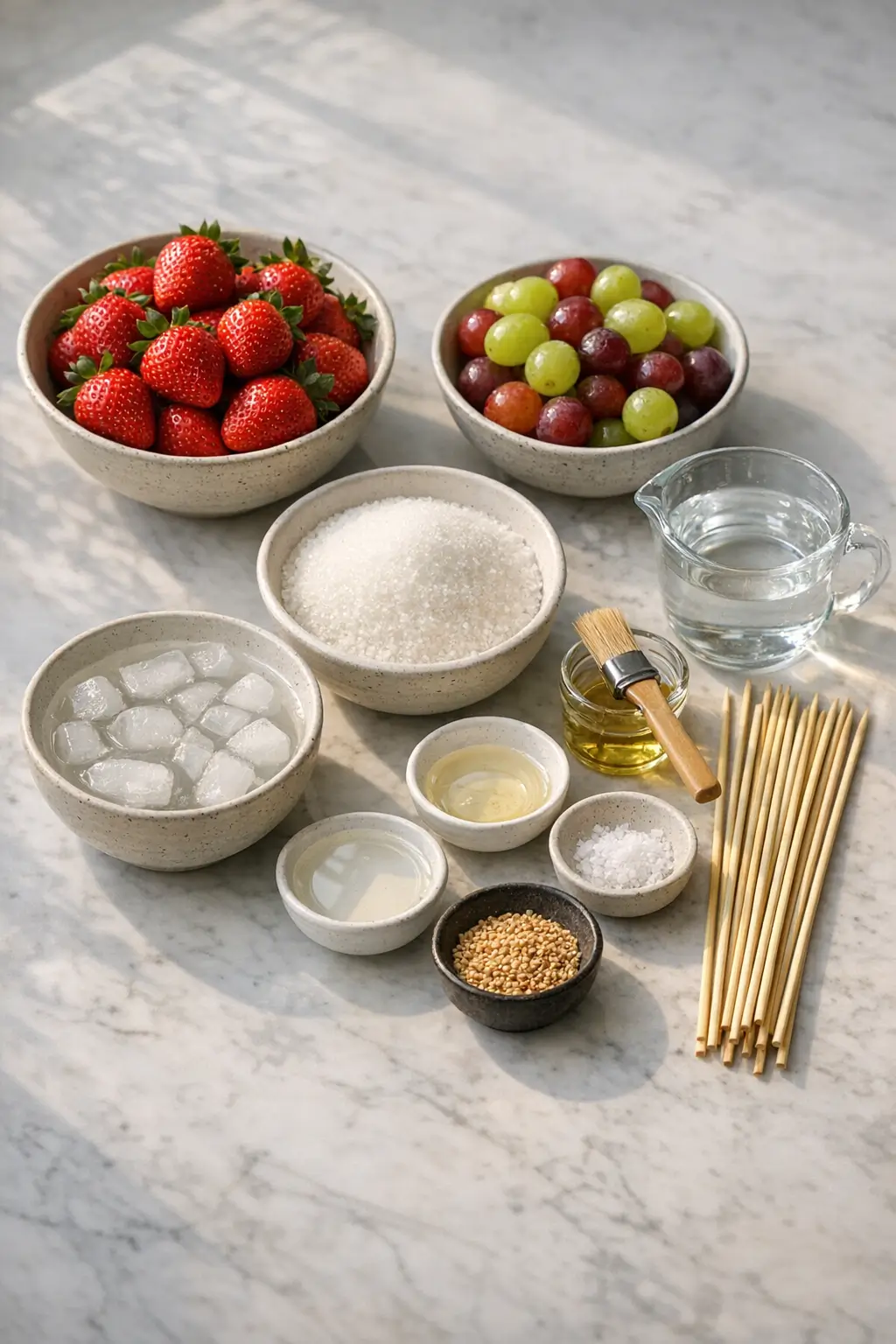
12–16 medium strawberries or 24–32 seedless grapes (about 400–500 g total), rinsed and completely dried
-
1 cup (200 g) granulated sugar
-
1/2 cup (120 ml) water
-
1–2 teaspoons light corn syrup or 1/4 teaspoon white vinegar — optional; helps reduce crystallization and keeps the glaze clear
-
8–10 bamboo skewers (6–8 inches)
-
Ice water in a small bowl — for hard-crack testing and optional quick set
-
Neutral oil or nonstick spray — a thin film on parchment helps release drips
-
Flavor finish (optional): 1–2 teaspoons toasted sesame seeds or pinch of flaky salt — adds contrast without masking the clean snap
Kitchen note: Fruit must be bone-dry. Any surface moisture will seize the syrup and make the shell dull or slide off. After washing, air-dry on towels at least 20 minutes, then pat each piece.
Step-by-Step Instructions for tanghulu
-
Prep the skewers. Thread 2–3 strawberries per skewer (or 3–5 grapes). Leave a little space between pieces so syrup can flow around them. Line a tray with lightly oiled parchment or a silicone mat.
-
Set up a cold-water test. Fill a small bowl with ice water and place it by the stove. If you don’t have a candy thermometer, this test tells you when the syrup is ready.
-
Combine the syrup. Add sugar and water to a small, heavy saucepan (1–2 qt). Add the optional corn syrup or vinegar if using. Swirl to moisten the sugar evenly; do not stir once it starts heating.
-
Cook the sugar. Bring to a boil over medium to medium‑high heat. Let it bubble vigorously, untouched. If crystals form on the sides, brush them down with a wet pastry brush or simply cover the pot for 30 seconds so steam dissolves them.
-
Watch the cues. In 8–12 minutes the syrup will thicken, the bubbles will look smaller and tighter, and the color will shift from clear to very pale straw. Using a thermometer, you’re aiming for 300°F/149°C (hard‑crack). Without a thermometer, drizzle a few drops into the ice water: it should harden instantly and snap when bent.
-
Hold at temperature briefly. Once the syrup reaches 300°F, turn the heat to low to maintain it. Tilt the saucepan slightly to pool the syrup for easier dipping.
-
Dip and coat. Working quickly and carefully, submerge a skewer and twirl to coat the fruit in a thin, even layer. Lift and let excess drip back into the pan for 1–2 seconds.
-
Optional chill for immediate set. Either place the skewer directly on the prepared parchment to harden within 30–60 seconds, or briefly dip the coated fruit into the ice water for 2–3 seconds to lock the shell, then set on the tray. The shell should be glassy and firm almost immediately.
-
Repeat fast. Continue with remaining skewers. If the syrup thickens, warm it gently. If it darkens beyond light amber, it’s overcooked; stop before it tastes bitter.
-
Finish and serve. While the shell is tacky (within seconds), you can sprinkle sesame seeds or a tiny pinch of salt. Enjoy within 30–60 minutes for peak crackle.
Kitchen note: Hot sugar causes severe burns and stays hot longer than boiling water. Keep the pot handle turned in, wear sleeves, and keep children away from the stove. Never microwave sugar syrup for this recipe.
What to Expect
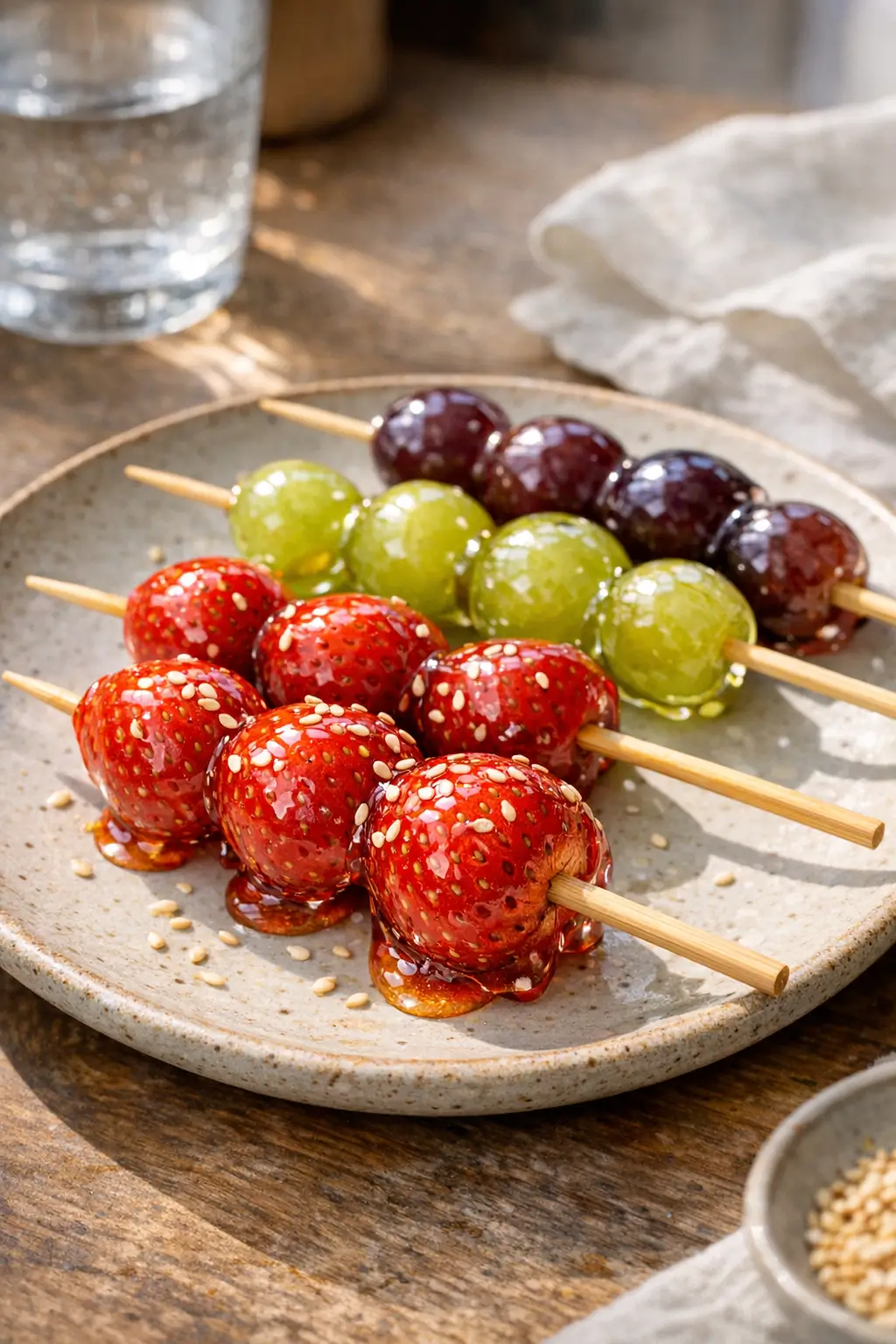
The shell should be thin, rigid, and glass‑clear, not gummy. It cracks audibly, then gives way to cool, juicy fruit. Strawberries feel dramatic and bright; grapes give an especially clean snap.
Flavor skews sweet with a faint caramel note from the hard‑crack stage. Tart fruit (hawthorn, if you find it; or just less‑ripe berries) helps balance the sugar. A thicker coat looks shiny but can turn sticky faster, especially in humid rooms.
Cookware and fruit size matter. A small, heavy saucepan concentrates heat and gives you enough depth to dip. Large berries cool the syrup more on contact; go a little slower and re‑warm the syrup between dips if needed.
Ways to Change It Up
-
Grape & citrus twist: Use green or black seedless grapes and tuck a thin strip of orange zest on the skewer between pieces. The oils perfume the candy without changing the syrup.
-
Sesame crunch: Sprinkle toasted white or black sesame on freshly dipped skewers. It adds aroma and a little texture contrast without muting the snap.
-
Mixed-fruit sparkle: Alternate kiwi chunks and strawberries for color. Pat kiwi very dry; its surface moisture can challenge the shell.
-
Vegan “milk candy” sheen: Stir in 1 teaspoon neutral oil off heat before dipping for a faint gloss and softer bite. Trade‑off: slightly less brittle shell.
-
Lean into tartness: If you can source Chinese hawthorn (shan zha), it’s the classic choice and brings sour notes that tame sweetness. The method doesn’t change; remove seeds if present.
-
Speed version: Make half a batch with 1/2 cup (100 g) sugar and 1/4 cup (60 ml) water for 2–3 people. Work even faster as the smaller volume cools quickly. For a quick profile on timing, see our streamlined take in Crisp Tanghulu at Home: Juicy Fruit, No Fuss.
Serving and Storage
Serve tanghulu soon after dipping—ideally within the hour—when the shell is at its most brittle. On a dry day, they hold at cool room temperature for up to 2 hours. In humid conditions, the shell can absorb moisture and become tacky. If that happens, they’re still tasty but lose the signature crack.
Tanghulu stands on its own as a street‑snack style dessert. It also pairs nicely with hot green tea or jasmine tea to offset sweetness. For a larger dessert table, contrast textures with something creamy like No-Bake Japanese Cheesecake That Chills Overnight or a chilled rice dessert such as Mango Sticky Rice Made Easy: Creamy, Foolproof Dessert. For a freezer‑cold option that kids enjoy, serve alongside Chocolate-Dipped Strawberry Yogurt Clusters, Easy Freezer Treat.
Storage is limited. Don’t refrigerate; condensation softens the shell. Don’t cover tightly; steam ruins the finish. If you must hold them, leave uncovered in the coolest, driest spot in your kitchen and eat the same day.
Kitchen note: A tiny drizzle of syrup may pool on the tray and glue a skewer down. Lightly oiling your parchment or using a silicone mat makes release easy and keeps the shell intact.
Cultural Context
Candied hawthorn skewers with a brittle sugar shell have been sold in northern Chinese cities for centuries, especially in winter around parks, temple fairs, and busy streets. The snack’s name is sometimes translated as “sugar gourd,” a nod to the rounded shape of the fruit on a stick. For a concise overview of the food and its regional aliases, see this encyclopedia entry on tanghulu. For a brief cultural note on its presence at Beijing winter fairs and the common use of hawthorn, the municipal travel page offers a snapshot: Beijing Winter Snack — Tanghulu.
Common Questions and Troubleshooting
-
My coating is sticky, not snappy. What went wrong? Most likely the syrup didn’t reach hard‑crack (300°F/149°C). Reheat and test in ice water—drops should harden immediately and shatter when bent. Humidity also softens the shell; serve quickly on damp days.
-
The sugar crystallized and turned grainy. How do I prevent this? Avoid stirring once the syrup boils. Wash down pan sides with a wet brush or briefly cover the pot to dissolve crystals with steam. A teaspoon of corn syrup or a few drops of vinegar helps inhibit crystallization.
-
The shell slides off the fruit. Why? Residual moisture is the usual culprit. Dry fruit thoroughly and avoid very ripe, leaking berries. Also keep the coating thin by letting excess drip off for a second or two after dipping.
-
Can I use brown sugar, honey, or coconut sugar? For a clear, glass‑like shell, use white granulated sugar. Unrefined sugars or honey tend to darken fast and can taste bitter before they reach hard‑crack.
-
Can I make it ahead? Not really. The shell absorbs moisture over time and loses its snap. If you must, hold for up to 2 hours in a dry, cool room. Don’t refrigerate or cover.
-
Is dunking in ice water necessary? It’s optional. A quick dip sets the shell fast, which is helpful when you need to move quickly. If your kitchen is humid, setting on parchment without dunking can maintain a glossier finish.
-
Can kids help? Yes—with the prep only. Assign threading fruit and sprinkling sesame; an adult should handle the syrup. For a treat kids can make start‑to‑finish, try these freezer bites: Chocolate-Dipped Strawberry Yogurt Clusters, Easy Freezer Treat.
Conclusion
For home cooks, tanghulu rewards attention to two details: dry fruit and hard‑crack syrup. Keep the coating thin, work briskly, and serve soon after dipping. If you experiment with different fruits or timing, share what worked in the comments and leave a rating so others can learn from your batch too.



Leave a Reply