
If you’ve never had watermelon feta salad with basil and lime, it’s one of those combos that shouldn’t work and absolutely does. Sweet cold melon, salty feta, bright lime, and soft basil all pile into a bowl that you can eat straight from the fridge when the kitchen’s already too hot. This version leans on a quick honey–lime vinaigrette so the flavors don’t just sit on top; they actually soak in a bit.
If you’re racing between work and kids’ bedtime, make the dressing first and cube the watermelon earlier in the day so you only have to toss and serve. I first made this as a “maybe people will pick at it” side; it disappeared before the burgers.
Ingredients
Serves 4 as a side, 2–3 as a light main
- 1.2–1.4 kg / 2.5–3 lb seedless watermelon, rind removed, cut into 2–3 cm / 1‑inch cubes (about 6–7 cups packed)
- 100–120 g / 3.5–4 oz feta cheese, preferably in a block, cut or crumbled into bite-size pieces
- 10–15 fresh basil leaves, stacked and sliced into thin ribbons (chiffonade)
- 1–2 tbsp very thinly sliced red onion (about 10–15 g), optional but good for bite
Honey–Lime Dressing
- 2 tbsp fresh lime juice (from about 1 large lime)
- 1 tsp finely grated lime zest (avoid the white pith)
- 1½ tbsp runny honey
You can use agave or maple syrup instead; maple is a little more pronounced but still tasty. - 2 tbsp extra-virgin olive oil
- ¼ tsp fine sea salt, plus more to taste
- Freshly ground black pepper, to taste
Step-by-Step Watermelon Feta Salad with Basil and Lime
-
Chill what you can.
If you have time, pop the watermelon cubes and feta into the fridge for at least 30 minutes first. Cold fruit holds its shape better and the salad tastes sharper. -
Make the dressing.
In a small bowl or jar, whisk together the lime juice, lime zest, honey, olive oil, salt, and several grinds of black pepper until it looks slightly creamy and emulsified. Taste; it should be bright, a bit sweet, and salty enough that it almost tastes too seasoned on its own. -
Adjust for your watermelon.
If your watermelon is very sweet, leave the dressing as is. If it’s a bit bland or underripe, add another ½ tbsp honey or a pinch more salt so the dressing can carry more of the flavor. -
Layer the watermelon.
Add the watermelon cubes to a wide salad bowl or shallow platter. You want some space for the dressing and feta to tuck between pieces instead of piling into a tall mountain. -
Dress gently.
Whisk the dressing again (it separates quickly), then drizzle about two-thirds of it evenly over the watermelon. Use clean hands or a large spoon to very gently turn the cubes from the bottom, so most pieces get a light coat without breaking down. It’ll look glossy but not wet; that’s what you want. -
Add basil and onion.
Scatter the basil ribbons and, if using, red onion over the dressed watermelon. Toss once or twice very lightly, just to distribute. -
Fold in feta last.
Add the feta on top and very gently fold it through once or twice. Don’t stir like a green salad or you’ll smear cheese everywhere. A little crumbling is fine; you still want some distinct chunks. -
Finish with more dressing (if needed).
Taste a few pieces of melon and feta together. If it needs more zip, drizzle on a bit more of the remaining dressing. You might not use it all, especially if your melon is very juicy. -
Rest briefly, then serve.
Let the salad sit for 5–10 minutes at room temperature so the basil and lime open up. After about 30–40 minutes the melon will start releasing more juice and things get soupier, so don’t walk away for an hour and expect it to look the same.
One thing — if you’re making this ahead for a party, keep the watermelon and dressing separate in the fridge and combine with basil and feta right before serving. The texture holds up much better.
What to Expect
You’ll end up with a loose salad rather than a packed bowl: bright red cubes of watermelon, white flecks and chunks of feta, and little green strands of basil. It’s juicy, and there’ll be a bit of pinkish dressing at the bottom that people will chase with a spoon.
Flavor-wise, expect a big hit of sweet and salty first, then lime, then basil. If your feta is strong, it can dominate, so don’t overdo the cheese the first time. The basil won’t read like pesto; it’s more of a soft, peppery background.
Ways to Change It Up
If you keep the basic sweet‑salty‑herb‑acid idea, you can play around a lot:
-
For a vegetarian‑but‑lighter take: Swap half the feta for 1 small avocado, diced just before serving. It makes the salad feel a bit more substantial without turning it into a cheese bomb. Toss the avocado very gently so it doesn’t mash.
-
If you’re cooking for someone who hates basil, go half basil, half mint the first time you serve it. Mint makes the salad taste colder and a bit more dessert‑y, while basil leans savory. Full swap to all mint works too; you just lose some of that peppery edge.
-
Vegan version: use a firm vegan feta or just skip the cheese and bump the salt in the dressing slightly. It’s good, but it won’t have that same salty hit, so I like to add a small handful of toasted pumpkin seeds or pistachios on top for some bite.
Serving and Storage
This watermelon feta salad likes company. It’s great next to grilled chicken, skewers, or simple pan‑seared fish. I also slide it into a mezze‑style spread with hummus, grilled flatbreads, olives, and a big bowl of something green.
Serve it slightly chilled but not icy cold; straight‑from‑the‑fridge watermelon can mute the lime and basil. If you’re bringing it to a cookout, I usually pack the basil and feta in separate containers and fold them in when I arrive so everything still looks fresh.
Leftovers keep up to 24 hours in the fridge in a covered container. The watermelon will release more juice and the feta softens, but it’s still good spooned over mixed greens or tucked into a pita with leftover grilled meat. Re-season before eating; a quick extra squeeze of lime fixes a lot.

Common Questions
Can I cut the watermelon the day before?
Yes, within reason. Cut the watermelon up to a day ahead, store it in an airtight container in the fridge, and drain off any excess juice before you dress it. Don’t add basil or feta until just before serving or they’ll wilt and go mushy.
What kind of feta works best?
Block feta packed in brine is the way to go. It holds its shape, tastes cleaner, and you can control how crumbly it gets. Pre‑crumbled feta tends to be drier and saltier, which can make the salad feel chalky.
Can I skip the olive oil?
You technically can, but the salad will taste sharper and a little flat. The oil rounds out the lime and honey and helps the dressing cling to the watermelon and feta instead of sliding straight to the bottom of the bowl.
How do I scale this for a crowd?
You can double or triple everything easily. Use the biggest mixing bowl you own or toss the salad in a clean roasting pan, then transfer it to a serving platter so you aren’t chasing cubes over the counter.
Is this actually a Greek dish?
Watermelon with salty cheese and herbs shows up in a lot of Eastern Mediterranean and Middle Eastern kitchens in different forms, and feta itself is part of a long Greek cheese and salad tradition. If you’re curious about those roots, the Museum of Cycladic Art has a good overview of ancient Greek foodways here: history of food in ancient Greece. There’s also an interesting piece on seasonal fruit and cheese pairings in the Mediterranean from the Barilla Center for Food & Nutrition: Mediterranean diet then and now.
I’d keep this one in your back pocket for any time watermelon is cheap and you’re sick of cutting it into plain wedges. If you try a mint‑only or vegan version, tell me what you changed and how fast it disappeared from the bowl; I’m always curious how people tweak this at home.
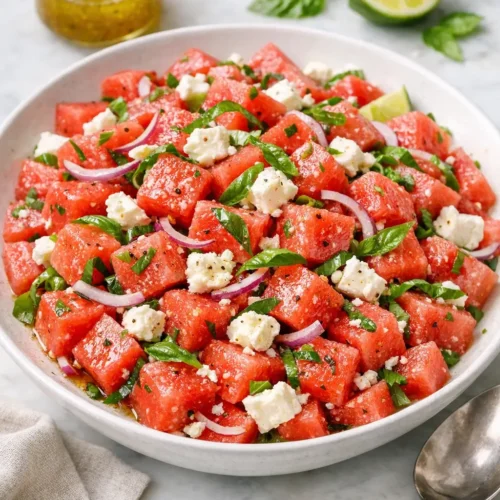
Watermelon Feta Salad with Basil and Lime

Equipment
- Cutting board
- Chef’s knife
- Large salad bowl or shallow platter
- Small bowl or jar (for dressing)
- Whisk
Ingredients
- 1.2–1.4 kg seedless watermelon rind removed, cut into 2–3 cm/1-inch cubes (about 6–7 cups packed)
- 100–120 g feta cheese preferably in a block; cut or crumbled into bite-size pieces
- 10–15 fresh basil leaves stacked and sliced into thin ribbons (chiffonade)
- 1–2 tbsp red onion very thinly sliced (about 10–15 g), optional
Honey–Lime Dressing
- 2 tbsp fresh lime juice from about 1 large lime
- 1 tsp lime zest finely grated; avoid the white pith
- 1½ tbsp runny honey or agave/maple syrup
- 2 tbsp extra-virgin olive oil
- 1/4 tsp fine sea salt plus more to taste
- freshly ground black pepper to taste
Instructions
- Chill what you can. If you have time, pop the watermelon cubes and feta into the fridge for at least 30 minutes first. Cold fruit holds its shape better and the salad tastes sharper.
- Make the dressing. In a small bowl or jar, whisk together the lime juice, lime zest, honey, olive oil, salt, and several grinds of black pepper until it looks slightly creamy and emulsified. Taste; it should be bright, a bit sweet, and salty enough that it almost tastes too seasoned on its own.
- Adjust for your watermelon. If your watermelon is very sweet, leave the dressing as is. If it’s a bit bland or underripe, add another 1/2 tbsp honey or a pinch more salt so the dressing can carry more of the flavor.
- Layer the watermelon. Add the watermelon cubes to a wide salad bowl or shallow platter. You want some space for the dressing and feta to tuck between pieces instead of piling into a tall mountain.
- Dress gently. Whisk the dressing again (it separates quickly), then drizzle about two-thirds of it evenly over the watermelon. Use clean hands or a large spoon to very gently turn the cubes from the bottom, so most pieces get a light coat without breaking down.
- Add basil and onion. Scatter the basil ribbons and, if using, red onion over the dressed watermelon. Toss once or twice very lightly, just to distribute.
- Fold in feta last. Add the feta on top and very gently fold it through once or twice. Don’t stir like a green salad or you’ll smear cheese everywhere. A little crumbling is fine; you still want some distinct chunks.
- Finish with more dressing (if needed). Taste a few pieces of melon and feta together. If it needs more zip, drizzle on a bit more of the remaining dressing. You might not use it all, especially if your melon is very juicy.
- Rest briefly, then serve. Let the salad sit for 5–10 minutes at room temperature so the basil and lime open up. After about 30–40 minutes the melon will start releasing more juice and things get soupier, so serve soon after mixing.



Leave a Reply