
A pan of French clafoutis solves the “I want dessert but don’t want fuss” dilemma with a batter you whisk in minutes and fruit you already have. Think of it as a custardy, crêpe‑like batter poured over cherries, then baked until golden and softly set. Expect lightly sweet, eggy richness with jammy fruit pockets—more pudding than cake.
Short on time? Pit the cherries first and preheat the oven to 375°F (190°C). Using frozen fruit? Thaw and pat it dry so the custard sets properly.
This version leans on classic French clafoutis technique and bakes best in an 8‑inch (20 cm) ovenproof dish, ideal for a small household or an easy weeknight dessert. Serve warm in summer, or chill for a next‑day treat.
Ingredients
- 2 cups (300 g) pitted sweet cherries (fresh preferred; well‑drained frozen works)
- 1 tablespoon (14 g) unsalted butter, softened, for the dish, plus 1 tablespoon (14 g) melted for the batter, optional for extra richness
- 2 large eggs, room temperature
- 1/3 cup (65 g) granulated sugar, plus 1 tablespoon (12 g) for sprinkling
- 1/3 cup (40 g) all‑purpose flour
- 3/4 cup (180 ml) whole milk
- 2 tablespoons (30 ml) heavy cream or half‑and‑half, optional but adds silkiness
- 1 teaspoon (5 ml) vanilla extract
- 1/8 teaspoon almond extract, optional
- 1/8 teaspoon fine salt
- 1 tablespoon (15 ml) kirsch (cherry brandy), optional; adds cherry aroma without more sweetness
- Powdered sugar, for dusting
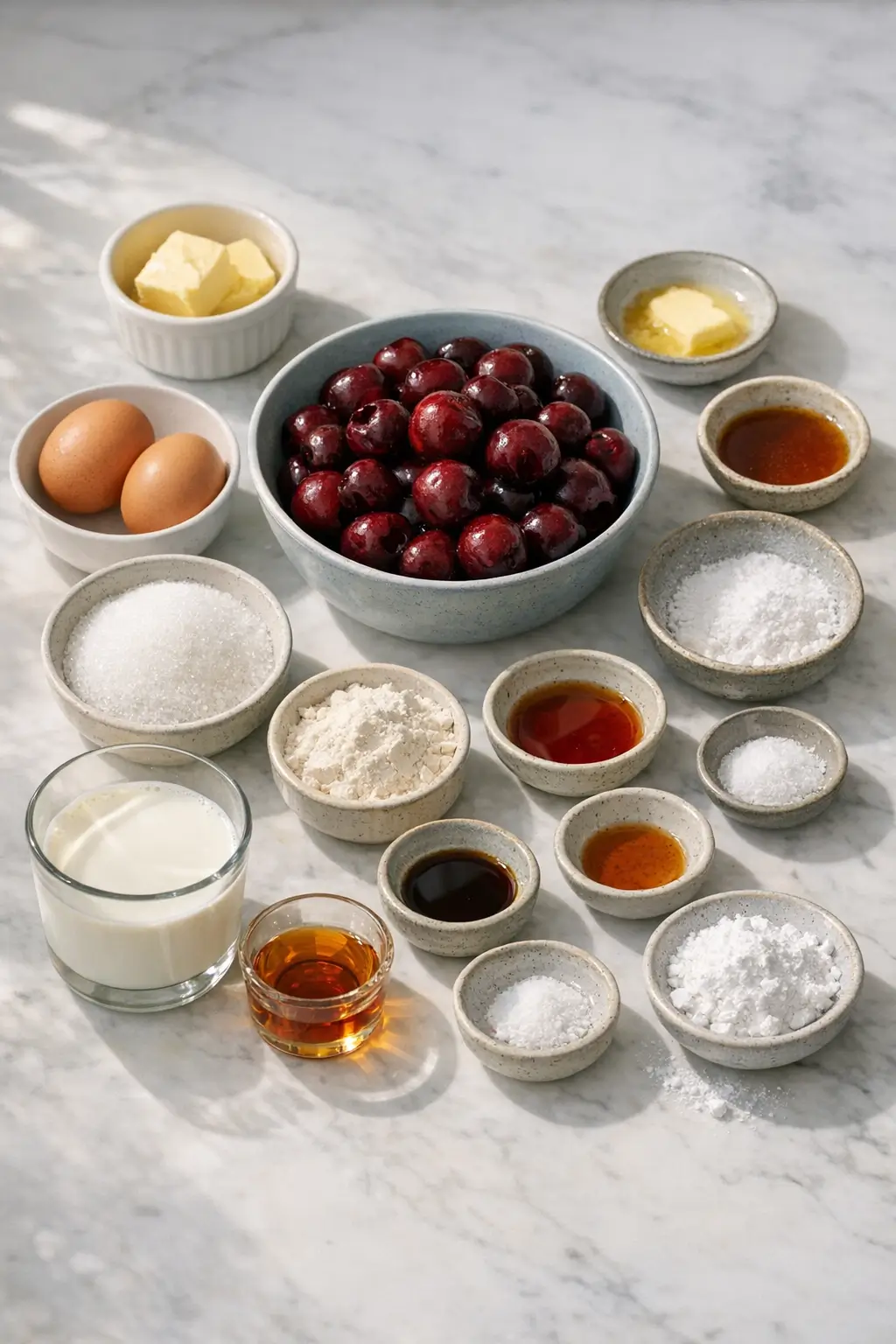
Purpose notes: Flour gives the custard structure, milk and eggs create a tender, lightly wobbly set, and a touch of fat (butter/cream) rounds the texture. Vanilla and almond highlight fruit without overpowering it.
Substitutions:
- Fruit: Swap cherries for halved apricots, sliced firm plums, or pears. Very juicy berries can work if you add 1 teaspoon flour to the fruit.
- Dairy: Use 2% milk; the custard will be a little lighter. Dairy‑free: whole‑fat oat milk works; skip the cream and melted butter.
- Flavorings: No almond extract? Add 1/2 teaspoon lemon zest instead. No kirsch? A teaspoon of brandy or amaretto is fine, or skip entirely.
Kitchen note: A pound (455 g) of whole cherries yields about 2 heaping cups (300–325 g) once pitted. If your fruit is very ripe and juicy, pat it dry; extra moisture lengthens bake time and can make the center stodgy.
Step-by-Step Instructions for French Clafoutis
- Heat the oven to 375°F (190°C). Generously butter an 8‑inch (20 cm) oven‑safe skillet, gratin, or pie dish. Dust the bottom with 1 teaspoon sugar if you like a faintly caramelized edge.
- Prep the fruit. Pit the cherries and blot dry. If using frozen, thaw, drain well, and pat dry; toss with 1 teaspoon flour to absorb surface juices. Arrange fruit in a mostly single layer in the dish.
- Make the batter. In a bowl or blender, combine eggs, 1/3 cup (65 g) sugar, flour, milk, cream (if using), vanilla, almond extract, salt, and the melted butter (if using). Whisk or blend until smooth—about 20 to 30 seconds. Avoid whipping in lots of air.
- Optional rest (5–10 minutes). This lets bubbles settle for a smoother top and helps the flour hydrate. Not essential, but helpful if your kitchen is cool and you have a moment.
- Pour and flavor. Pour batter evenly over the cherries. If using kirsch, drizzle it over the surface. Sprinkle the remaining 1 tablespoon sugar across the top for gentle browning.
- Bake on the middle rack for 28 to 35 minutes. Look for edges that are puffed and lightly browned, and a center that still has a slight jiggle when you nudge the pan. A knife inserted near the center should emerge with custardy crumbs, not wet batter.
- Cool briefly. Let the clafoutis rest 10 to 15 minutes so the custard finishes setting and the fruit juices thicken. Dust with powdered sugar just before serving.
- Serve warm, room temperature, or chilled. Slice into wedges or spoon it out rustically. Any pan sticking? Run a thin spatula around the edge to loosen.
Kitchen note: Overbaking makes clafoutis bouncy and eggy. Pull it when the center retains a gentle wobble; it will firm as it cools. If the top browns too fast before the center sets, tent loosely with foil for the last 5–10 minutes.
What to Expect
-
Texture: This is a softly set, custard‑forward dessert. The rim puffs dramatically in the oven and falls slightly as it cools; the center should be tender, not dry. Fruit pockets turn jammy and may tint the custard.
-
Flavor: Lightly sweet with vanilla and a faint almond note if you use the extract or kirsch. Cherries carry the dessert; sugar levels are modest so the dish never tastes cloying.
-
Equipment effects: Cast iron runs hotter and can darken the edges faster; ceramic or glass bakes more gently and may need a few extra minutes. Frozen fruit extends bake time. Different brands of flour hydrate differently—give the batter a minute or two of rest if it looks foamy or too thin.
Ways to Change It Up
-
Vegetarian or vegan‑leaning: The base recipe is vegetarian. For a vegan‑style version, use 3/4 cup (180 ml) full‑fat oat milk, 1/3 cup (40 g) flour, and whisk in 2 tablespoons cornstarch plus 6 tablespoons aquafaba (liquid from canned chickpeas) in place of the eggs. Bake until set; the texture will be more pudding‑like than custardy.
-
Bolder or gentler flavor: For more intensity, keep the almond extract and add 1 tablespoon kirsch. For a milder profile, omit both and reduce sugar to 1/4 cup (50 g); you’ll taste the fruit more.
-
Faster weeknight pan: Use a well‑preheated 8‑inch cast‑iron skillet. As the oven heats, butter the skillet and warm it for 5 minutes. Add cherries, pour the batter in, and bake; the hot pan shaves a few minutes off the cook time and encourages a lightly caramelized base.
-
Seasonal swaps: Halved apricots, firm plums, or small pear slices are excellent. Very juicy berries work better mixed (for texture) and tossed with 1 teaspoon flour. Expect small timing shifts.
Kitchen note: If your fruit is very tart (sour cherries, some apricots), sprinkle 1–2 teaspoons sugar over the fruit before adding the batter; you’ll keep the custard sweetness restrained while balancing the fruit.
Serving and Storage
Serve warm with a light snowfall of powdered sugar. A spoonful of lightly sweetened whipped cream or crème fraîche is classic. Vanilla ice cream is indulgent but not necessary; the dessert is designed to stand on its own.
Pair it with other make‑ahead desserts when you’re hosting: Italian Tiramisu Made Simple: Creamy, Make-Ahead Magic offers cool contrast, Basque Cheesecake Made Easy: Burnt Top, Creamy Center brings a deeper baked‑custard mood, and No-Bake Japanese Cheesecake That Chills Overnight saves oven space. For fruit‑forward finales, try Valentine’s Chocolate-Covered Strawberries Busy Cooks Can Nail or the shiny crunch of Tanghulu Made Easy: Glassy, Crunchy Fruit Skewers.
Storage: Cool completely, cover, and refrigerate up to 2 days. The custard will firm in the fridge; flavor deepens by day two. Rewarm slices at 300°F (150°C) for 8–10 minutes or enjoy cold. Freezing isn’t ideal—the custard can weep when thawed.
Cultural Context
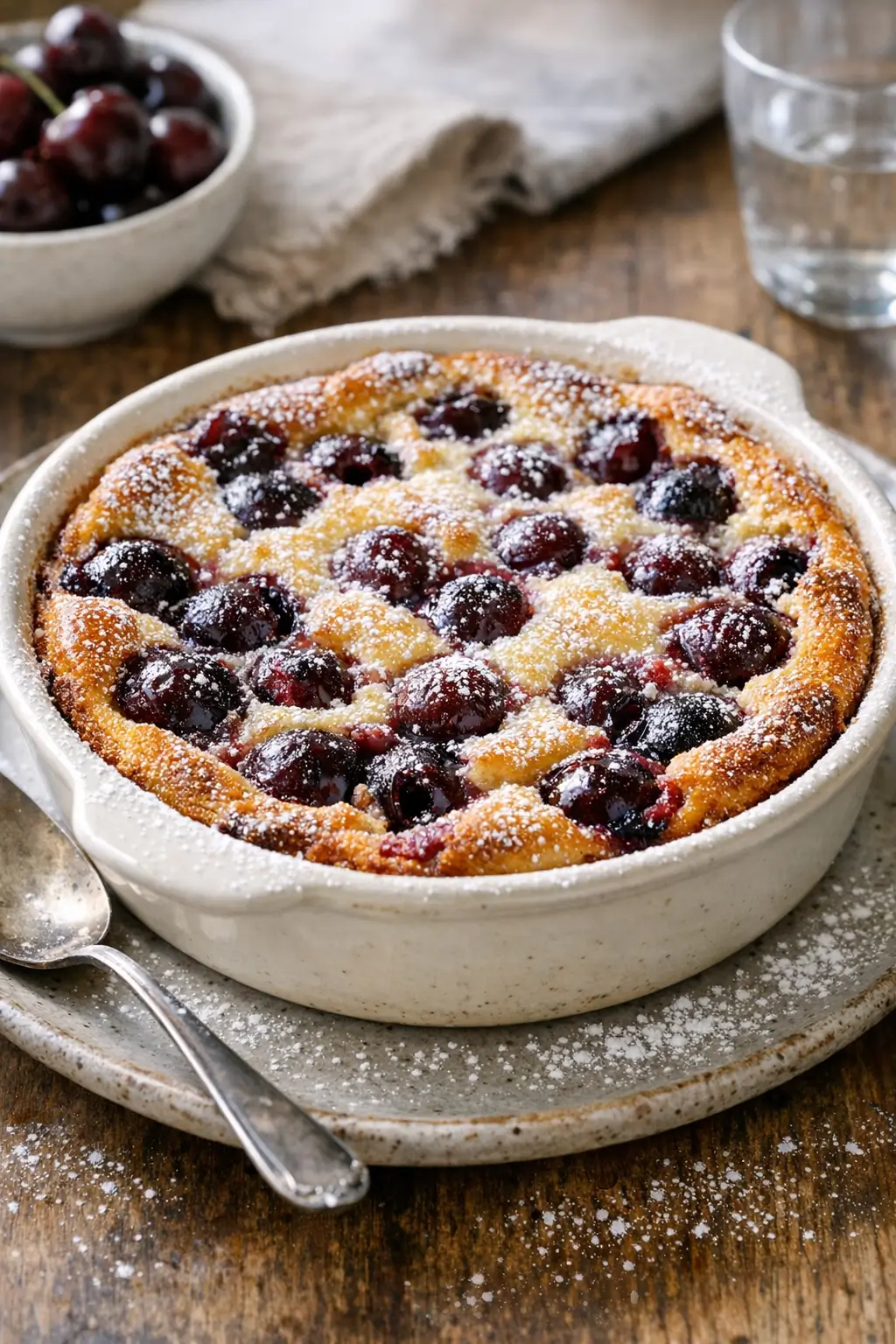
Clafoutis is associated with central France, especially the Limousin, where black cherries are abundant and summer fruit desserts are common. The dish’s name is often linked to Occitan—an older regional language—via a verb meaning “to fill,” an apt description of batter poured over a dish filled with cherries. For a concise overview of the dessert’s background and its relation to flaugnarde, see this encyclopedia‑style article. For a short regional perspective on Limousin’s cherry clafoutis and naming conventions, this regional gastronomy page is a useful primer.
Common Questions and Troubleshooting
-
My clafoutis puffed and then collapsed. Is that normal? Yes. The rim inflates in the heat and relaxes as it cools. Aim for a set but jiggly center when you pull it from the oven; overbaking is what makes it sink into a rubbery dome.
-
Do I have to pit the cherries? For family‑friendly serving, pitting is safest and neatest. Some traditional versions keep pits for a faint almond aroma, but warn guests and keep this for adult tables only. The flavor difference is subtle compared to the convenience of pitted fruit.
-
Can I use frozen cherries? Yes. Thaw, drain, and blot dry. If baking straight from frozen, toss with 1–2 teaspoons flour and add 5–10 minutes to the bake time; the center should still wobble slightly when ready.
-
My center looks wet while the edges are brown. What now? Tent loosely with foil and continue baking until the middle just sets. Next time, check at 25 minutes and rotate the pan if one side browns faster—ovens vary.
-
The texture is too eggy. Why? Usually overbaking or too high heat. Bake at 375°F (190°C) and pull when a gentle jiggle remains. Using 2% milk (instead of whole + cream) also yields a slightly firmer, less rich custard.
-
Can I make it ahead? Yes. Bake earlier in the day, cool, and keep refrigerated. Dust with powdered sugar just before serving. For best texture, serve within 24–36 hours.
-
How sweet should it be? The base here is modestly sweet to let fruit shine. If your cherries are very tart, sprinkle 1–2 teaspoons sugar over the fruit before pouring in the batter.
-
What pan works best? An 8‑inch (20 cm) ceramic gratin or pie dish bakes most evenly. Cast iron also works but may brown quicker at the edges; check early around 25 minutes.
Conclusion
This small‑pan clafoutis gives you a classic, custardy French dessert with realistic, weeknight‑friendly steps. If you try it, leave a comment with how you adjusted for your fruit, pan, or oven—those details help other home cooks. And if you discovered a particularly good cherry or a spice twist you liked, note it so we can all make smarter choices next time.



Leave a Reply