
Bibimbap is a build-it-your-way rice bowl that rewards a little prep with a lot of flavor. Korean Bibimbap shows up in home kitchens, casual eateries, and stone-bowl restaurants, and it’s eaten year-round for lunch or dinner. Expect warm rice, crisp-tender vegetables, savory beef, and a runny egg bound by spicy-sweet gochujang. If you’re cooking on a busy weeknight, start the rice first and whisk the sauce while it cooks. Short on time or working in a small kitchen? Prep one pan of vegetables at a time, keeping seasonings simple—salt, sesame oil, and garlic—so they add up cleanly when mixed.
Ingredients
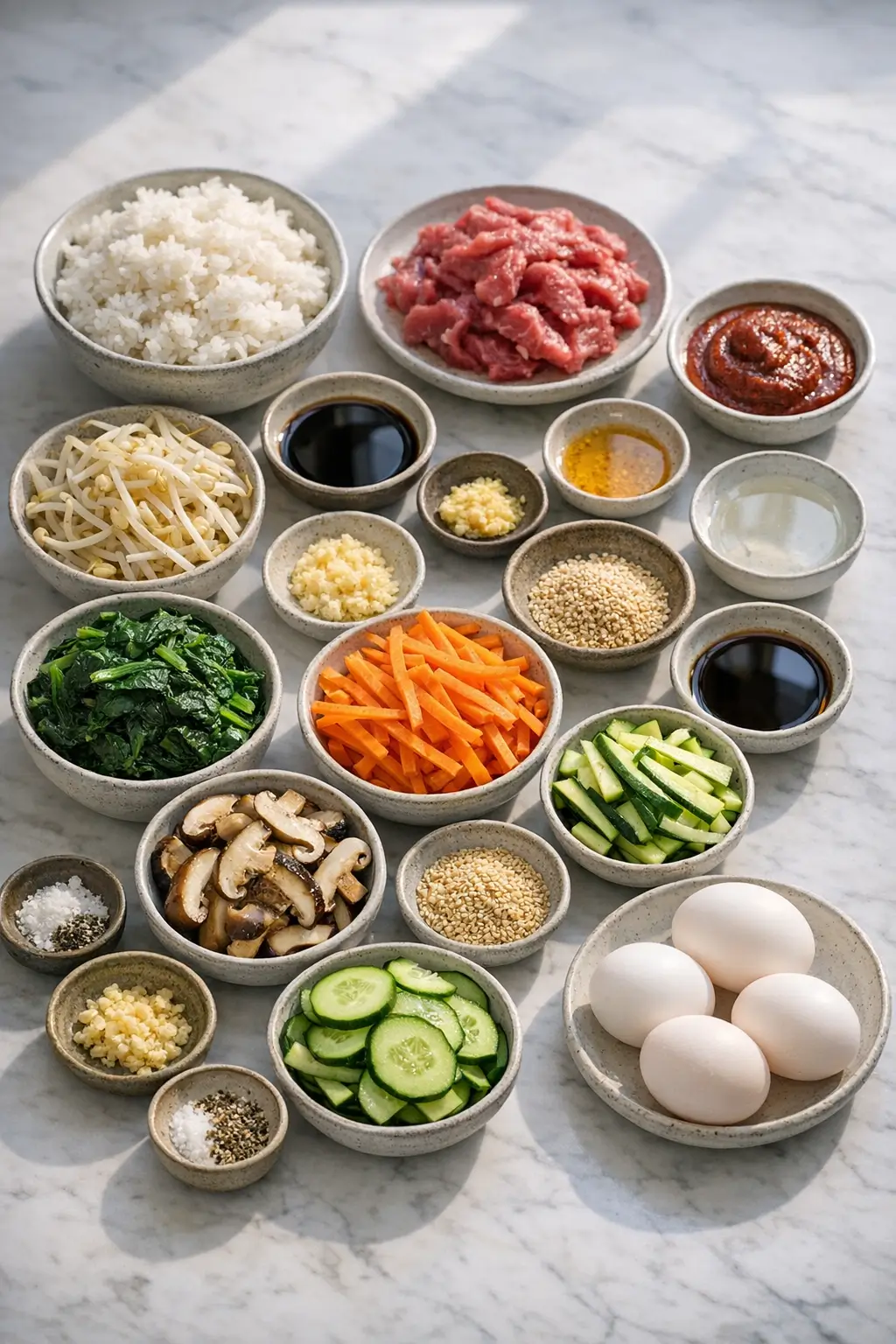
- 1 1/2 cups (300 g) short‑grain white rice — cooked a touch drier for better texture
- 8 oz (225 g) beef sirloin or flank, thinly sliced — quick-cooking protein; use firm tofu for vegetarian
- 1 tbsp soy sauce — for the beef marinade; tamari works
- 2 tsp sugar or honey — balances salt and heat
- 2 tsp toasted sesame oil, plus more to finish — nutty aroma throughout
- 1 tsp minced garlic — savory base for beef and veg
- 1 tbsp neutral oil — for sautéing
- 5 oz (140 g) bean sprouts (mung or soybean) — crunchy, classic topping
- 5 oz (140 g) spinach — blanched and seasoned
- 1 small zucchini (about 7 oz/200 g), julienned — quick sauté
- 1 medium carrot (about 4 oz/115 g), julienned — quick sauté
- 4 oz (115 g) shiitake or cremini mushrooms, sliced — umami boost
- 1/2 small cucumber, thinly sliced — lightly salted for freshness; or use lettuce
- 2–4 large eggs — sunny-side-up or your preference
- 1 tsp sesame seeds — finish with a little crunch
- Kosher salt & black pepper — to season each component
Gochujang sauce (mix in a bowl):
- 3 tbsp gochujang (Korean chili paste) — the signature heat
- 1–2 tbsp warm water — to thin to drizzling consistency
- 2 tsp sugar or honey — adjust to taste
- 1 tsp rice vinegar — a little brightness; or cider vinegar
- 1 tsp toasted sesame oil — round, nutty finish
Kitchen note: Gochujang brands vary in sweetness and saltiness. Whisk the sauce, taste on a grain of rice, then adjust with a splash of water or a pinch of sugar as needed. For more ideas on using gochujang beyond this dish, see 30-Minute Gochujang Butter Noodles for Busy Nights or Weeknight Gochujang Butter Salmon With Charred Edges.
Step-by-Step Instructions for Korean Bibimbap
- Cook the rice.
- Rinse the short-grain rice until water runs mostly clear. Cook using your usual method but with 2–3 tablespoons less water than normal so the grains stay separate. Keep warm, lid on.
- Sensory cue: finished rice should be tender with surface dryness—you don’t want sticky porridge here.
- Marinate the beef (5–20 minutes is enough).
- In a small bowl, mix soy sauce, sugar, 1 tsp sesame oil, garlic, and a few grinds of pepper. Toss with the sliced beef and set aside while you prep vegetables. Short marination is fine for thin cuts.
- Blanch and season the spinach and sprouts.
- Bring a medium pot of salted water to a boil. Blanch bean sprouts for 60–90 seconds, scoop out, rinse briefly under cold water, drain well, then season with a pinch of salt, 1/2 tsp sesame oil, and a few sesame seeds.
- In the same pot, blanch spinach for 20–30 seconds. Rinse cold, squeeze out excess water, then season with a pinch of salt, a tiny dab of garlic if you like, and 1/2 tsp sesame oil.
- Salt the cucumber (optional but nice).
- Sprinkle the sliced cucumber with a pinch of salt. Let sit 10 minutes, then gently squeeze to remove excess water. This keeps your finished bowl from going watery.
- Sauté the quick-cook vegetables.
- Heat 1 tsp neutral oil in a skillet over medium-high. Sauté carrots with a pinch of salt for about 1–2 minutes until just pliable; remove.
- Add another 1 tsp oil. Sauté zucchini with a pinch of salt 1–2 minutes; remove.
- Add another drizzle of oil if needed. Sauté mushrooms with a small pinch of salt and pepper until they release moisture and reabsorb it, 3–4 minutes. Keep each topping simply seasoned; the sauce will tie everything together.
- Cook the beef fast.
- Return skillet to high heat with a thin film of oil. Spread the marinated beef in a single layer. Sear 1–2 minutes total, just until no longer pink and edges start to caramelize. Transfer to a plate.
- Fry the eggs.
- In a clean nonstick pan, add a few drops of oil and heat until shimmering. Crack in the eggs and cook sunny-side-up until whites set and edges are lacy, 2–3 minutes. For firmer yolks, cover the pan for the last 30–60 seconds.
- Make the sauce.
- Whisk gochujang, warm water, sugar, vinegar, and sesame oil until smooth and spoonable. Taste and fine-tune.
- Assemble and mix.
- Divide hot rice among bowls. Neatly arrange small piles of each vegetable and the beef over the rice. Add the egg on top. Drizzle 1–2 teaspoons sesame oil around the bowl and spoon on 1–2 tablespoons sauce to start.
- At the table, mix thoroughly from the bottom up so the hot rice warms everything and the yolk emulsifies with the sauce. Add more sauce to taste.
- Dolsot‑style crisped rice (no stone pot required).
- Heat a well-seasoned cast‑iron skillet over medium with 1 tsp sesame oil until lightly shimmering. Add a packed layer of cooked rice and press gently. Arrange toppings and warm for 3–5 minutes until you hear a faint crackle and smell toasty rice. Serve straight from the skillet (use a trivet) and mix at the table.
Kitchen note: Rice that’s too wet won’t crisp. If yours turned out soft, spread it on a sheet pan for 5–10 minutes to steam off excess moisture before using the cast‑iron method.
What to Expect
-
Texture: Warm, fluffy rice with pockets of crispness if you use the cast‑iron step; tender spinach and sprouts; slightly snappy carrots and zucchini; juicy, seared beef; and a creamy egg yolk binding everything.
-
Flavor balance: Savory from soy and beef, nutty from sesame oil, bright heat from gochujang, and gentle sweetness. The vegetables are purposefully lightly seasoned so they don’t compete with the sauce when mixed.
-
Variability: Stoves and pans differ. A heavy skillet holds heat better and gives more sear on the beef and mushrooms. Some gochujang brands run sweeter or saltier; taste your sauce and adjust.
Ways to Change It Up
-
Vegetarian or vegan: Swap beef for 8–10 oz (225–280 g) firm tofu, patted dry and pan‑seared until golden. Season with 1 tsp soy sauce and 1/2 tsp sesame oil after cooking. Use a plant‑based egg or omit it. Mushrooms (shiitake, oyster, or king trumpet) also make a meaty stand‑in.
-
Spicier or milder: For more heat, add 1/2–1 tsp gochugaru (Korean chile flakes) to the sauce or a touch of chopped kimchi on top. To go milder, thin the sauce further with water and add a splash more sesame oil. If you love spicy-saucy bowls, keep extra sauce on the table.
-
Faster, simplified version: Use ground beef (it browns in 2–3 minutes) and pick three vegetables max—say, spinach, carrots, and mushrooms. Microwaveable short‑grain rice works in a pinch. You can also lean on ready-made banchan from a Korean market. For an easy side to round out the meal, make this Cucumber Salad That Stays Crunchy in 15 Minutes.
Serving and Storage
-
Serving: Bibimbap is typically served with a squeeze of sesame oil and gochujang on the side so each person can adjust. Kimchi, roasted seaweed (gim), and a light broth are classic accompaniments. If you’re hosting, set out extra toppings so diners can personalize.
-
Pairings: Crisp salads or tangy vegetables work well with the rich egg and sesame. Try it next to Easy Tteokbokki at Home, Chewy Rice Cakes Tonight for a cozy Korean-inspired spread, or keep the theme going with Kimchi Fried Rice in 20 Minutes With Pantry Twists to repurpose leftovers the next day.
-
Storage: Cool components separately. Rice and cooked vegetables keep 3–4 days refrigerated in airtight containers; cooked beef, 3 days; sauce, 1–2 weeks. Fry eggs fresh when serving.
-
Reheating: Warm rice and toppings in a skillet with a drizzle of sesame oil for a quick crisp; or microwave in short bursts and finish with fresh sauce and a new egg.
Kitchen note: Avoid storing fully mixed bibimbap; the cucumber and sprouts weep into the rice. Keep wet ingredients aside and combine right before eating.
Cultural Context
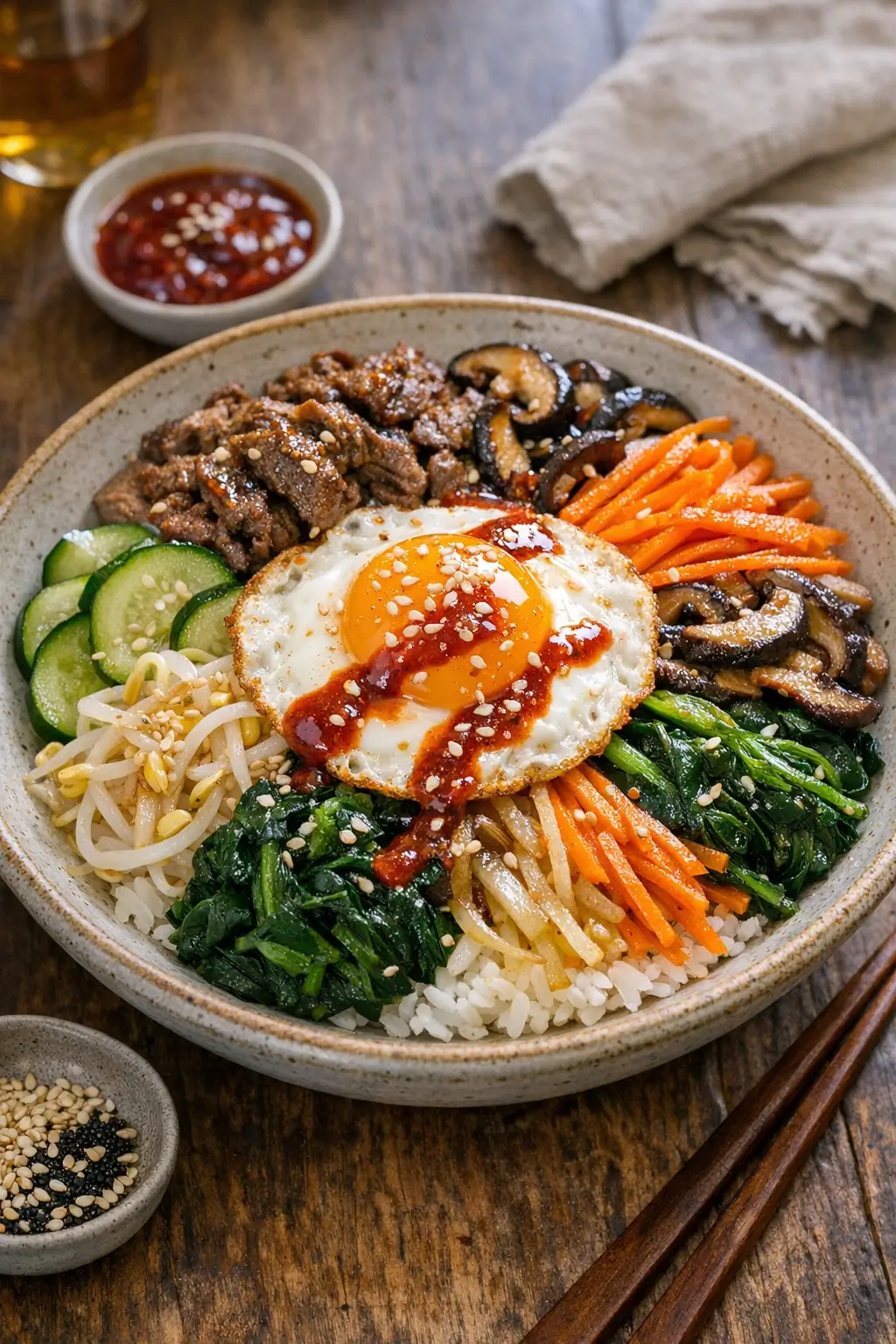
Bibimbap simply means “mixed rice,” and the bowl is built from rice plus assorted namul (seasoned vegetables), often beef and an egg. Regional versions abound—Jeonju’s is especially well known for its quality toppings and careful preparation. For a concise overview, the Korean Cultural Center New York summarizes the dish and notes Jeonju’s food heritage and festival connections: KCCNY on bibimbap. A broader reference with historical notes and variations is available here: Bibimbap entry (encyclopedic overview). These resources highlight how bibimbap flexes by season and region, from dolsot (stone bowl) to versions that feature raw beef (yukhoe) or mountain vegetables.
Common Questions and Troubleshooting
-
My rice is soft and won’t crisp. What can I do now?
Spread the hot rice on a sheet pan for 5–10 minutes to vent steam, then press it into a lightly oiled cast‑iron skillet over medium heat until you hear a gentle crackle. Resist stirring for a few minutes to form a crust. -
I can’t find gochujang. Is there a substitute?
The flavor is distinct, so it’s worth seeking out at Asian markets or online. In a pinch, mix miso paste with a little chili sauce and honey for a similar salty‑sweet profile, understanding it won’t taste the same. -
My vegetables taste bland on their own. Is that right?
Yes. Season lightly—salt, a little garlic, a touch of sesame oil—so they stay bright. The mixing step with sauce and yolk is where the full flavor blooms. -
Can I make this ahead for meal prep?
Yes. Cook rice and toppings, cool quickly, and portion in containers with a divider for the sauce. Reheat gently and add a fresh egg. Keep cucumbers and other watery items separate until serving. -
Is the sunny‑side‑up egg safe?
Use fresh, quality eggs. If serving kids, pregnant people, or immunocompromised diners, fully cook the egg or use a pasteurized product. -
What if I don’t have a stone bowl?
Use the cast‑iron skillet method above for a similar crisped rice effect. A well‑heated nonstick pan can work too, though the crust will be thinner. -
Can I swap the beef?
Absolutely. Thin‑sliced chicken thighs, ground beef or pork, shrimp, or tofu all work. Keep the quick cooking and light seasoning approach so the bowl stays balanced. -
My sauce is too thick to drizzle. How do I fix it?
Whisk in warm water a teaspoon at a time until it’s spoonable. If it’s too salty after thinning, balance with a touch more sugar or honey.
Conclusion
Bibimbap rewards even a modest prep session with a colorful, deeply satisfying bowl. Cook your rice a bit drier, keep the vegetables bright, and let the sauce and egg bring it together. If you make adjustments—different veg, tofu instead of beef, cast‑iron instead of stone—share what worked in the comments. Your tips help other home cooks dial in their own favorite version.
Korean Bibimbap Made Simple: Colorful Bowls, Big Flavor

Equipment
- Medium pot
- Skillet
- Nonstick pan
- Mixing bowl
- Rice cooker or saucepan with lid
- Cast-iron skillet (optional, for crisped rice)
- Sheet pan (optional, to dry rice)
Ingredients
Rice bowl components
- 1 1/2 cups short-grain white rice about 300 g; cook a touch drier
- 8 oz beef sirloin or flank thinly sliced (about 225 g)
- 1 tbsp soy sauce for beef marinade (tamari works)
- 2 tsp sugar or honey for marinade
- 2 tsp toasted sesame oil plus more to finish
- 1 tsp garlic minced
- 1 tbsp neutral oil for sautéing
- 5 oz bean sprouts mung or soybean (about 140 g)
- 5 oz spinach about 140 g
- 1 small zucchini julienned (about 7 oz/200 g)
- 1 medium carrot julienned (about 4 oz/115 g)
- 4 oz shiitake or cremini mushrooms sliced (about 115 g)
- 1/2 small cucumber thinly sliced (or use lettuce)
- 2–4 large eggs sunny-side-up or to preference
- 1 tsp sesame seeds
- kosher salt to season each component
- black pepper to season each component
Gochujang sauce
- 3 tbsp gochujang (Korean chili paste)
- 1–2 tbsp warm water to thin
- 2 tsp sugar or honey adjust to taste
- 1 tsp rice vinegar or cider vinegar
- 1 tsp toasted sesame oil
Instructions
- Cook the rice: Rinse the short-grain rice until water runs mostly clear. Cook using your usual method but with 2–3 tablespoons less water than normal so the grains stay separate. Keep warm, lid on; rice should be tender with slight surface dryness.
- Marinate the beef (5–20 minutes): In a small bowl, mix soy sauce, sugar, 1 tsp sesame oil, garlic, and a few grinds of pepper. Toss with the sliced beef and set aside while you prep vegetables.
- Blanch and season spinach and sprouts: Bring a medium pot of salted water to a boil. Blanch bean sprouts 60–90 seconds, scoop out, rinse briefly under cold water, drain well, then season with a pinch of salt, 1/2 tsp sesame oil, and a few sesame seeds. In the same pot, blanch spinach 20–30 seconds; rinse cold, squeeze out excess water, then season with a pinch of salt, optional tiny dab of garlic, and 1/2 tsp sesame oil.
- Salt the cucumber (optional): Sprinkle sliced cucumber with a pinch of salt. Let sit 10 minutes, then gently squeeze to remove excess water.
- Sauté the vegetables: Heat 1 tsp neutral oil in a skillet over medium-high. Sauté carrots with a pinch of salt 1–2 minutes until just pliable; remove. Add another 1 tsp oil; sauté zucchini 1–2 minutes; remove. Add another drizzle of oil if needed and sauté mushrooms with a pinch of salt and pepper 3–4 minutes until they release moisture and reabsorb it.
- Cook the beef fast: Return skillet to high heat with a thin film of oil. Spread marinated beef in a single layer and sear 1–2 minutes total, just until no longer pink and edges caramelize. Transfer to a plate.
- Fry the eggs: In a clean nonstick pan, add a few drops of oil and heat until shimmering. Crack in eggs and cook sunny-side-up until whites set and edges are lacy, 2–3 minutes. For firmer yolks, cover for the last 30–60 seconds.
- Make the gochujang sauce: Whisk gochujang, warm water, sugar, vinegar, and sesame oil until smooth and spoonable. Taste and fine-tune.
- Assemble and mix: Divide hot rice among bowls. Arrange vegetables and beef over the rice and add an egg on top. Drizzle 1–2 teaspoons sesame oil and spoon on 1–2 tablespoons sauce to start. At the table, mix thoroughly from the bottom up; add more sauce to taste.
- Optional dolsot-style crisped rice (no stone pot): Heat a well-seasoned cast-iron skillet over medium with 1 tsp sesame oil. Add a packed layer of cooked rice and press gently. Arrange toppings and warm 3–5 minutes until you hear faint crackling and smell toasty rice; serve straight from the skillet and mix at the table.



Leave a Reply