
Dry turkey breast is the thing everyone quietly forgives at Thanksgiving. A simple turkey brine fixes most of it: salt water, a little sugar, some garlic and herbs, and an overnight soak. That’s it. You don’t need a special kit or a dozen spices.
I started brining just a bone-in breast the year we were only four at the table, and I haven’t gone back to a whole bird for small groups since.
If you’ve got a full fridge and kids underfoot, mix the brine the night before, while dinner dishes soak. It takes 10 minutes, and the next morning the hard part’s already done.
Ingredients
This batch is sized for one bone-in, skin-on turkey breast of 1.4 to 1.8 kg (3 to 4 lb), which feeds 4 with some leftovers. Doing a whole bird up to about 7 kg (16 lb)? Double the brine and use a bigger container.
For the brine
- 2 cups (480 ml) water, for dissolving the salt and sugar
- 4 cups (960 ml) cold water
- 2 cups ice (about 300 g), to cool the brine fast
- 3/4 cup (about 105 g) Diamond Crystal kosher salt. Using Morton kosher or fine sea salt? Use a scant 1/2 cup instead. Those salts are denser, so the same cup measure gives you a lot more salt.
- 1/4 cup (50 g) brown sugar, which takes the edge off the salt and helps the skin brown. Granulated sugar works the same way.
- 2 bay leaves
- 1 1/2 teaspoons black peppercorns, coarsely crushed
- 3 garlic cloves, peeled and smashed
- 1 tablespoon chopped fresh rosemary. Or 1 1/2 teaspoons dried.
For roasting
- 1 bone-in, skin-on turkey breast, 1.4 to 1.8 kg (3 to 4 lb), fully thawed
- 4 tablespoons (55 g) unsalted butter, softened
- Zest of 1/2 lemon (optional, but it brightens the butter nicely)
Read the label before you buy. If the package says “kosher,” “self-basting,” “enhanced,” or lists a salt solution, the bird’s already been salted. Brining it again makes it taste like deli ham. I learned that the hard way my first year.
Use unsalted butter for the same reason. The meat brings plenty of salt on its own.
Step-by-Step Turkey Brine
-
Dissolve the base. Warm the 2 cups of water in a saucepan over medium heat. Add the salt, sugar, bay leaves, crushed peppercorns, garlic and rosemary, then stir until the salt and sugar disappear and the liquid turns clear. It doesn’t need to boil, just get warm enough to dissolve everything.
-
Cool it completely. Take the pan off the heat and pour it into your brining container. Add the 4 cups of cold water and the ice, and stir until the ice is mostly melted. Check it with your finger before going further. It should be fridge-cold, not lukewarm.
-
Never put raw turkey into warm brine. It’s the one food-safety mistake that really matters here. Warm brine starts cooking the outside of the meat and holds it at temperatures bacteria love.
-
Submerge the turkey. Set the breast skin side down in a 2-gallon zip-top bag, a brining bag inside a bowl, or a snug pot. Pour in the brine, squeeze out the air, and seal. The meat should be fully covered. If a corner sticks out, use a smaller container or top it up with a little cold water.
-
Refrigerate about 12 hours. Overnight is the easiest timing. A breast this size doesn’t need any longer than that, and I’d never push past 24 hours, because the texture starts going spongy and too salty. (No fridge space? Food Network’s version uses a clean cooler packed with ice. Add more ice as it melts so everything stays below 4°C / 40°F.)
-
Drain and dry. Lift the turkey out and throw the brine away. Don’t reuse it. Pat the breast dry with paper towels, including under the skin flap and around the bone. Some recipes have you rinse first. I skip it and just dry thoroughly, since rinsing raw poultry splashes germs around your sink.
-
Air-dry if you can. Set the breast on a rack over a plate and leave it uncovered in the fridge for a few hours, or until you’re ready to cook. This is the part that gets you crisp skin. Wet skin steams instead of browning.
-
Take the chill off. About an hour before roasting, take the turkey out of the fridge. Heat the oven to 175°C (350°F).
-
Butter under the skin. Mash the softened butter with the lemon zest. Gently work your fingers under the breast skin to loosen it without tearing, then push the butter in and spread it as evenly as you can from the outside. No extra salt needed.
-
Roast. Put the breast on a rack in a roasting pan and roast until an instant-read thermometer in the thickest part (not touching bone) hits 74°C (165°F). Expect roughly 1 1/2 to 2 hours for this size, but ovens and breasts vary, so start checking early and trust the thermometer, not the clock. If the skin gets too dark before the meat’s done, tent it loosely with foil.
-
Rest before carving. Give it 15 to 20 minutes on a board. Cut too soon and the juices end up on the board instead of in the meat.
One thing about the drippings: they’ll be saltier than you’re used to. Taste them before you season any gravy, and thin them with unsalted stock if they’re too strong.
What to Expect
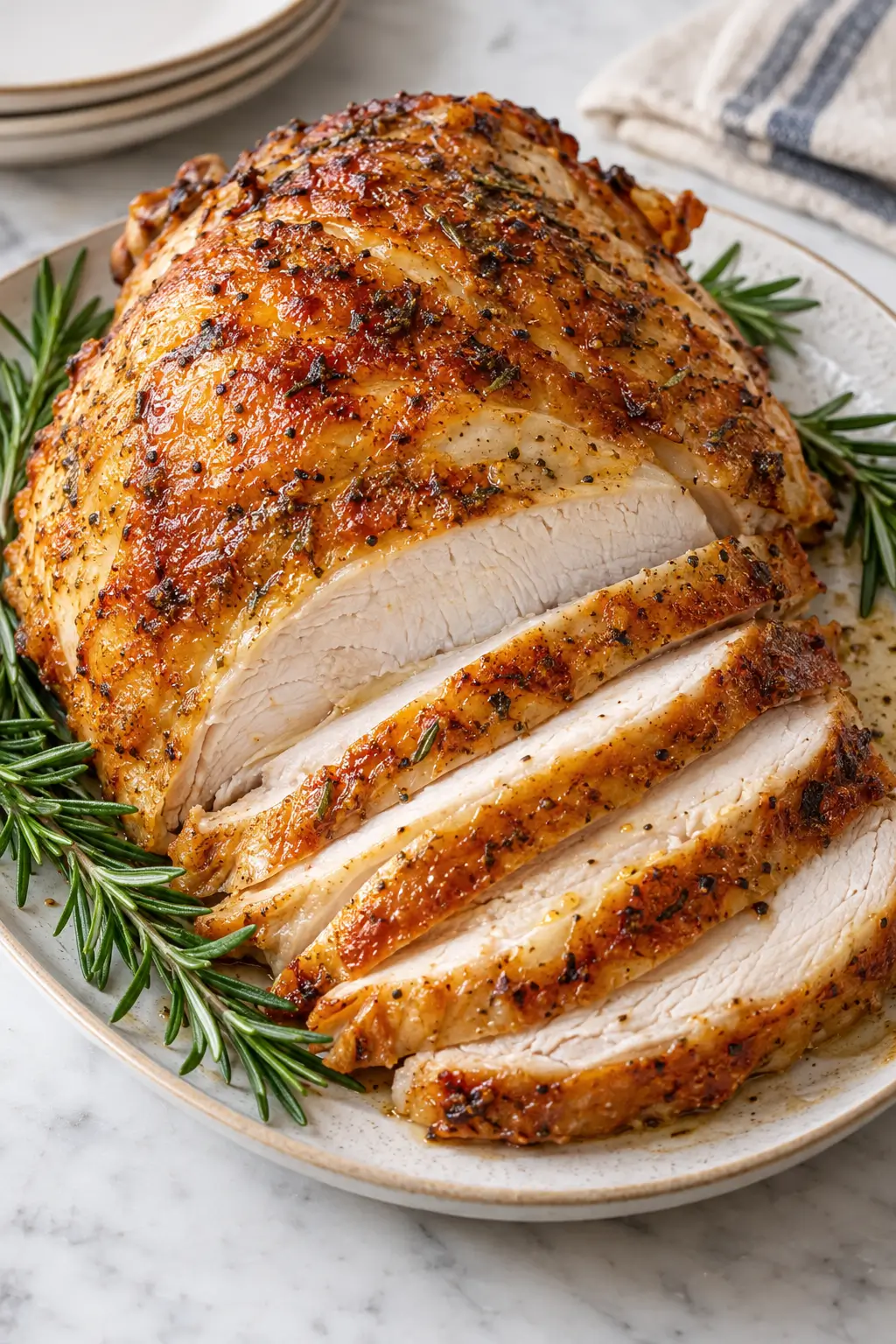
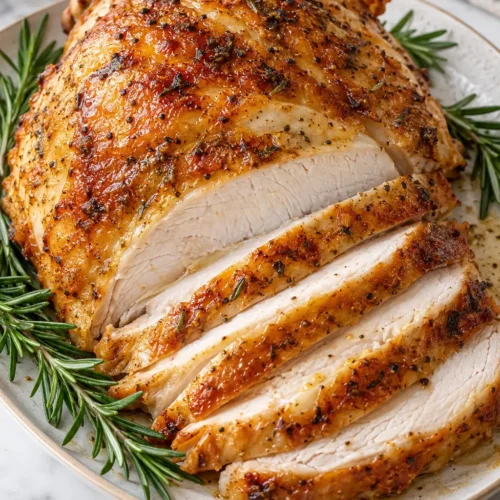
The meat comes out moist and seasoned all the way through, not just at the surface. It’s the biggest difference you’ll notice compared with an unbrined breast. The skin browns faster because of the sugar, so it may look deeper mahogany than usual. That’s normal.
The flavor reads as well-seasoned turkey, not herby or sweet. Rosemary and garlic stay in the background. If you used denser salt without reducing the amount, you’ll taste it. That’s almost always why a brined turkey comes out too salty.
Ways to Change It Up
For something fruitier, swap some of the cold water for apple juice or cider. Well Plated’s brine leans that way, with orange peel, allspice berries and a bit more sugar. It’s subtle, but you’ll catch a faint sweetness in the skin. If you want that warm-spice direction for chicken on a weeknight too, my apple cider chicken marinade uses similar flavors.
The Food Network version goes much bolder:
- honey and molasses in place of brown sugar
- soy sauce
- red pepper flakes, dried sage, and a big bunch of thyme
All that sugar browns fast, so watch the skin closely and get the foil ready earlier. I like it, but it’s not for anyone who wants their turkey to taste like plain turkey.
Want to skip the bucket entirely? Salt the meat directly a day or two ahead and leave it uncovered in the fridge. It’s often called dry brining, though the Exploratorium’s explainer on brining turkey points out that “salting” is probably the more accurate word. The same page explains why wet brining works: salt loosens muscle proteins so they don’t squeeze out as much moisture while the meat cooks.
Serving and Storage
On our table, sliced brined breast sits next to homemade cranberry sauce with orange zest, a from-scratch green bean casserole, and either colcannon mashed potatoes or maple glazed sweet potato wedges. Finish with a pumpkin pie made from real roasted pumpkin and you’ve got a full spread without a 20-pound bird.
Carve leftover meat off the bone and keep it in an airtight container in the fridge for 3 to 4 days. You can also freeze it for up to 3 months. Brined meat holds its moisture better than unbrined when you reheat it, but it isn’t magic.
To reheat, put slices in a covered dish with a splash of stock and warm them at 150°C (300°F) until just hot. Microwaving works in a pinch, but the edges dry out. The skin won’t crisp again either way, so eat it on day one.
Common Questions
Can I use table salt?
I wouldn’t. It’s much denser than kosher salt, so a cup of it brines far harder than you’d expect, and the anti-caking agents can cloud the water. If table salt is all you have, use well under half the kosher amount. Honestly, though, buy a box of kosher salt.
Can I brine a turkey that’s still partly frozen?
No. Thaw it completely in the fridge first. Frozen spots won’t take in the brine, and you’ll end up with patches of bland meat next to seasoned ones.
Why did my turkey come out too salty?
Usually it’s one of three things: denser salt measured like Diamond Crystal, a turkey that was already pre-brined, or too much time in the brine. Check all three next time. The salty-drippings complaint isn’t new, either. According to CooksInfo’s history of turkey brining, Harold McGee argued in 2008 that brining could over-salt the meat and ruin the drippings. That came about a decade after the method took off in 1999 through Chez Panisse and Alton Brown’s Good Eats.
Is brining worth it for a whole bird?
Yes, if you have the space. Double this batch for a turkey up to about 7 kg (16 lb), give it 12 to 24 hours, and follow the same drying and roasting steps. Cooking time goes up a lot for a whole bird, so a thermometer matters even more.
The drying step is where most people cut corners, and it’s the one that decides whether the skin crackles or sags. If you try the cider version or the honey-soy one, tell me which your family liked better. I’m split myself.
Easy Turkey Brine That Keeps Thanksgiving Breast Meat Juicy

Equipment
- Saucepan
- 2-gallon zip-top bag or brining container
- Paper towels
- Wire rack
- Roasting pan
- Instant-read thermometer
- Aluminum foil
Ingredients
For the brine
- 2 cups water 480 ml, for dissolving the salt and sugar
- 4 cups cold water 960 ml
- 2 cups ice about 300 g, to cool the brine fast
- 3/4 cup Diamond Crystal kosher salt about 105 g; use a scant 1/2 cup if using Morton kosher or fine sea salt
- 1/4 cup brown sugar 50 g; granulated sugar works the same way
- 2 bay leaves
- 1 1/2 teaspoons black peppercorns coarsely crushed
- 3 cloves garlic peeled and smashed
- 1 tablespoon fresh rosemary chopped; or 1 1/2 teaspoons dried
For roasting
- 1 bone-in, skin-on turkey breast 1.4 to 1.8 kg (3 to 4 lb), fully thawed
- 4 tablespoons unsalted butter 55 g, softened
- 1/2 lemon lemon zest optional
Instructions
- Warm the 2 cups of water in a saucepan over medium heat. Add the salt, sugar, bay leaves, crushed peppercorns, garlic and rosemary, and stir until the salt and sugar dissolve and the liquid is clear. It does not need to boil.
- Take the pan off the heat and pour the mixture into your brining container. Add the 4 cups of cold water and the ice, and stir until the ice is mostly melted. The brine should be fridge-cold, not lukewarm, before you go further.
- Never put raw turkey into warm brine. Warm brine starts cooking the outside of the meat and holds it at temperatures bacteria love.
- Set the breast skin side down in a 2-gallon zip-top bag, a brining bag inside a bowl, or a snug pot. Pour in the brine, squeeze out the air, and seal. The meat should be fully covered; if a corner sticks out, use a smaller container or top up with a little cold water.
- Refrigerate about 12 hours, overnight is ideal. Do not go past 24 hours or the texture becomes spongy and too salty. If you have no fridge space, use a clean cooler packed with ice and add more ice as it melts so everything stays below 4°C (40°F).
- Lift the turkey out and discard the brine; do not reuse it. Pat the breast dry with paper towels, including under the skin flap and around the bone. Skip rinsing, since rinsing raw poultry splashes germs around the sink.
- Set the breast on a rack over a plate and leave it uncovered in the fridge for a few hours, or until ready to cook. This drying step is what gives you crisp skin, since wet skin steams instead of browning.
- About an hour before roasting, take the turkey out of the fridge and heat the oven to 175°C (350°F).
- Mash the softened butter with the lemon zest. Gently loosen the breast skin with your fingers without tearing it, then push the butter under the skin and spread it as evenly as you can. No extra salt is needed.
- Place the breast on a rack in a roasting pan and roast until an instant-read thermometer in the thickest part (not touching bone) reads 74°C (165°F). Expect roughly 1 1/2 to 2 hours, but trust the thermometer over the clock. If the skin darkens too early, tent it loosely with foil.
- Rest the turkey for 15 to 20 minutes on a board before carving so the juices stay in the meat. The drippings will be saltier than expected, so taste them before seasoning any gravy and thin with unsalted stock if needed.



Leave a Reply