
A classic pecan pie doesn’t need corn syrup. People were baking it with darker syrups and molasses long before the bottled stuff took over, and the history of pecan pie backs that up. Maple syrup plus brown sugar gives you a filling that’s deep and caramel-y without the one-note sweetness.
I switched to this version after a Thanksgiving where my sister-in-law asked, very politely, if the pie came with a dentist. It hasn’t left the rotation since.
Busy week? Bake it the day before. The pie needs hours to set anyway, and a fully cooled pie slices far cleaner than a warm one.
Ingredients
Makes one 9-inch (23 cm) pie, about 8 slices. That’s dessert for 4 people with leftovers for breakfast, which is the correct way to eat pecan pie.
For the crust
- 1 unbaked 9-inch (23 cm) pie crust, fitted into a pie plate. Store-bought refrigerated dough is fine. The filling is the star here, and nobody’s grading your crimp.
For the filling
- 2 cups (226 g) pecan halves, toasted and roughly chopped. Save a handful of whole halves for the top if you want it to look pretty.
- 3 large eggs, at room temperature. These are the only thing setting the filling, so don’t cut back.
- 1 cup (240 ml) pure maple syrup. Grade A amber or dark both work; dark gives a stronger maple flavor.
- ½ cup (107 g) packed light brown sugar. Dark brown sugar works too, with a deeper molasses edge.
- 3 tablespoons (42 g) unsalted butter, melted and slightly cooled
- 1½ teaspoons vanilla extract
- ¾ teaspoon fine salt. Using salted butter? Drop it to ½ teaspoon.
- 1 tablespoon molasses (optional). This pushes the flavor toward old-fashioned pecan pie, the kind made before corn syrup.
Don’t use pancake syrup. It’s mostly corn syrup with flavoring, which defeats the whole point of this recipe.
Step-by-Step Classic Pecan Pie
-
Toast the pecans. Spread them in a dry skillet over medium heat and stir often for about 5 minutes, until they smell nutty and darken a shade. Tip them onto a plate right away so they don’t keep cooking in the hot pan, then chop roughly once cool.
-
Chill the crust. Put the dough-lined pie plate in the fridge for about 30 minutes, until firm. Cold dough holds its shape in the oven. Warm dough slumps down the sides.
-
Blind bake. Heat the oven to 375°F (190°C). Line the chilled crust with parchment or foil, fill it with pie weights (dried beans or rice work), and bake about 15 minutes, until the edges just start to brown. Lift out the weights and liner and set the crust aside while you mix the filling.
-
Mix the filling. In a large bowl, whisk the eggs until the yolks and whites are blended. Add the brown sugar, salt, maple syrup, vanilla, melted butter, and molasses if you’re using it. Whisk until smooth.
Whisk to combine, not to whip. If you beat a lot of air into it, you’ll get a pale, foamy layer on top of the baked pie. It still tastes fine, but it looks odd.
Heads up: the butter needs to be warm, not hot. Hot butter can start cooking the eggs, and you’ll see little cooked bits in the filling.
-
Add the pecans and fill. Stir the chopped pecans into the filling, then pour it into the crust. Press a few whole halves on top if you saved some. (Set the pie plate on a rimmed baking sheet. It’s easier to get into the oven without sloshing, and it catches any drips.)
-
Bake. Bake at 375°F for 40 to 45 minutes. Check at the 30-minute mark. If the crust edges are already deep brown, cover them loosely with a ring of foil and keep going. Ovens vary a lot here, so start checking for doneness around 40 minutes.
-
Know when it’s done. The edges should look puffed and set. The center should still wobble a little when you nudge the pan, like set gelatin, not liquid sloshing under a skin. It’ll look underdone. Pull it anyway, because it keeps setting as it cools.
My first test batch stayed in until the center was totally firm. It cracked across the top and the filling went slightly grainy. A little jiggle is what you want.
-
Cool completely. Let the pie sit on a wire rack for at least 2 to 4 hours before slicing. Cut it warm and the filling runs all over the plate. I know it smells too good to wait. Wait anyway.
What to Expect
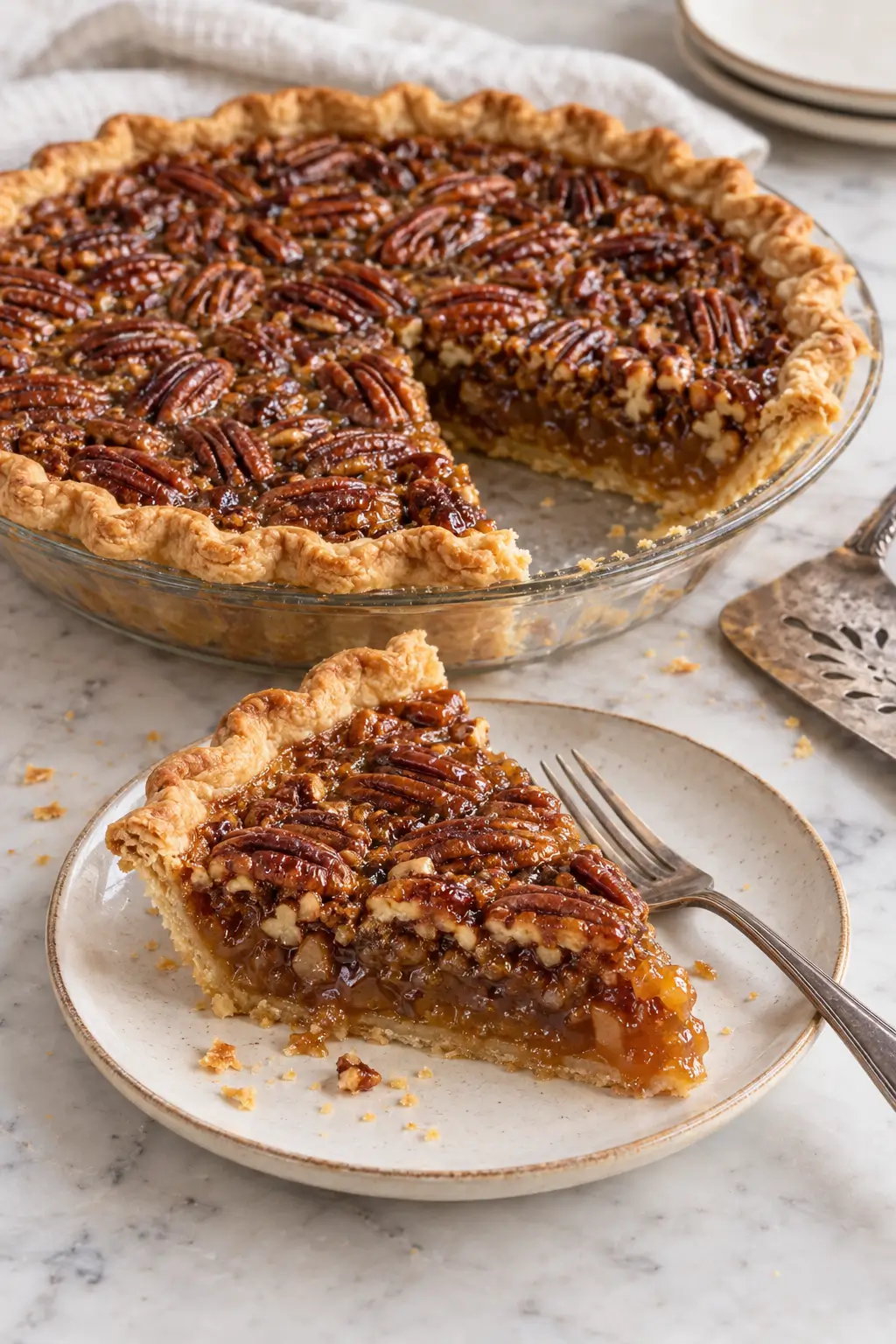
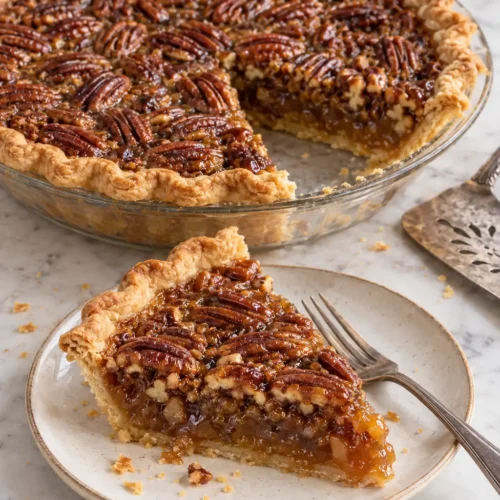
The top bakes into a glossy, deep amber layer with pecans poking through, and you’ll likely get a few spots where the nuts look darker than the rest. That’s normal. Inside, the filling is soft and gooey but holds its shape when sliced.
The maple flavor is there, but it doesn’t taste like pancakes. You’ll mostly notice caramel and toasted nuts, with enough salt to cut the sweetness. This version is less sugary than a corn syrup pie and a little softer-set, especially if you use dark maple syrup.
Ways to Change It Up
If you like a sweeter, firmer pie that’s closer to the corn syrup texture, flip the ratio: use 1 cup packed brown sugar with ½ cup maple syrup, 4 tablespoons butter, and 2 teaspoons vanilla. That version bakes at 400°F (200°C) for 10 minutes, then at 350°F (175°C) for about 30 minutes more.
For a richer, darker, more old-fashioned flavor, add the optional tablespoon of molasses and switch to dark brown sugar. America’s Test Kitchen goes further with heavy cream and egg yolks instead of whole eggs, but that’s a different recipe with its own bake, so don’t just stir cream into this one.
- Gluten-free: Use your favorite gluten-free pie crust. The filling’s already gluten-free.
- Vegan: Honestly, skip it. The eggs are the only thing holding this filling together, and I haven’t found a swap that sets properly.
Serving and Storage
Serve it at room temperature with lightly sweetened whipped cream or a scoop of vanilla ice cream. That’s all it needs.
On a holiday table, it fits right next to a pumpkin pie made from scratch, or after a dinner of brined roast turkey, green bean casserole from scratch, and cranberry sauce with orange zest. If you’re already serving a sweet potato casserole with pecan streusel, it’s a lot of pecans, but nobody’s ever complained to me about that.
Storage: Once the pie has cooled, cover it and refrigerate. It keeps for up to 4 days. It’s an egg-based filling, so don’t leave it on the counter overnight.
Freezing: Wrap the cooled pie tightly in plastic, then foil, and freeze for up to a month. Thaw it overnight in the fridge.
Reheating: Let slices sit out for about 30 minutes, or warm them in a 300°F (150°C) oven for 10 minutes. The crust softens a bit in the fridge and won’t fully crisp back up. That’s fine, but it’s the trade-off of baking ahead.
Common Questions
Why is my filling runny?
It’s almost always one of two things: the pie came out too early, or you cut it before it cooled. If the center sloshed like liquid when you pulled it, it needed more time. If it only wobbled and it’s still runny, it probably just needed more hours on the rack. A night in the fridge fixes a lot.
Can I use corn syrup instead?
This recipe is built around maple syrup, and I haven’t tested it with corn syrup. If you want the corn syrup version, use a recipe written for it, since the sugar balance is different. Corn syrup pecan pie is younger than you’d think. The Food Historian’s look at early pecan pie recipes traces the first corn syrup versions to the 1920s.
Do I really have to blind bake the crust?
Yes. The filling is wet and the bake isn’t that long, so an unbaked crust tends to come out pale and soggy on the bottom. Those 15 minutes are worth it.
The top cracked. Did I ruin it?
No, it’s just a little overbaked. It’ll taste fine, maybe a bit firmer. Next time, pull it while the center still has some wobble. Whipped cream covers cracks nicely in the meantime.
How far ahead can I make it?
One to two days ahead in the fridge is ideal. For holiday dessert trays, sweet potato pie bars make good make-ahead company.
One last thing: taste your maple syrup before you start. A darker, stronger syrup gives you a darker, stronger pie, so pick the one you actually like on its own. If you try the molasses and dark brown sugar version, tell me whether you liked it more than the lighter one. My family’s still split on it.
Classic Pecan Pie Without Corn Syrup That Slices Clean

Equipment
- 9-inch pie plate
- Dry skillet
- Pie weights
- Parchment paper or foil
- Rimmed baking sheet
- Wire rack
- Whisk
- Large bowl
Ingredients
For the crust
- 1 unbaked 9-inch (23 cm) pie crust fitted into a pie plate; store-bought refrigerated dough is fine
For the filling
- 2 cups (226 g) pecan halves toasted and roughly chopped; save a handful of whole halves for the top if desired
- 3 large eggs at room temperature
- 1 cup (240 ml) pure maple syrup Grade A amber or dark both work; dark gives a stronger maple flavor
- 1/2 cup (107 g) packed light brown sugar dark brown sugar works too, with a deeper molasses edge
- 3 tablespoons (42 g) unsalted butter melted and slightly cooled
- 1 1/2 teaspoons vanilla extract
- 3/4 teaspoon fine salt use 1/2 teaspoon if using salted butter
- 1 tablespoon molasses optional; pushes the flavor toward old-fashioned pecan pie
Instructions
- Toast the pecans. Spread them in a dry skillet over medium heat and stir often for about 5 minutes, until they smell nutty and darken a shade. Tip them onto a plate right away so they don’t keep cooking, then chop roughly once cool.
- Chill the crust. Put the dough-lined pie plate in the fridge for about 30 minutes, until firm. Cold dough holds its shape in the oven.
- Blind bake. Heat the oven to 375°F (190°C). Line the chilled crust with parchment or foil, fill it with pie weights (dried beans or rice work), and bake about 15 minutes, until the edges just start to brown. Lift out the weights and liner and set the crust aside.
- Mix the filling. In a large bowl, whisk the eggs until the yolks and whites are blended. Add the brown sugar, salt, maple syrup, vanilla, melted butter, and molasses if using. Whisk until smooth. Whisk to combine, not to whip, or a pale foamy layer will form on top. The butter should be warm, not hot, so it doesn’t start cooking the eggs.
- Add the pecans and fill. Stir the chopped pecans into the filling, then pour it into the crust. Press a few whole halves on top if saved. Set the pie plate on a rimmed baking sheet for easier handling and to catch any drips.
- Bake at 375°F (190°C) for 40 to 45 minutes. Check at the 30-minute mark. If the crust edges are already deep brown, cover them loosely with a ring of foil and keep going. Start checking for doneness around 40 minutes since ovens vary.
- Know when it’s done. The edges should look puffed and set, and the center should still wobble slightly when the pan is nudged, like set gelatin. It will look underdone, but it keeps setting as it cools. Avoid baking until the center is fully firm, which can crack the top and make the filling grainy.
- Cool completely. Let the pie sit on a wire rack for at least 2 to 4 hours before slicing. Cutting it warm causes the filling to run across the plate.



Leave a Reply